Although artificial intelligence has been driving Wall Street's bull market for almost four years, it's not the only game-changing trend that's capturing the attention and capital of investors. The quantum computing revolution is a potential trillion-dollar addressable market and is exciting investors.
As of October 2025, several pure-play quantum computing stocks were delivering breakneck trailing 12-month (TTM) returns. IonQ (IONQ -1.63%), Rigetti Computing (RGTI -0.69%), and D-Wave Quantum (QBTS -1.03%) gained as much 6,200% over the trailing year. Investors who had the wherewithal to put their capital to work in these pure-play companies have been handsomely rewarded.

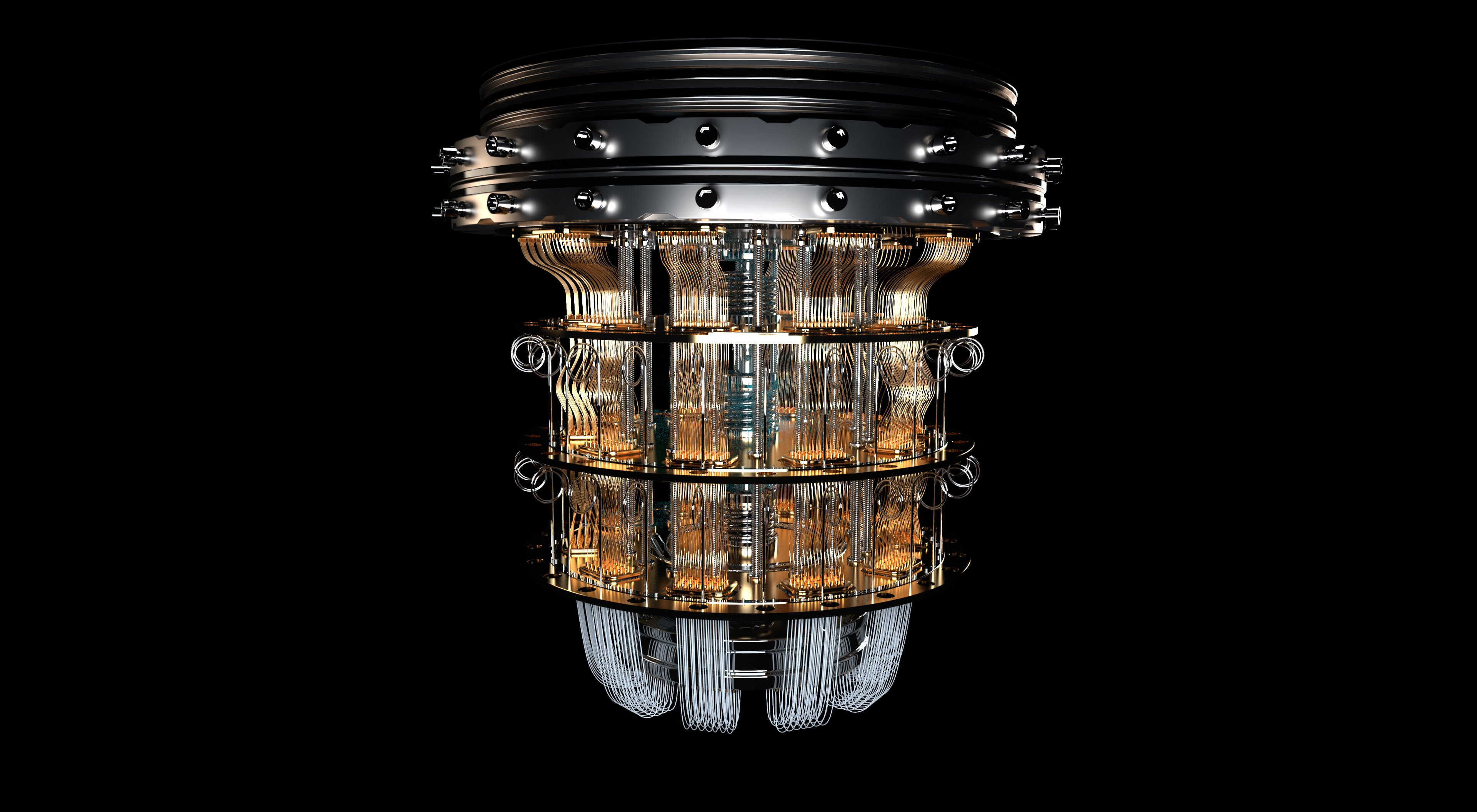
Image source: Getty Images.
But things may not be as perfect as the eye-popping two-year gains in quantum computing stocks suggest. Based on the actions of those who know IonQ, Rigetti, and D-Wave best, a worrisome message has been sent to Wall Street.
Insiders at IonQ, Rigetti, and D-Wave have put Wall Street on notice
Even though dozens of analysts closely monitor these pure-play quantum computing stocks, no one understands the nuts and bolts of these companies better than their insiders. An "insider" is a high-ranking executive, board member, or beneficial owner of at least 10% of a company's outstanding shares who may possess non-public information.
Typically, insiders are a public company's biggest cheerleaders. But sometimes their actions speak louder than words.
Securities law requires that insiders report any purchases or sales in their company's stock (including option exercises) via Form 4 within two business days. This also allows everyday investors to track whether insiders have been buyers or sellers of their company's stock.
IONQ IonQ
NYSE · As of 4:00 PM ET 10/26/26

In the case of IonQ, Rigetti Computing, and D-Wave Quantum, insiders have been decisive sellers. Over the trailing three-year period, net insider sales in these stocks total:
- IonQ: $457.2 million
- Rigetti: $74 million
- D-Wave: $331.3 million
Collectively, insiders at these pure-play quantum computing companies have sold a net of nearly $863 million of their stock.
If there's a silver lining to the above data, it's that not all selling activity is necessarily nefarious. For instance, high-ranking executives and board members are often compensated in stock and/or options. Given that stock sales are commonly a requirement to satisfy the federal and/or state tax liability of stock-based compensation, tax-based selling isn't a worry for investors.
But the opposite side of this coin, insider buying, is potentially even more worrisome for quantum computing pure-play stocks.
RGTI Rigetti Computing
NASDAQ · As of 4:00 PM ET 10/26/26
Over the trailing three years, insider buying totals are as follows:
- IonQ: $3.32 million
- Rigetti: $0
- D-Wave: $1,795
Save for a handful of director purchases at IonQ, insider buying would be virtually nonexistent. While there are plenty of reasons to sell shares of a company, there's only one reason to buy: the belief in future appreciation.
If insiders aren't buying, investors should ask why.
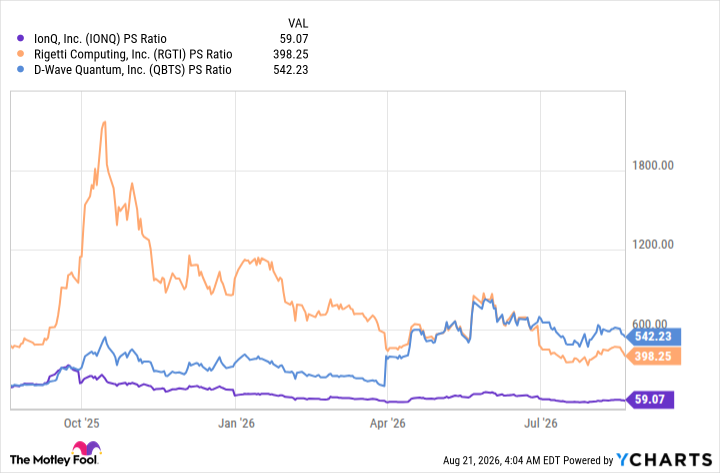
IONQ PS Ratio data by YCharts. PS Ratio = price-to-sales ratio.
One reason could be the valuation of quantum computing stocks. No company at the forefront of a game-changing trend has ever maintained a price-to-sales (P/S) ratio above 30 for an extended timeline. IonQ, Rigetti, and D-Wave sport respective P/S ratios of 59, 398, and 542!
Additionally, game-changing technologies and bubble-bursting events go hand in hand. All innovations need ample time to mature. Quantum computers are neither widespread nor anywhere close to optimized at present, increasing the likelihood that we witness a bubble-bursting event.