Lucid Group (LCID -0.24%) has had a rough year or two and could use some positive news. The electric vehicle (EV) company announced it would delay its Cosmos crossover until at least next year (it was previously scheduled for launch in late 2026). It's still bleeding cash and posted a net loss of $1 billion during the second quarter.
Management is now working on a plan to save cash, including two rounds of layoffs this year alone. The young EV maker went as far as to hire consulting firm AlixPartners to help with a turnaround plan. In a rare moment of good news from the company, it announced the 2027 Gravity GT-S. But is this a development that can move the needle?
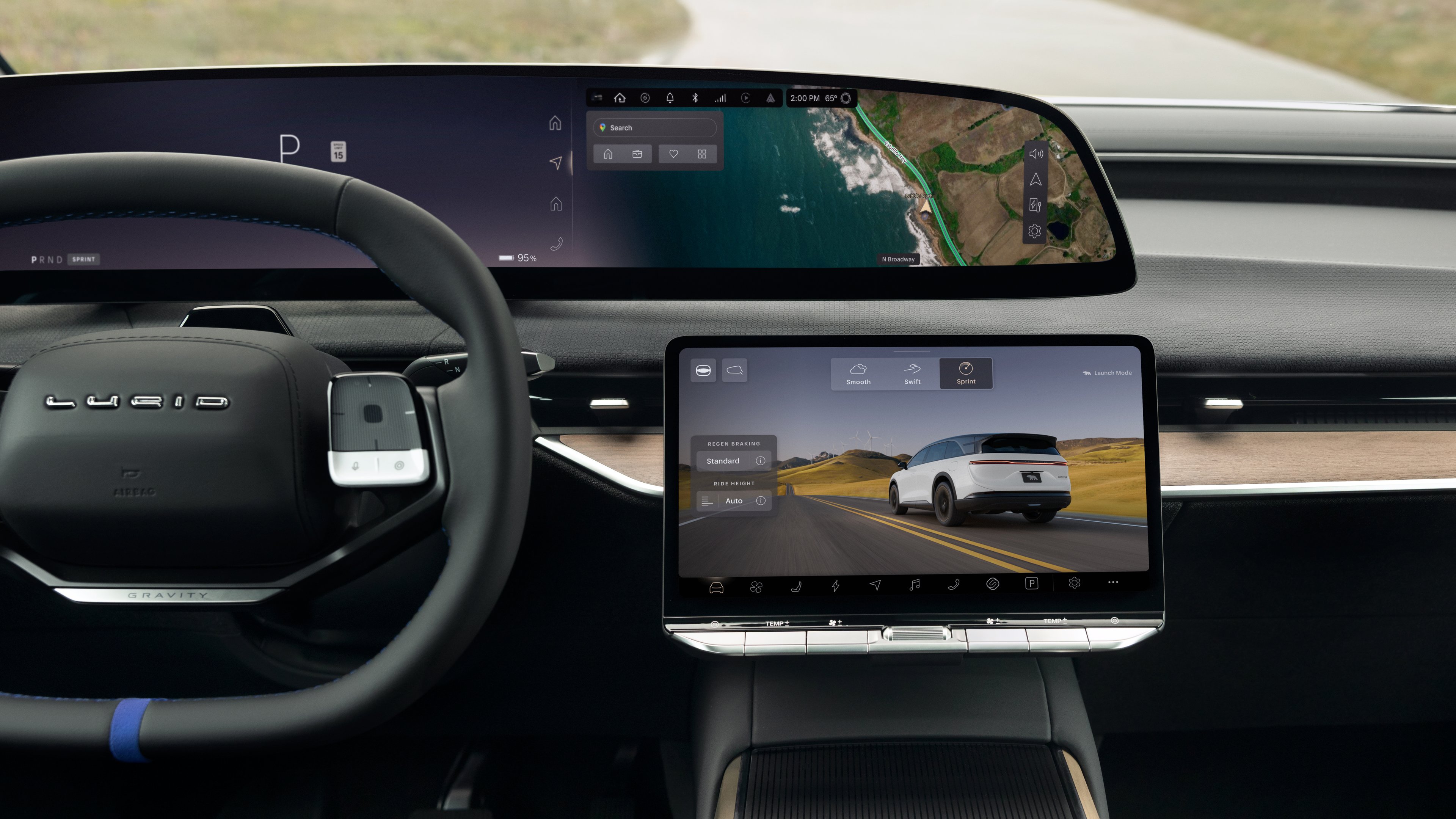
Interior of Lucid Gravity GT-S. Image source: Lucid
Creating? Or remixing?
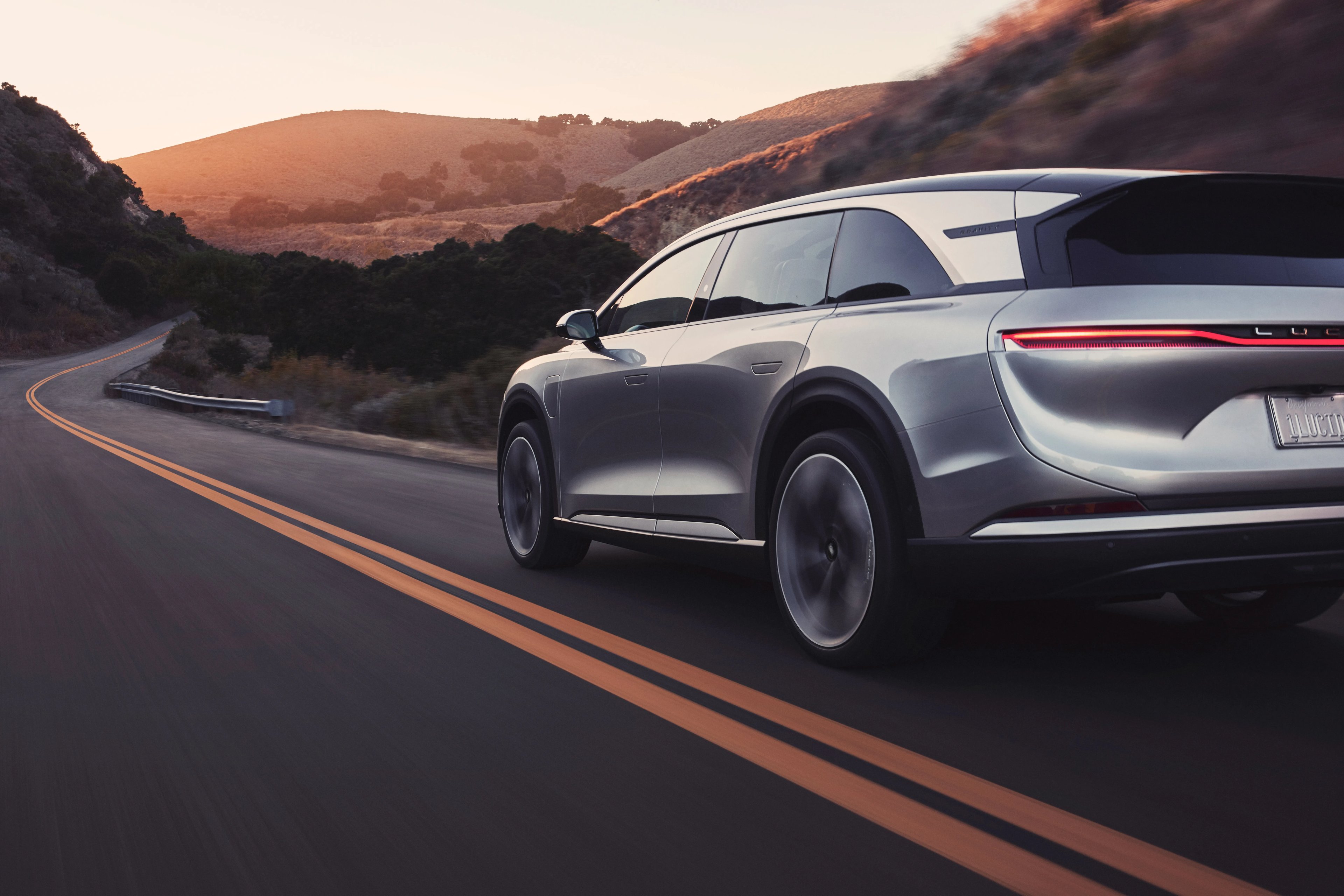
Lucid is reviving the 1,070-horsepower drivetrain from its discontinued Dream Edition for the GT-S, which it claims to be America's most powerful three-row crossover, barely surpassing the nearest competitor, Rivian's R1S three-row crossover, which has 1,025 horsepower. It's a lot of power, but Lucid's flaw has never been its ability to create excellent EVs.
The problems with Lucid have been production hiccups, supplier bottlenecks, product delays, and the inability to lower costs to consistently improve its gross margins -- a feat rival Rivian continues to excel at.
The Gravity GT-S could certainly make a marketing splash, but it almost certainly won't move the needle on sales volume at a starting price approaching $128,000. The high end of the EV industry has been saturated by automakers' attempts to make EVs as profitable as possible, with many companies continuing to lose large sums on the vehicles.
The Gravity GT-S will at least be cheaper than the limited-run Dream Edition, which sold for over $141,000 as a 2026 model. There's little doubt it will be flashy, but that's perhaps where the positive news ends.
Demand for Lucid's other Gravity trim versions has so far been uneven at best due to high pricing that often exceeded $100,000 in luxury configurations, a number of delivery disruptions, and a stop-sale order on the stock. It has also taken some heat for software bugs and other minor issues, and there is some buyer hesitation regarding the company's long-term financial situation and dependence on Saudi Arabia's Public Investment Fund (PIF) for billions of dollars in support.
The GT-S won't solve problems
Unfortunately, the Gravity GT-S won't address many of the valid Lucid concerns facing consumers and investors. There were rumors earlier this year that Lucid was considering bankruptcy or going private, since Saudi Arabia's PIF already owns about 60% of the company.
Management strongly denied both rumors and will now rely on AlixPartners to help improve operations, lower costs, and save cash. AlixPartners has not recommended bankruptcy.

NASDAQ: LCID
Key Data Points
The delayed Cosmos SUV, which is targeting a price around $50,000 and was expected to open doors to an even wider market than the Gravity, is arguably a bigger announcement than the GT-S. That's because Lucid is between a rock and a hard place.
Amid a management shake-up and a new CEO, it needs to build scale and fill its production capacity to help lower costs, which the Cosmos would help with, but a 2026 launch would have been a lot to take on while still working out the issues with Gravity production and delivery. Lucid needs the Cosmos as soon as possible, but only when it's well prepared to handle another big launch with fewer operational and supply issues.
The Gravity GT-S could help draw eyes to the company's more affordable options, similar to a "halo" car. But it's a high-priced vehicle in a saturated segment, when the company really needs to double down on cutting costs without sacrificing quality and improving operations to conserve cash.
Lucid needs answers, and maybe AlixPartners will come through, because its flashy GT-S isn't going to solve any of the numerous problems facing long-term investors.