Despite the advent of alternatives such as Alphabet's Tensor Processing Units (TPUs), Nvidia (NVDA -1.41%) remains the leader of the artificial intelligence (AI) data center chip market. It sold $89 billion worth of data center silicon last quarter alone.
But more than just chips go into data center operations. Processing capacity is another aspect of artificial intelligence data centers. Networking is another. Electricity is still another, along with cooling. One of these more nuanced slivers of the AI business has gone largely unnoticed by both Main Street and Wall Street. And despite what you're probably thinking, it's not onsite power like the electricity generated by GE Vernova's (GEV -0.24%) natural gas power turbines.
The overlooked aspect of the modern-day AI business is the 800-volt power distribution equipment that could eventually become the industry norm, making the companies operating in this space a lot of money.
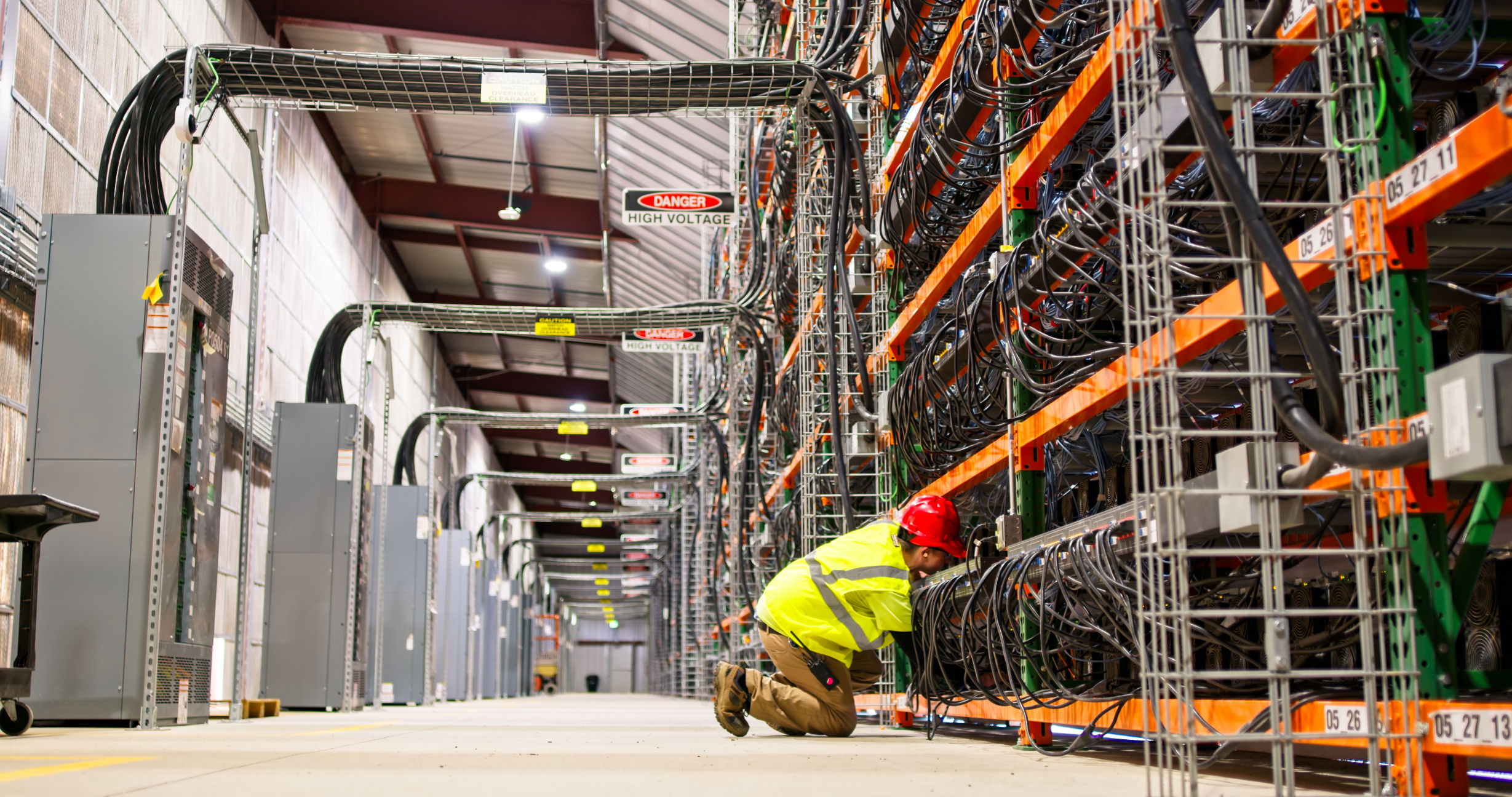
Image source: Getty Images.
A new norm for data centers is on the horizon
A quick lesson: The ordinary electrical outlets in your home deliver 110 alternating current (or AC) volts, while appliances like your dryer or oven need between 220 and 240 volts to function. Some industrial manufacturing equipment requires 440 volts to operate. And by and large, data centers have historically been built to use these long-standing conventional voltages, particularly within the United States.
With energy prices soaring, though, every potential improvement in data centers' electrical efficiency matters. And as it turns out, 800-volt direct-current platforms are far more power-efficient, and therefore cheaper to operate. Specifically, this option costs about 10% less than most of the power supplies readily available right now.
And this technology is far from being merely theoretical or experimental. Vertiv (VRT -1.14%) -- the company arguably best known for its data center cooling solutions -- co-announced with Nvidia in August of last year that it was making good design progress with its 800-volt power infrastructure specifically for Nvidia's ballyhooed next-generation Vera Rubin accelerators.

NYSE: VRT
Key Data Points
Nvidia and Vertiv aren't the only players adapting to 800-volt power supplies, though. Chipmakers Navitas Semiconductor (NVTS -5.13%) and Texas Instruments (TXN -2.97%) are moving in this direction, while smaller players like Korea-based Delta Electronics and non-publicly traded Schneider Electric are developing 800-volt power distribution equipment for data centers.
Vertiv and Nvidia are arguably leading the race, however. Nvidia confirmed in mid-August that its MGX-compatible direct current 800-power rack will be available before the end of 2026, firmly launching the beginning of a new chapter in AI data centers' power management.
There should be plenty of business to go around, given that many modern-day data centers' power consumption is measured in megawatts.

NASDAQ: NVTS
Key Data Points
Just keep your eyes peeled
There is a challenge here. While no one disputes that 800-volt direct current platforms are more power-efficient and therefore offer an important cost savings, we're still at the early stages of a transition that could take years, and the industry is already committed to spending over $700 billion this year alone on other AI infrastructure. It may balk at replacing recently installed power supply equipment, even if it is inferior to newer options.
Still, it's a technological upgrade with clear potential, even if most of Wall Street isn't paying attention yet. You'll want to keep your eyes and ears open for how this story develops simply because there's an opportunity buried within it.