Shares of offshore drilling equipment provider Valaris (VAL +1.90%) rallied 8.5% on Tuesday.
While Valaris didn't report company-specific news today, oil prices rose about 4.5% as of this writing, reaching roughly $106 per barrel. Oil prices were climbing as overseas supply took another hit, this time due to the Russia-Ukraine conflict. Today's damage comes shortly after a key pipeline in Saudi Arabia was damaged last week.
VAL Valaris
NYSE · As of 4:00 PM ET 10/26/26

Ukraine and Russia trade fire on oil refineries, despite Trump's assurances
According to local authorities monitoring local Telegram channels, both Russia and Ukraine struck each other's oil refining facilities overnight. What's especially notable about the strikes is that they seemed to contradict President Trump's recent assurance that both sides had agreed to hold off on striking each other's oil facilities. Just yesterday, President Trump wrote on his social media platform, Truth Social, "Ukraine has agreed not to hit Russian Energy targets. Russia has agreed to do likewise!"
So, not only were the strikes likely to be a crimp in global refined product supply, but the Trump Administration's seeming inability to mitigate the damage doesn't bode well for future supply disruptions.
The Russia-Ukraine strikes come on the heels of strikes on the key East-West pipeline in Saudi Arabia last week, which Saudi Arabia had been employing to bypass the Strait of Hormuz, where Iran threatens traffic. That pipeline has been a key reason oil prices haven't gone dramatically higher since the start of the U.S.-Iran war, so the damage to it is a serious hit to global supply. While U.S. Energy Secretary Chris Wright believes the pipeline will be shut down for only a matter of days, some analysts believe repairs will take longer.
A curtailed land-based supply would likely spur more investment in offshore drilling, where Valaris is well-positioned. Not only that, but Valaris is in the process of acquiring Transocean (RIG +1.87%). Combining these two would create the world's largest offshore rig operator. Currently, Valaris has the second-largest fleet, and Transocean the sixth-largest, in terms of rigs. However, Valaris' fleet focuses heavily on lower-cost shallow-water jackups, while Transocean's fleet skews toward more expensive deep-water rigs, which is why both companies' market values are similar.
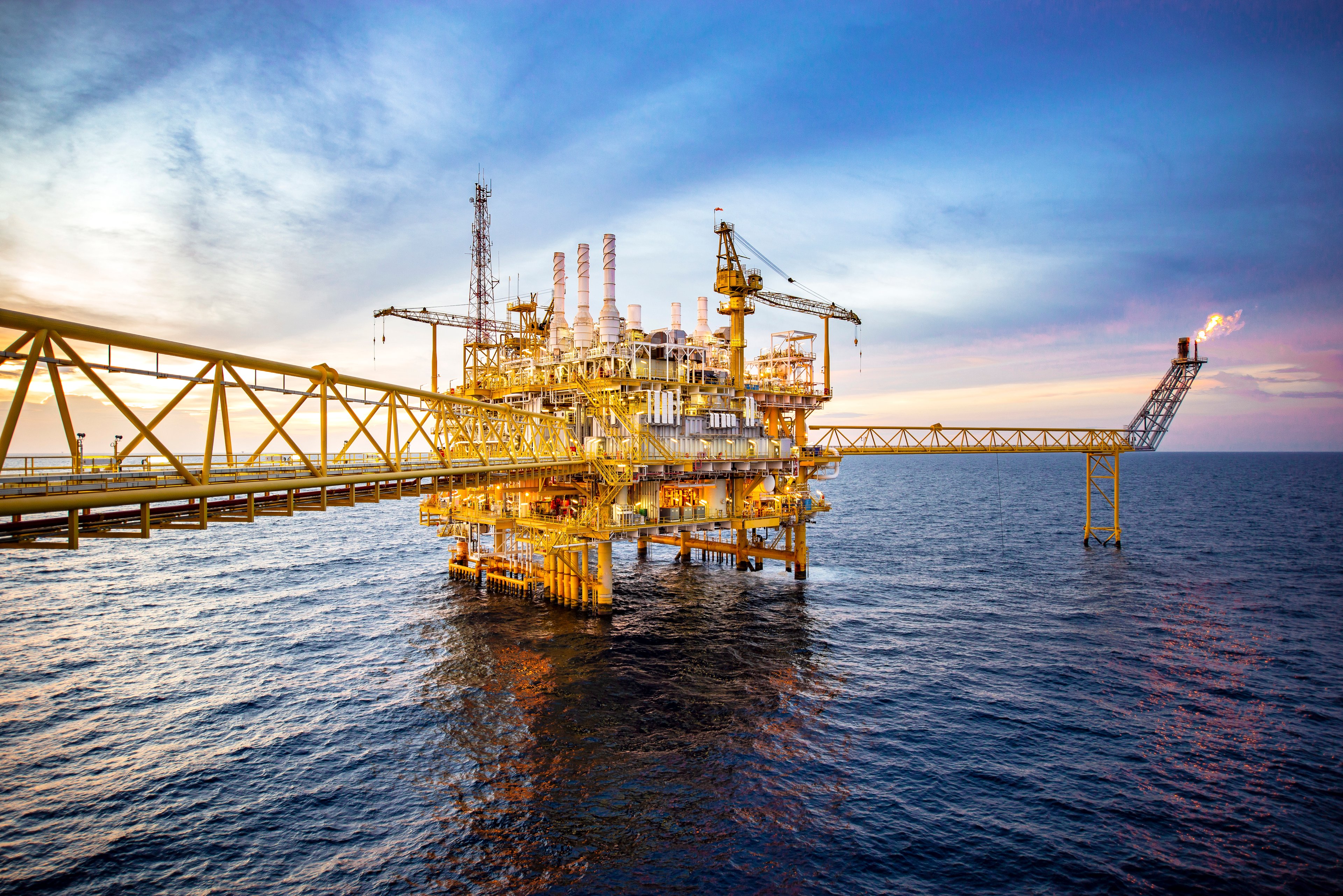
Image source: Getty Images.
Still below recent highs
It's pretty simple -- if more land-based oil production is threatened in Russia and the Middle East, offshore drilling becomes more attractive, and offshore drillers should generate more cash flow with which to invest in more production.
As such, Valaris is rising strongly today as it seeks regulatory approval for its acquisition of Transocean. The immediate path forward for the stock will depend on the duration of curtailment in land-based supply, and on whether Valaris receives approval for the Transocean merger.