Arguably, no investor in history has made a bigger name for themselves than Warren Buffett. He helped turn Berkshire Hathaway into one of the world's most valuable companies and made himself quite a fortune along the way. That's why investors tend to listen whenever Buffett dishes out advice.
Buffett has offered plenty of advice over the years, but one thing has remained consistent: his recommended investment for the everyday investor. The S&P 500 (^GSPC -0.06%) tracks the largest 500 U.S. companies on the stock market. According to Buffett, the best ETF for most investors is an S&P 500 ETF.
There are a few to choose from, but my personal go-to is the Vanguard S&P 500 ETF (VOO -0.06%) because of its low cost, which Buffett often emphasized.

NYSEMKT: VOO
Key Data Points
Why Buffett recommends the S&P 500
Although the country has millions of businesses, S&P 500 companies contribute meaningfully to the economy because of their size and the number of people they employ. That's why, for all intents and purposes, investing in the S&P 500 is akin to investing in the broader U.S. economy.
The S&P 500 and the U.S. economy don't always align in the short term, but they have always moved in the same direction over the long term. That's largely why Buffett believes it should be a go-to. He once said:
For 240 years, it's been a terrible mistake to bet against America, and now is no time to start. America's golden goose of commerce and innovation will continue to lay more and larger eggs.
Time will tell how the economy ultimately evolves, but it has a lot going for it that should encourage investors to embrace the S&P 500.

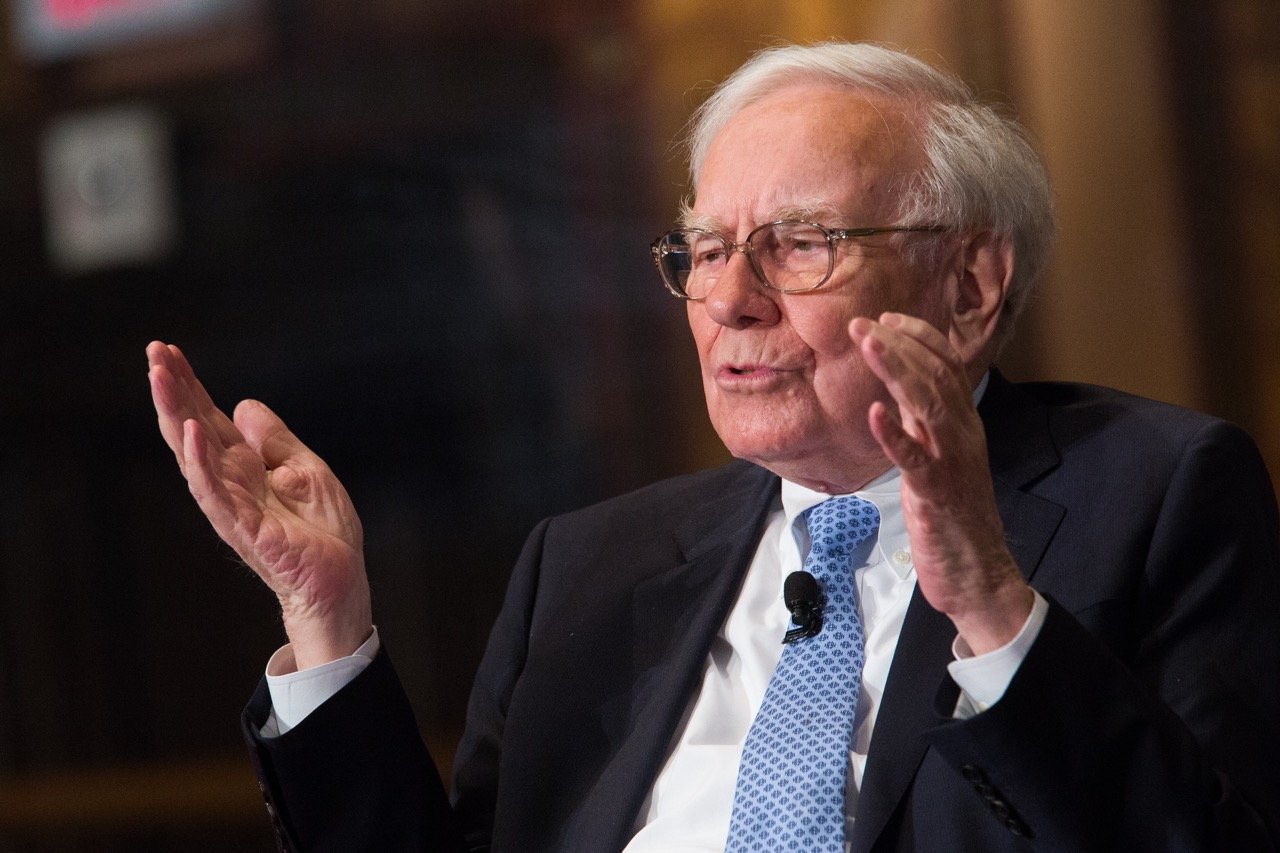
Image source: Getty Images.
VOO is a one-stop shop
VOO is as close to a one-stop shop as you'll find on the stock market. Yes, it only holds large-cap U.S. stocks, but it still covers a lot of ground with one investment. Its companies come from every major U.S. sector, though it has become much more tech-heavy in recent years:
- Information technology (tech): 36.6% of the S&P 500
- Financials: 12.5%
- Communication services: 9.9%
- Consumer discretionary: 9.4%
- Healthcare: 9.1%
- Industrials: 8.7%
- Consumer staples: 4.7%
- Energy: 3.4%
- Utilities: 2.1%
- Real estate: 1.9%
- Materials: 1.8%
These sectors include virtually all major blue chip stocks, adding a sense of stability and dependability.
History is on the side of VOO
Since VOO began trading in September 2010, it has been as productive an investment as you could want from a broad ETF. In that time, it has averaged 12.8% annual returns, or 14.9% when including dividends (as of Sept. 14).
I wouldn't count on it continuing to average that long term (though you never know), but even if it continues to average the 8.5% annual returns it has over the past 30 years (10.5% with dividends), investors can build a nice nest egg over time by staying consistent.
There will be inevitable ups and downs, but history shows the S&P 500 is as resilient as it gets. That's why VOO is my largest holding.