Broadcom (AVGO -0.48%) and Marvell Technology (MRVL +2.25%) are both benefiting from the rapid build-out of artificial intelligence (AI) infrastructure. Broadcom's AI semiconductor revenue surged 221% year-over-year to $16.7 billion in the third quarter of fiscal 2026 (ended Aug. 2). Marvell Technology also earned nearly 79% of its revenue from the data center segment in the second quarter of fiscal 2027 (ended Aug 1, 2026), with the segment benefiting from strong AI-related demand.
Hence, while both companies appear well-positioned to benefit from the AI supercycle, investors may want to know which stock offers the better mix of growth, profitability, and valuation. Let's find out.

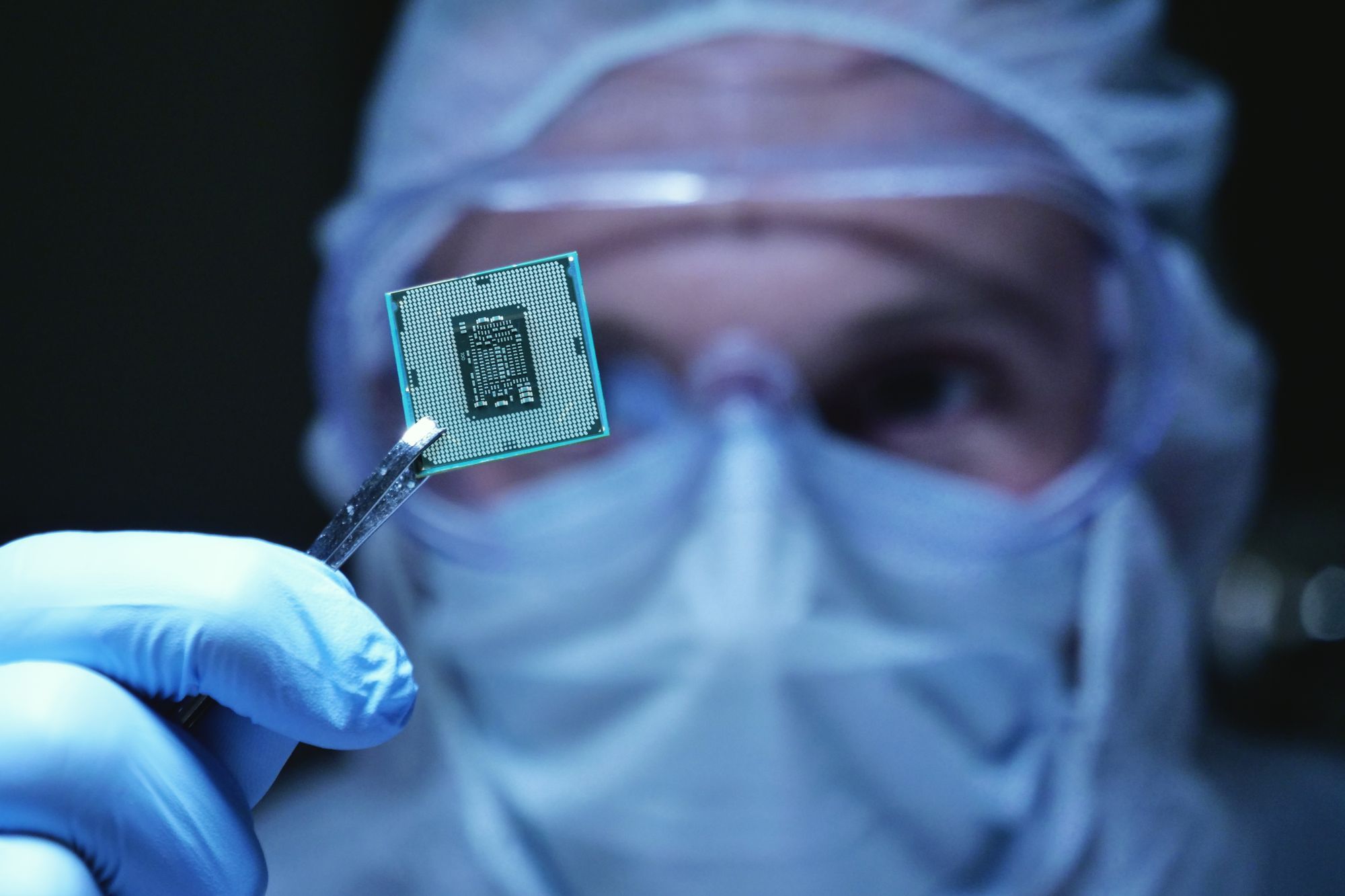
Image source: Getty Images
Marvell's Google deal does not necessarily weaken Broadcom
Marvell recently expanded its partnership with Alphabet's (GOOG -1.08%) (GOOGL -1.24%) Google to develop several custom silicon products linked to Google's TPU (custom AI chips designed by Google) ecosystem. These chips will help Google run AI models, move and store data, and manage memory more efficiently.
Google can buy up to roughly 59 million Marvell shares at $206.58 each. However, most of these shares become available only if Google buys large amounts of Marvell's custom chips. After a small initial portion, the remaining warrants vest gradually as Marvell generates more revenue from Google. Hence, most of the potential equity dilution will happen only if the partnership also brings Marvell substantial business.
But, Marvell's growing relationship with Google does not necessarily imply that Broadcom is losing Google's business. Broadcom has entered into a long-term agreement to develop and supply chips for future generations of Google's TPUs. The agreement also covers networking and other components for Google's next-generation AI racks through as late as 2031.
Hence, Google appears to be broadening its supplier base as its AI infrastructure requirements expand.
MRVL Marvell Technology
NASDAQ · As of 4:00 PM ET 10/23/26

Broadcom's AI growth remains strong despite its scale
Broadcom expects its AI semiconductor business to generate about $21.7 billion in revenue in the fourth quarter of fiscal 2026, up 236% on year-over-year basis.
The chipmaker expects about $58 billion of AI semiconductor revenue in fiscal 2026. The longer-term expectations for the company's AI business are even more impressive. Management expects AI semiconductor revenue of roughly $115 billion in fiscal 2027 and around $230 billion in fiscal 2028.
Broadcom is also generating significant cash from its growth. The company's free cash flow reached $13.7 billion in the third quarter, which was nearly 46% of revenue. The company also has a large infrastructure software business, which generated around $8.8 billion of revenue in the third quarter. Hence, Broadcom has another source of earnings even as its semiconductor business becomes increasingly dependent on AI spending.
Marvell's growth still depends on future execution
Marvell's growth outlook has continued to improve. Management now expects fiscal 2027 revenue to grow 45% year-over-year to $12 billion, up from its previous guidance of $11.5 billion. The company also expects fiscal 2028 revenue to rise about 50% year-over-year to $18 billion, compared with its earlier outlook of $16.5 billion. Marvell also expects its Data Center business to grow about 60% in fiscal 2027 and more than 60% in fiscal 2028.
Marvell's custom chips business is expected to more than double in fiscal 2028. Connectivity solutions are expected to be the largest contributor to the company's $1.5 billion increase in its fiscal 2028 revenue outlook. The connectivity business is benefiting from stronger demand for optical products, network switches, and technologies that help connect larger AI computing systems.
AVGO Broadcom
NASDAQ · As of 4:00 PM ET 10/23/26
Broadcom offers a more attractive valuation
Analysts expect Broadcom to generate about $173.5 billion in fiscal 2027 revenue, representing nearly 64% year-over-year growth. Marvell's fiscal 2028 revenue is expected to rise about 51% year-over-year to $18.2 billion. These periods are reasonably comparable, since Broadcom's fiscal 2027 ends in November 2027 while Marvell's fiscal 2028 ends in January 2028.
However, Broadcom trades at only about 21.6 times estimated fiscal 2027 earnings, compared with roughly 57.3 times fiscal 2028 earnings for Marvell. Broadcom also trades at around 14.2 times expected fiscal 2027 EBITDA, while Marvell trades at roughly 30.2 times expected fiscal 2028 EBITDA.
Hence, investors are paying a substantially higher valuation for Marvell even though its expected revenue growth is not higher. Marvell could still outperform if its custom chip and connectivity businesses grow well above current expectations. But Broadcom does not require the same level of future execution to justify its valuation.
Broadcom appears to offer a better risk-reward proposition today. Marvell has significant growth potential, but Broadcom currently offers faster expected revenue growth at a much lower forward valuation.