As recently as a dozen years ago, things weren't looking good for Boeing (BA +0.67%) stock, as the company's defense unit lost fighter contract after fighter contract in competitions from Brazil to South Korea to the United States.
But times have changed. And here in the mid-2020s, Boeing Defense, Space, and Security (BDS) is on a winning streak.
In March 2025, the U.S. Air Force awarded Boeing an exclusive contract to build its newest stealth aircraft, the Next Generation Air Dominance fighter. Now designated the F-47, just developing this sixth-generation fighter jet will earn Boeing anywhere from $20 billion to $50 billion. Actually building them would presumably bring in tens of billions more.
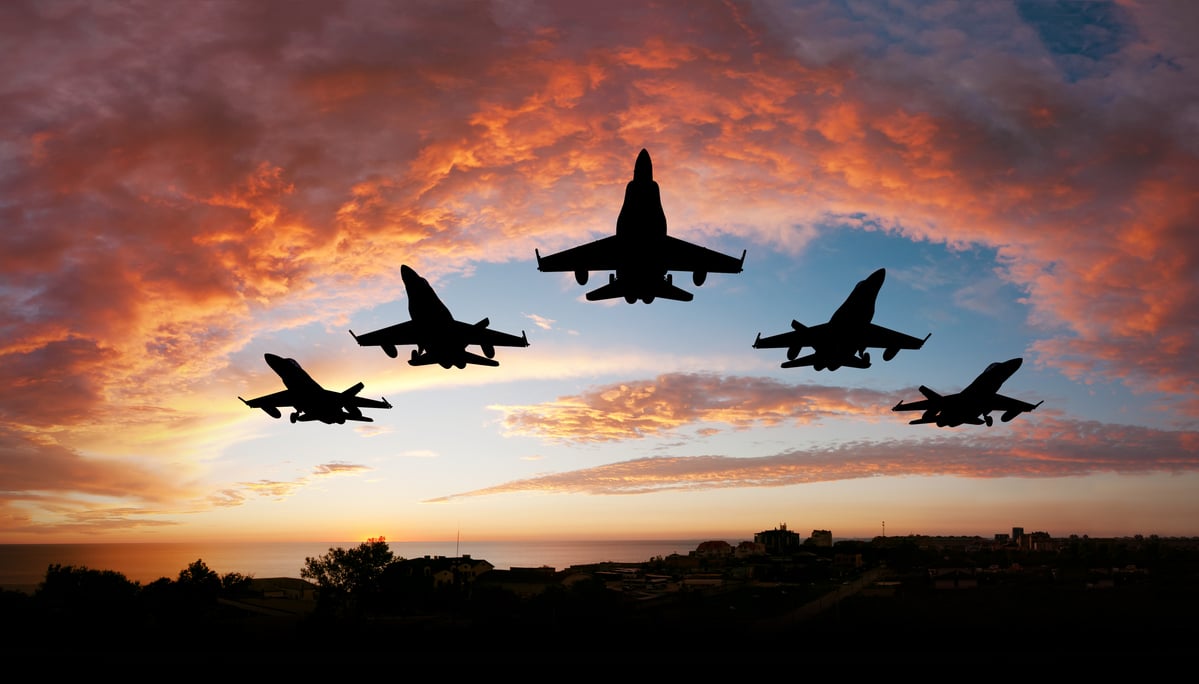
Image source: Getty Images.
Boeing's next big win
And that's not all. Back in July 2025, not long after the F-47 contract was awarded, rumors began circulating that Boeing was in contention to win the other big sixth-generation fighter contract the Pentagon was sponsoring -- this time for the Navy.
Dubbed F/A-XX, this contract would see the winner build a fighter-bomber to replace the Navy's fleet of F/A-18 Super Hornets. And last week, we learned that this contract, too, has been awarded to Boeing.
Once again, the "development phase" of the contract is valued at $20 billion, which includes the purchase of "multiple test aircraft for ground, airworthiness, systems, and weapons integration testing." The goal is to produce a stealth fighter jet that is harder to see with radar than the F/A-18, boasts longer range, and that can cooperate with and control Collaborative Combat Aircraft -- military strike drones being developed by Anduril and General Atomics.
F/A-XX will also apparently carry a native electronic warfare (EW) system, because the Pentagon notes that its deployment will replace not only the Navy's F/A-18s, but also their EW variant, the EA-18G Growler, built cooperatively by Boeing and Northrop Grumman.
What this means for Boeing (and for everyone else)
Awarding F/A-XX -- and F-47 -- to Boeing holds several implications for investors in the defense industry. First and foremost, it means that just as Lockheed Martin dominated the production of fifth-generation warplanes by virtue of winning both the F-22 and F-35 stealth fighter contracts, Boeing will dominate the production of sixth-generation warplanes.
Not exclusively. Northrop Grumman did win the contract to produce sixth-generation B-21 stealth bombers. But in the fighter jet category, Boeing now stands alone.
As the sole-source provider of sixth-gen fighters to both the Air Force and the Navy, Boeing doesn't need to compete with anyone on price going forward. And given the cost of these programs (the Air Force and Navy combined are expected to buy upwards of 370 sixth-generation fighters over time), it's unlikely the Pentagon could afford to buy additional sixth-generation fighter models that might compete with Boeing on price.
That's bad news for Lockheed Martin, which has just lost pole position in the fighter industry -- at least for one generation, and possibly forever. It's bad news for Northrop Grumman, too, which, after winning the B-21 sixth-generation stealth bomber contract, probably figured it was the odds-on bet to win F/A-XX (and for that matter, F-47 as well).

NYSE: BA
Key Data Points
What it means for Boeing investors
But for Boeing investors, it's simply wonderful news. The company's Boeing Defense, Space, and Security business recently returned to profitability after losing money for four straight years (according to data from S&P Global Market Intelligence). Wall Street analysts were already expecting 2027 to be the year that Boeing resumes earning sustainable, companywide profits that will last for years.
With the F-47 and F/A-XX contracts locked up, Boeing's defense business, at least, could be profitable for decades.