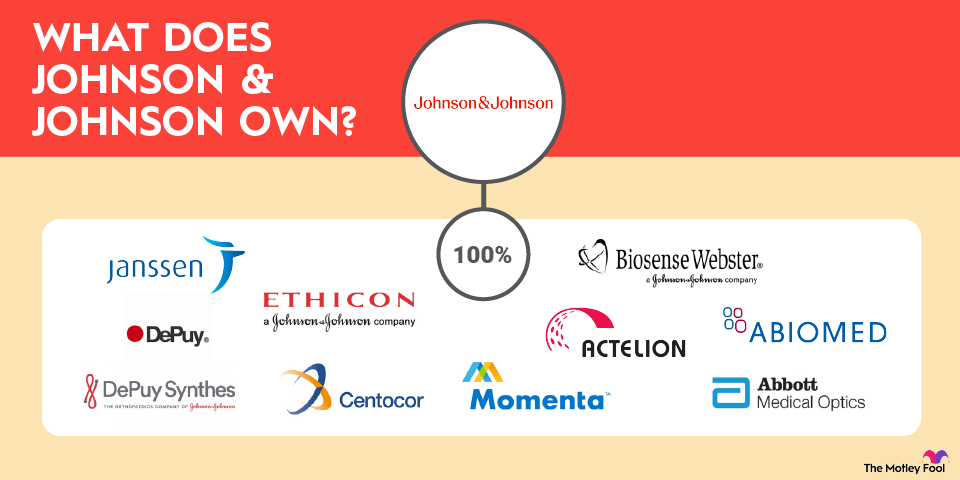
I frequently check out the 30 companies in the Dow Jones Industrial Average for investment opportunities. In my mind, there's no better way to quickly screen for an industry leader with impressive cash flow generation and a favorable operating outlook. And as a contrarian investor, I'm always on the lookout for negative short-term news that will help me pick up a stock on the cheap.
I also like the health-care industry, because of one favorable demographic trend: Aging baby boomers. There are three giant pharmaceutical firms in the Dow: Merck (NYSE:MRK), Pfizer (NYSE:PFE), and Johnson & Johnson (NYSE:JNJ). Merck has seen a nice recovery after a rough patch, with plenty of positive news flow regarding its pipeline prospects. The latter two haven't been doing so well, and I've placed some chips on the table in each.
I'm drawn to Pfizer's dividend yield and low valuation, but its shares are not for the faint of heart, as a major drug is up for patent expiration in just a couple of years. This brings me to mighty J&J, one of the most diversified health-care companies out there. And after a slight run in its share price, I still think the bar is low in terms of the growth expectations built into the current valuation.
In regard to negative short-term news, there is plenty to be had at J&J's business segments. Its core pharmaceutical division is being criticized for a weak pipeline, and a current blockbuster for treating anemia, Procrit, is being subject to dosing concerns and debates over appropriate government reimbursement rates. Archrival Amgen (NASDAQ:AMGN) is bearing the brunt of the issues, as its Epogen and Aranesp drugs account for a major block of overall sales, and I find this only speaks to the benefits of J&J's diversified approach in the industry. Procrit only accounts for about 6% of total sales.
Additionally, J&J sells drug-coated stents, which help open clogged arteries and improve blood flow, and the effectiveness of using stents versus drugs or other therapies is currently under question. And if that's not enough for you, its DePuy medical device unit recently settled a federal investigation surrounding industry incentives to physicians to go with one product over another.
Again, companies with primary exposure to these product categories are doing much worse. Look no further than Boston Scientific (NYSE:BSX) for an example of unfavorable product exposure. Fortunately for J&J, it reported more than $53 billion in sales last year, so it can easily handle a number of near-term setbacks. In terms of key divisions, pharma accounted for about 43% of total sales last year, medical devices 38%, and a consistent, predictable consumer division of well-known health-care brands accounting for the rest.
Thanks to international exposure and a weak U.S. dollar, J&J is easily bucking the above challenges. In other words, in addition to overall product diversity, it has a favorable geographical footprint. And, speaking of cash generation, J&J posted just more than $14 billion in operating cash flow last year, for an impressive cash flow-to-sales margin of about 26%.
Sounds to me like the company is handling those pesky near-term difficulties quite well, and low levels of annual capex mean it has plenty of free cash flow with which to make acquisitions, buy back stock, and pay a respectable dividend. And despite its size, mighty J&J is still growing the bottom line in the double digits, continuing a long history of earnings and cash flow growth.
According to my estimations, the market is currently pricing in 8% free cash flow growth over the next decade. If J&J can achieve that, which would be below its historical track record, and then take another 10 years for growth to slow to that of the overall economy, that would make its stock perhaps 10% undervalued today. Of course, I think J&J can continue to grow more than 10% per year, making its stock an even better bargain at current levels.
Check out the other arguments in this duel, and then vote for a winner.