A few weeks ago, I wrote about the possibility that Freddie Mac (NYSE:FRE) and Fannie Mae (NYSE:FNM) shareholders could be wiped out in the case of government intervention. Readers wrote back to ask, "Are you out of your mind?" and "What have you been smoking?" But that shock and awe wasn't surprising: You'd have to go back to FDR's New Deal plan (which ironically helped form Fannie) to find an intervention so enormous.
So how did two companies with access to more capital, more talent, more lobbyists, more connections to government bigwigs, and more monopolistic power than nearly any company in history go from swaggering superheroes to destitute deadbeats in just a few months? As it turns out, their size, power, and government ties ultimately doomed them.
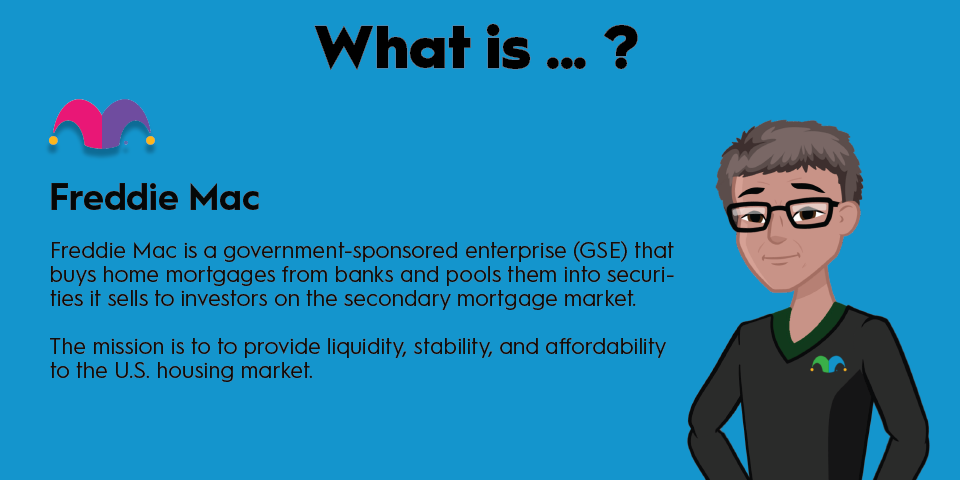
Treasury secretary Hank Paulson recently reminded us that Mac and Mae "are unlike any other financial institutions." And boy, was he right. (Here's a good overview of how Mac and Mae operate.) The two giants could borrow with the strength of the U.S. government, gamble like a drunkard at a craps table, and then convince the world that their superior risk-management skills made them the Berkshire Hathaway (NYSE:BRK-B) of the mortgage market -- able to not only outperform the masses, but also do so with overwhelming size.
Grab your pitchforks
Who's to blame for creating this Frankenstein? "Blame" is a strong word. This isn't Enron. "Who was ignorant enough?" is probably a better way to put it. Many people bear responsibility for the fallout, but a slug of accountability lies with Congress. As Hank Paulson said yesterday, "[Fannie and Freddie] didn't create the ambiguities around this charter or the structural flaws around [the] companies. This was created by Congress a long time ago. It was a system that shouldn't have existed."
The key here being "system that shouldn't have existed." Any time a company can act like a government and a business in the same day, problems are bound to arise. As former Freddie CEO Dick Syron put it, "This company has to answer to shareholders, to our regulator, and to Congress, and those groups often demand completely contradictory things."
The result was a pair of bubbling giants that, while making life easier for the likes of Wells Fargo (NYSE:WFC), Washington Mutual (NYSE:WM), Bank of America (NYSE:BAC), and Annaly Capital (NYSE:NLY), were legally able to become a two-headed monstrosity whose complexity and enormousness no one could justify. More importantly, few wanted to even acknowledge Fannie and Freddie's brewing problems.
See no evil, invest no evil
And that was the problem: So many people -- including investors, politicians, and financial regulators -- believed the hype they were creating. Since Americans hardly save a dime, and the stock market has been a drag for most of the last decade, home prices had to keep going up to keep the economy bubbling. The only way to keep home prices moving was to let Mac and Mae borrow and lend like it was nobody's business. As the New York Times recently reported, "Once, a high-ranking Democrat telephoned [Fannie and Freddie] and screamed at them to purchase more loans from low-income borrowers." Free markets, anyone?
Mortgage-backed securities are backed by (redundantly) mortgages. Mortgages are backed by homeowners and home values. Home values are backed by ... um ... did anyone bother to ask? Few did.
Before you knew it, legions of homeowners, analysts, foreign investors, and politicians alike were stumbling around in a zombielike haze, chanting, "Home prices go up forever. Real estate values never fall. Defaulting on your mortgage is voodoo science. Real estate is a guaranteed success. I shall leverage up to my teeth and buy real estate until the sun burns out."
Even Alan Greenspan appeared largely blind to real estate's vulnerability when he stated in 2004:
[It]would take a large, and historically most unusual, fall in home prices to wipe out a significant part of home equity. Many of those who purchased their residence more than a year ago have equity buffers in their homes adequate to withstand any price decline other than a very deep one.
That was the problem: Those sorts of supposedly unlikely calamities can kill you, especially when you're as large and levered as Mac and Mae. Their lack of regulation and oversight allowed the two to forgo the safety nets that other financial companies would implement.
As long as real estate kept marching along, things would be OK. When real estate eventually turned (as it always does), the two were in quite a precarious spot. As former Fannie CEO Daniel Mudd put it, "You've got the worst housing crisis in U.S. recorded history, and we're the largest housing finance company in the country, so when one goes down, the other goes with it."
Yep. That "risk management" thing is always a doozy.
For related Foolishness: