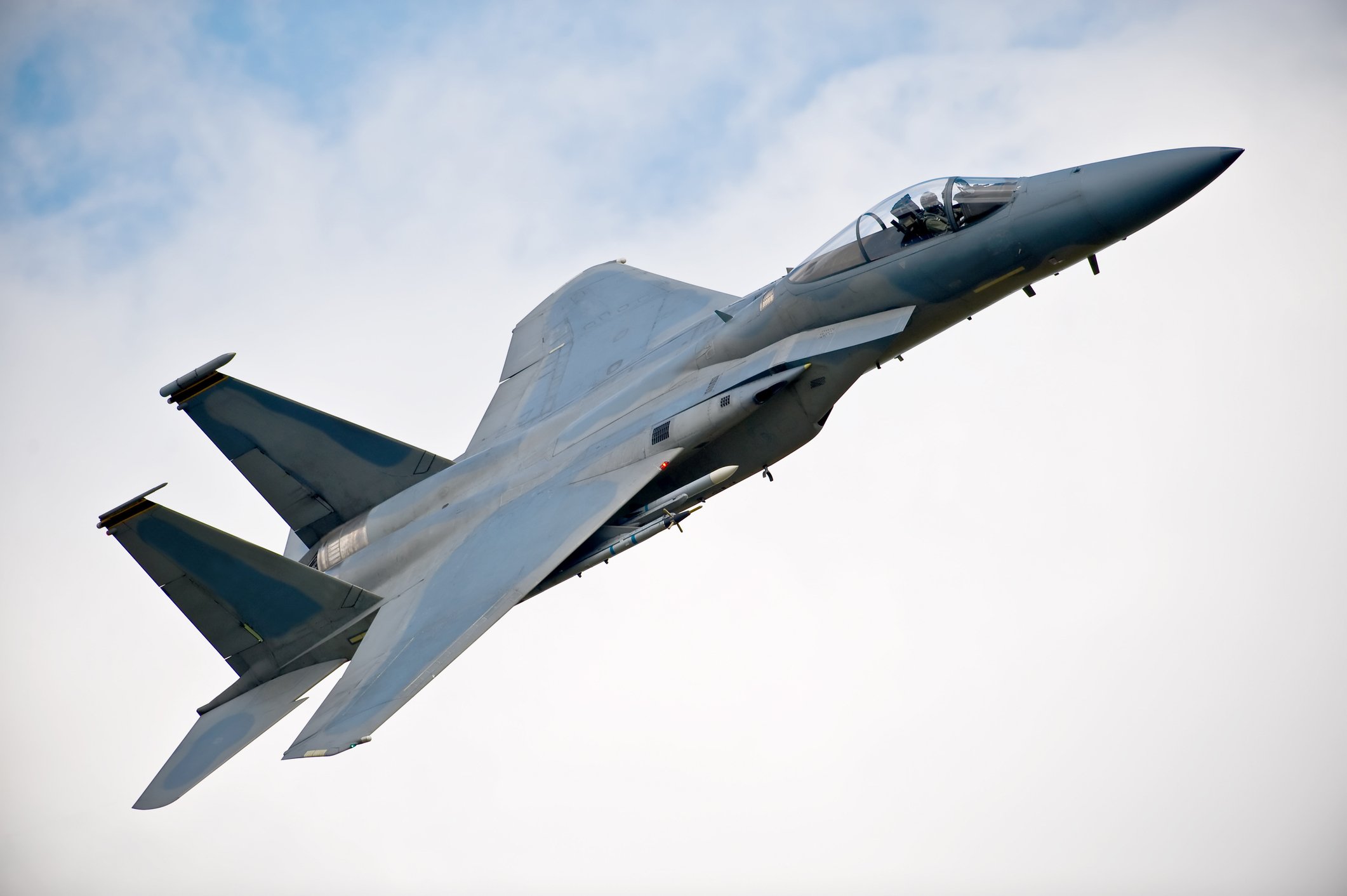
Over the past 52 weeks, shares of aerospace giant Boeing (NYSE:BA) have soared more than 40%, outperforming the S&P 500 by a wide margin. Rival defense contractor Textron (NYSE:TXT) has done even better, rising north of $20 a share. Meanwhile, shareholders of Lockheed Martin (NYSE:LMT) looked on in horror as their stock not only failed to keep pace with the S&P, but actually declined in value. It gets a Fool to wondering -- what are these companies really worth?
If that's the question that's bugging you today, then I've got good news: We're about to get a really good clue as to how these companies should be valued. Because the analysts at Stone Key Partners of Connecticut are hard at work right this moment, fixing a price on Argon ST (NYSE:STST).
Argon gives a glimpse
While never one of the defense industry's leading lights, Argon's work in the field of sensors, surveillance, and reconnaissance systems puts it right in the middle of industry trends toward "smart" warfare. And it seems Argon aims to capitalize on this, having just hired Stone Key to shop the company to its rivals for a buyout.
News reports on the deal suggest buyers are in no short supply, with Boeing, BAE, Raytheon (NYSE:RTN), and L-3 Communications (NYSE:LLL) all named as potentially interested in a deal. Other reports suggest that Goodrich and Lockheed might also be pushing a shopping cart.
As for how much an acquirer might pay for Argon, analysts posit anywhere from seven to 14 times earnings before interest, taxes, depreciation and amortization (EBITDA) for Argon. Applied to the firm's $50.7 million in 2009 EBITDA, that works out to a price of anywhere from $355 million to $710 million.
Homey don't play EBITDA-t
Not thrilled with valuations based on an accounting construct that assumes debt has no cost, that Uncle Sam lacks sticky fingers, and that writedowns of goodwill from ill-considered buying sprees are unavoidable and irrelevant? Me neither. So let's use something a little less debatable for our hypothetical valuing of Boeing, why don't we? Specifically, let's focus on sales.
Argon generated $366 million in sales last year, which when married to the potential prices being bandied about gives us a much easier-to-grasp result: One-to-two times sales. As in, take the annual revenues of any defense contractor, and a fair price to pay for it should be anywhere from one to two times that annual revenues number. Thanks to its stellar technology in a high-growth area, Argon deserves a premium over its larger rivals. However, most estimates place the baseline at one times sales, with a premium potentially bringing Argon's worth significantly higher.
Longtime readers of the Fool will recognize such a valuation as lying right in line with historical norms. It's the price that defense contractors routinely commanded for their shares during the boom years of the Bush administration. But it's also the price that Northrop Grumman's TASC unit fetched when it was sold to General Atlantic and KKR last month.
What it means to investors
In other words, when dealing with savvy, long-term investors, it doesn't seem to matter that we currently have a "Democratic Dove" in the White House. Didn't matter either that the previous administration was staffed with "Chickenhawks." Regardless of the government's political leanings, business is still business, and profitable defense and aerospace companies like Northrop, Argon ... and yes, Boeing, Lockheed, et al., should all be valued closer to one times sales -- and perhaps more.
Which brings us to the point of today's column:
|
Company |
Annual Revenues |
Market Cap |
Potential Profit |
|---|---|---|---|
|
General Dynamics (NYSE:GD) |
$31.9 billion |
$27.2 billion |
17% |
|
Boeing |
$63 billion |
$42.1 billion |
50% |
|
Lockheed Martin |
$43.8 billion |
$28.6 billion |
53% |
|
Textron |
$11.5 billion |
$5.8 billion |
98% |
Foolish takeaway
How much profit is out there? The numbers speak for themselves. If you look at the prices that smart investors are paying for these businesses, and compare them to what the rest of us "dumb investors" are valuing the stocks at (as reflected in their market caps), there's a clear disconnect between price and value. Simply put, these companies are selling for less than their worth -- in some cases, for far less.
But the discount won't last forever, and perhaps, it won't last for long.