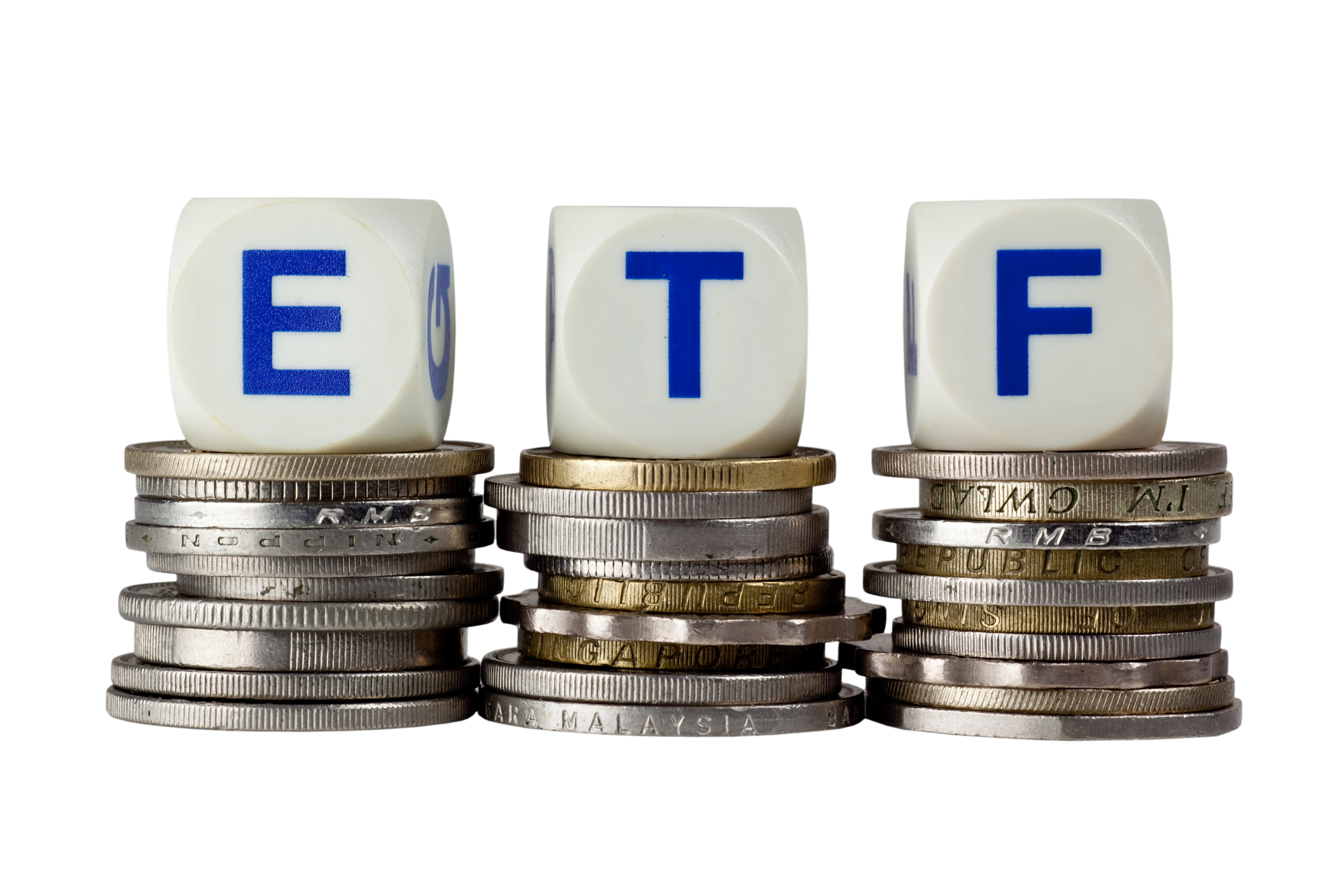
5 top small-cap ETFs for 2026
Even after accounting for its 0.25% expense ratio, the ETF has still delivered tangible outperformance recently. Over the trailing one-year period, the fund returned 48.38%, ahead of the Russell 2000 Index at 44.41%.
Invest better with The Motley Fool. Get stock recommendations, portfolio guidance, and more from The Motley Fool's premium services.

Small-cap exchange-traded funds (ETFs) can be an appealing option for investors looking to potentially outperform the market over the long run. There are many ways investors attempt to beat the market, from picking individual stocks to using leverage. One of the most widely studied approaches, however, has been increasing exposure to smaller companies.
Part of the reasoning comes from the work of economists Eugene Fama and Kenneth French, who developed a three-factor model to explain stock returns. One of those factors was “small minus big,” often shortened to SMB, which reflects the historical tendency for smaller companies to outperform larger ones over long periods.
Proposed explanations vary. Smaller firms may have more room for growth, receive less analyst coverage, or carry additional risk that investors demand compensation for bearing. That said, investing directly in small-cap stocks can be risky. Many smaller companies are unprofitable or thinly traded compared with large-cap blue chips. Dispersion is also much wider, meaning the gap between winners and losers can be substantial.
Using a small-cap ETF helps investors sidestep many of those company-specific risks by spreading exposure across hundreds or even thousands of businesses. Rather than trying to identify the next breakout winner yourself, the ETF captures the broader small-cap segment and the potential size premium it offers.
Here’s what to look for when evaluating small-cap ETFs, along with some of the top small-cap ETF options to buy today.
For a hands-off, low-cost approach to small-cap investing, consider the Vanguard Small-Cap ETF (VB +0.69%). The main draw here is affordability. With a 0.03% expense ratio, a $10,000 investment would incur just about $3 in fee drag per year.
The ETF is also broadly diversified, holding more than 1,312 stocks in May 2026. Like many small-cap strategies, the portfolio has a notable overweight to industrials because many smaller businesses operate in manufacturing, transportation, construction, and related cyclical industries.

That said, some investors may find the small-cap exposure less concentrated than expected. According to Vanguard, the ETF currently has a median market capitalization of about $9.9 billion, which pushes closer to the mid-cap range.
Investors specifically seeking deeper exposure to smaller companies may find VB somewhat diluted despite its low cost and diversification.
The iShares Russell 2000 ETF (IWM +1.53%) tracks one of the most widely followed small-cap benchmarks in the market. The Russell 2000 takes a deliberately broad approach, essentially screening in the investable universe of smaller U.S. companies regardless of profitability or business quality.
That broad inclusion comes with trade-offs. Some companies within the index are unprofitable or highly speculative. That can work well during strong bull markets when risk appetite is high, but it can also amplify downside during economic slowdowns or periods of tighter financial conditions.

Unsurprisingly, the ETF is more volatile than the broader U.S. market. Over the trailing three years, the fund has carried a beta of 1.31. Sector exposure also reflects the nature of the small-cap universe, with overweight positions in industrials, followed by technology, healthcare, and financials.
Investors should also note the higher cost relative to some competitors. The ETF charges a 0.19% expense ratio, substantially higher than the Vanguard alternative.

Historically, that quality screen has translated into stronger returns. Over the trailing 10-year period, SPSM has delivered a 10.96% annualized return, ahead of the iShares Russell 2000 ETF at 9.8%.
Cost is another advantage. The ETF charges the same ultra-low 0.03% expense ratio as Vanguard’s small-cap ETF, making it one of the cheapest ways to access a more quality-focused small-cap strategy.
The Dimensional U.S. Small Cap ETF (DFAS +1.06%) takes a different approach from the Vanguard, State Street, and iShares options because it does not strictly follow a traditional index benchmark.
Instead, the ETF is actively managed using a systematic process. That does not mean frequent trading or conventional discretionary stock picking. Turnover remains low at roughly 6% annually. Rather, the strategy systematically tilts toward smaller, more undervalued, and more profitable companies to improve long-term returns.

So far, the approach has produced encouraging results. Over the trailing five-year period, the ETF has returned 7.58%, ahead of the Russell 2000 Index at 5.75%. The trade-off is cost. Because the fund is actively managed, investors pay a higher 0.26% net expense ratio compared with traditional passive small-cap ETFs.
Risks of investing in small-cap ETFs
Tilting toward small caps can be one of the more academically grounded ways to potentially outperform the broader market over long periods.
However, the strategy is only useful if you can actually stick with it through periods of underperformance. That has not been easy over the past decade. Large-cap technology stocks, especially the "Magnificent Seven," dramatically outpaced many small-cap strategies.
Investors with a dedicated small-cap tilt had to watch some of the market’s biggest winners surge ahead while continuing to trust the long-term research behind the size premium. That requires patience and conviction, especially since factor investing often only proves itself over a full market cycle rather than a year or two.
For that reason, investors considering small-cap ETFs should approach them with a long-term perspective, ideally a decade or more. If you do commit to the strategy, focus less on chasing the best recent returns and more on understanding the methodology behind the small-cap ETF.
For passive funds, pay attention to the underlying index construction and screening rules. For active approaches, evaluate the manager’s process and long-term track record. Above all, keep costs in mind. Fees compound negatively over time, and every additional percentage point paid in expenses reduces your long-term returns.

The Avantis U.S. Small Cap Equity ETF (AVSC +1.47%) is another actively managed small-cap ETF designed to potentially outperform traditional index benchmarks, such as the Russell 2000.
Like Dimensional, Avantis uses a systematic approach rather than traditional discretionary stock picking. In addition to company size, the strategy evaluates factors such as valuation, profitability, and capital investment levels when constructing the portfolio. The ETF also maintains relatively low turnover and strong tax efficiency while still giving managers flexibility beyond the rigid constraints of a static index.
If you are looking for a more selective yet still affordable approach to small-cap investing, the SPDR Portfolio S&P 600 Small Cap ETF (SPSM +1.32%) may stand out.
The ETF tracks the S&P 600 SmallCap Index, which is narrower than the Russell 2000 but also more selective. Rather than simply including the entire small-cap universe, the index applies profitability and earnings consistency requirements. That helps filter out many of the speculative or lower-quality companies often referred to as “junk small caps.”