Investments that can compound your money faster
While compound interest can provide consistent and safe returns for investors, you can get better returns over the long run by investing in other assets. In particular, dividend stocks and real estate investment trusts (REITs) offer consistent cash flow while providing additional upside in capital appreciation.
Dividend stocks
Stocks that pay dividends compound similarly to compound interest if you reinvest the dividends. You can instruct your brokerage to automatically reinvest all dividend payments you receive and buy more shares.
The risk, however, is that the share price will decline by more than the dividends received. A good dividend stock will, over the long run, provide both capital appreciation and a bigger dividend payment.
Real estate investment trusts
A REIT is an entity that holds a portfolio of real estate or real estate loans. Either strategy can produce consistent cash flow, which a REIT is required to pass on to its shareholders. That means shareholders receive sizable distribution checks every year and can reinvest them in the REIT to compound over time.
The power of compound interest
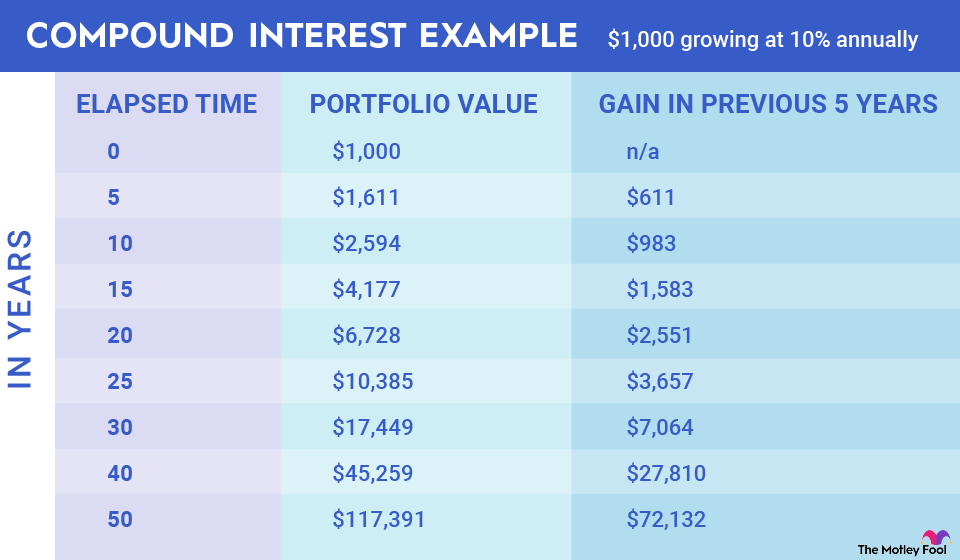
Compound interest can turn meager investments into wealth over time, especially if you start investing as soon as possible and stay invested. The earlier you start investing, the more time you have for interest to compound.
The $1,000 investment in the example above increased by $983 from the fifth year to the 10th year and by $7,064 from year 25 to year 30. The longer you wait to start investing, the older you will be when you reach year 30.
The bottom line on compound interest accounts
Staying invested is key to maximizing the effects of compound interest. If you're constantly moving or withdrawing your money, you lose out on a lot of potential compounding.
There are plenty of good reasons to withdraw your savings, though. You could have reached your savings goal and now need to spend the cash. Or you could be moving from a compound interest account to a riskier investment, like stocks or real estate, which have more attractive return potential.
But heed Charlie Munger's wisdom: "The first rule of compounding is to never interrupt it unnecessarily."