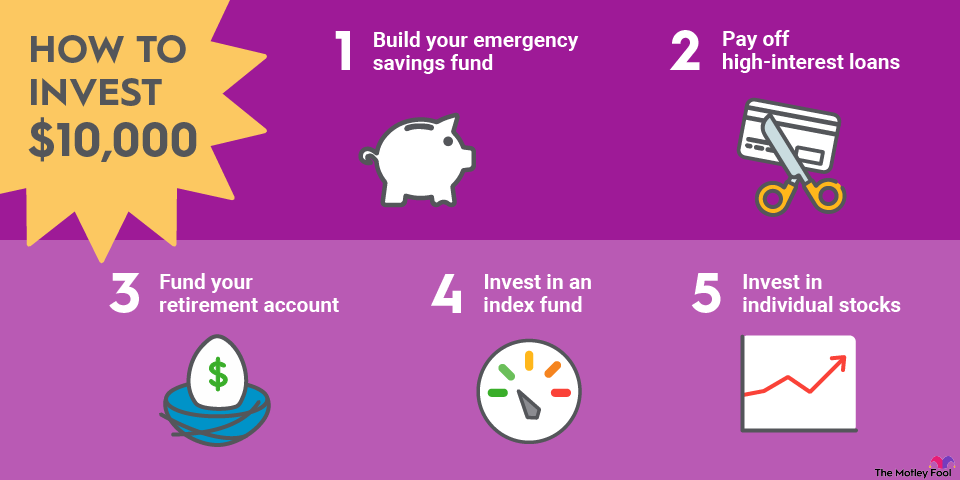
4. Invest in an index fund
Retirement accounts aren't the only places you can invest. Unlike an IRA, a brokerage account has no contribution limit.
Think of it like a savings account, but with the option to invest rather than just collect interest. If you have $10,000, starting a brokerage account may be the ticket -- either with all $10,000 or with what's left over after starting an emergency fund, paying off debt, and/or maximizing an annual retirement account contribution.
Now, the question becomes where to invest that cash. An index fund can be a relatively lower-risk place to start, especially if you're interested in earning money without regular active management.
Companies such as Vanguard offer a range of low-cost index funds for investors looking to passively capture the performance of a market or industry. Options range from funds that invest in bonds (typically lower volatility but lower return) to those that invest in stocks (typically higher volatility but potentially higher returns).
For example, the Vanguard 500 Index Fund (VFIAX -1.11%) tracks the S&P 500 index (500 of the largest publicly traded companies in the U.S.). The fund has a low investment minimum of $3,000. If you will be staying invested for the long term (at least five to 10 years) and you aren't interested in babysitting your money, an index fund in a brokerage account is worth considering.
5. Invest in ETFs
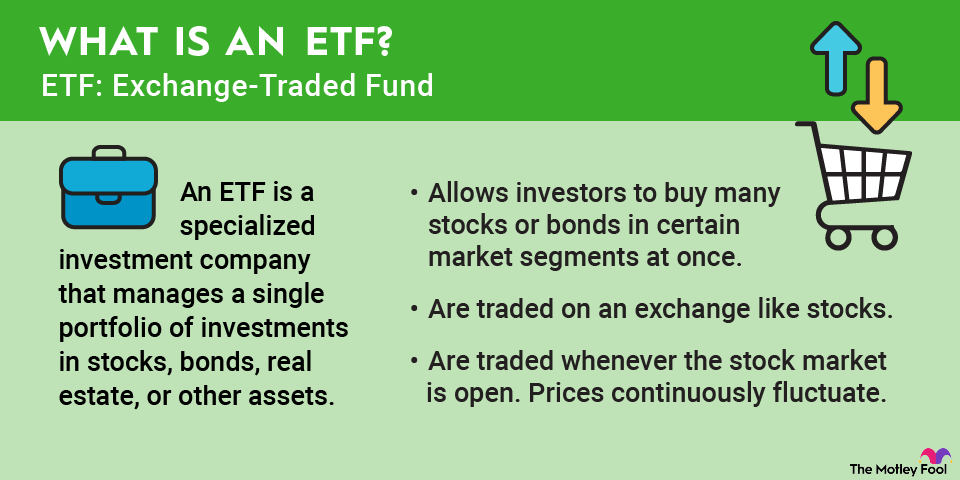
Exchange-traded funds (ETFs) can be a great way for beginners to invest $10,000. They offer the diversification of a mutual fund but trade on the stock market, offering increased liquidity.
Many ETFs track an index, making them similar to an index fund. For example, the Vanguard S&P 500 ETF (VOO +0.28%) also tracks the S&P 500. However, it has a much lower investment minimum of only $1. It also trades on a major stock exchange, enabling you to buy and sell shares through a brokerage account.
Meanwhile, other ETFs focus on a specific sector (e.g., energy or technology), stock type (value, growth, or dividends), investment theme (e.g., space or AI), or asset class (stocks, bonds, or preferred stocks). ETFs enable anyone to build a diversified portfolio with $10,000.
6. Invest in individual stocks
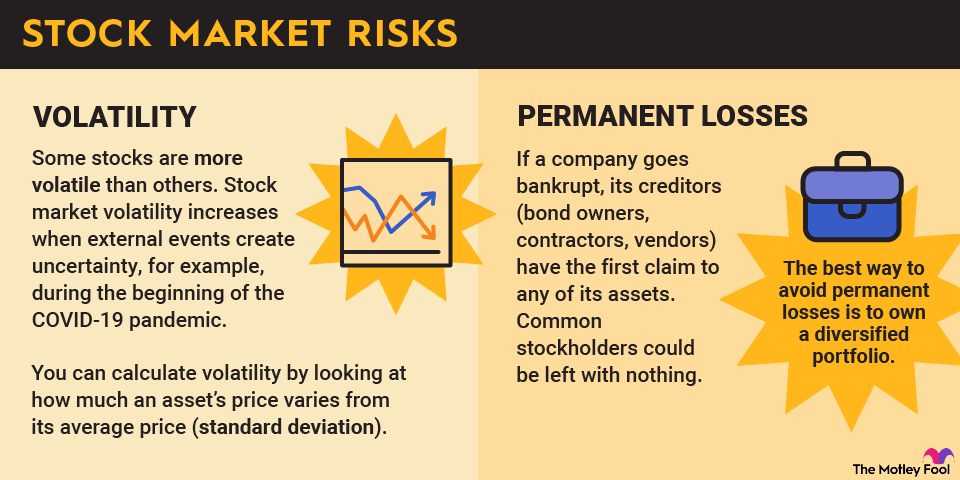
A brokerage account also lets you invest in individual stocks. Stocks represent ownership in a business and have historically been one of the most effective ways to build long-term wealth. However, their values can fluctuate significantly in the short term. Diversification across multiple companies and sectors is important to manage that risk.
Even with $10,000, it's possible to build a well-balanced portfolio of individual stocks. Many brokerages now offer fractional shares, allowing you to invest a set amount rather than buying a full share. This allows you to own shares of high-priced companies without overconcentrating your portfolio in a single position. The Motley Fool's investing philosophy is to build a diversified portfolio of 50 or more stocks held for five or more years.
Not sure which brokerage to use? Motley Fool Money has reviewed the best brokerage accounts so you can compare your options and get started with confidence.