Medical Properties Trust (NYSE:MPW) focuses on owning hospitals secured by NNN leases. It's one of the world's largest hospital owners with 388 properties across nine countries.
The medical REIT has struggled in recent years due to tenant issues and higher interest rates. Its top two tenants went bankrupt. The loss affected the REIT's rental income and its ability to refinance maturing debt. However, it has replaced those tenants with financially stronger ones. As a result, the REIT expects to collect more than $1 billion in annual cash rent by the end of 2026 as new tenants ramp up their rental rates.
Additionally, Medical Properties Trust has sold assets and started refinancing debt, putting its balance sheet on a much firmer foundation. The improvements position the REIT to grow shareholder value in the coming years as its recovery takes hold. It started rebuilding its dividend (which it cut twice in recent years to preserve cash), raising the payout by 12% in late 2025.
How to invest in healthcare REITs
- Open your brokerage app: Log in to your brokerage account where you handle your investments.
- Search for the stock: Enter the ticker or company name into the search bar to bring up the REIT's trading page.
- Decide how many shares to buy: Consider your investment goals and how much of your portfolio you want to allocate to this REIT.
- Select order type: Choose between a market order to buy at the current price or a limit order to specify the maximum price you're willing to pay.
- Submit your order: Confirm the details and submit your buy order.
- Review your purchase: Check your portfolio to ensure your order was filled as expected and adjust your investment strategy accordingly.
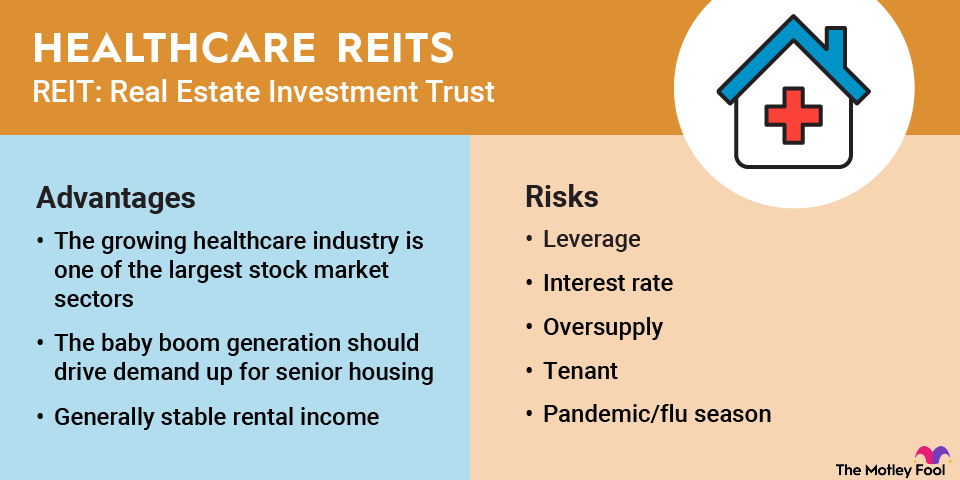
Advantages of investing in healthcare REITs
Healthcare REITs benefit from several notable catalysts, including:
- A massive and growing industry: Healthcare is one of the largest stock market sectors. Healthcare spending in the U.S. is on track to reach a staggering $6.8 trillion by 2030, up from $4.9 trillion in 2023.
- Demographics: The aging of the baby boomer generation is a major driver of rising healthcare real estate demand. The U.S. population of people aged 80 years or older is on track to hit 18 million by 2030, representing a 30% increase from the current level. As a result, companies will need to build more senior housing properties, skilled nursing facilities, and other related real estate to support the aging population.
- Generally stable income: Most mealthcare properties produce stable rental income backed by long-term leases.
Risks of investing in healthcare REITs
While healthcare REITs are less risky than other healthcare stocks due to their generally stable rental income, they're not without risk. Here are some of the risks they face:
- Leverage risk: REITs borrow heavily to acquire and develop real estate. The debt reduces their financial flexibility during economic recessions.
- Interest rate risk: REITs are highly sensitive to changes in interest rates. Higher rates increase their cost of debt, given the sector's use of leverage. In addition, higher interest rates give income-focused investors more options, such as government and corporate bonds, that offer attractive yields, which can weigh on REIT stock prices.
- Oversupply risk: Healthcare REITs must align their development plans with demand. Given the highly specialized nature of most healthcare facilities, REITs need to be careful not to build too much, as excess supply may sit vacant.
- Tenant risk: Healthcare REITs rely on their tenants to pay rent and effectively manage senior living facilities. However, healthcare margins are relatively thin, which can cause operators to run into financial trouble if they're not vigilant. That can affect rental receipts and force a healthcare REIT to find a new tenant for their facility if an operator can't meet its financial obligations.
- Pandemic/flu season risk: Virus outbreaks can significantly affect healthcare REITs, especially those focused on senior housing. It can cause occupancy to decline as more patients check out than are admitted.
Factors to Consider When Investing in Healthcare REITs
Investors should evaluate the following factors when selecting healthcare REITs:
- Property focus: Determine whether the REIT owns the healthcare properties you want in your portfolio.
- Financial health: Examine the company's financial health, including balance sheet strength, cash flow durability, and dividend payout ratio.
- Portfolio strength: Analyze the quality of the REIT's tenants and whether it owns high-quality properties that would appeal to potential replacement tenants should existing ones default on their rent.
Strategies for Investing in Healthcare REITs
Here are some practical tips for investing in healthcare REITs:
- Ensure the REIT has a healthy financial profile to support its dividend and ability to continue expanding its portfolio.
- Consider healthcare REITs capitalizing on demographic trends, such as an aging population (e.g., senior housing, skilled nursing facilities, and hospitals).
- Make sure it partners with financially healthy operating tenants.
A unique way to invest in the healthcare sector
Healthcare REITs will benefit from the healthcare sector's continued growth. These companies should continue raising rents while experiencing healthy occupancy levels as baby boomers age, making it an excellent sector for investors to consider.