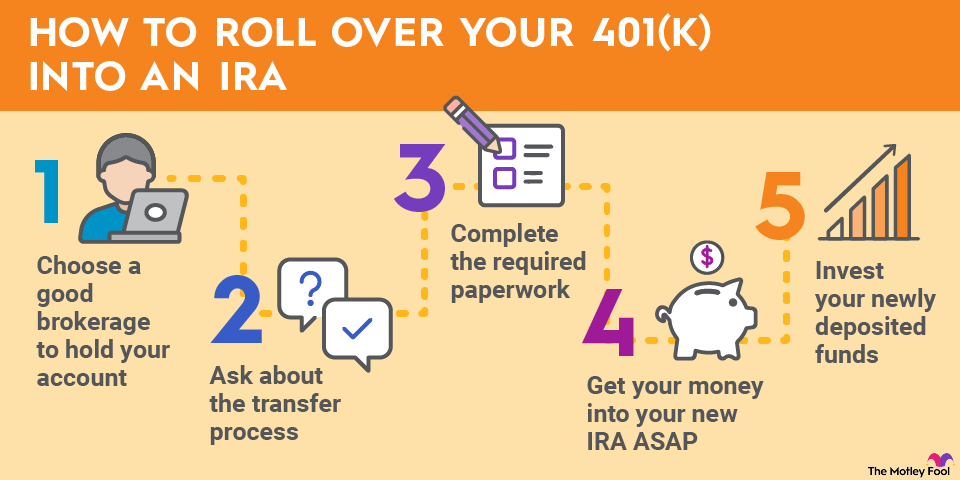
3. Contact your old 401(k) plan administrator to begin the rollover process
To transfer funds from your old 401(k), you'll need to get in touch with your former employer's plan administrator and indicate that you want to roll over your account.
There are two ways for administrators to transfer your funds to your rollover destination: direct and indirect rollover.
Direct rollover: A direct rollover is the easiest way to roll over your 401(k). If this is available to you, it's the best option to avoid any pitfalls that could result in taxes and penalties.
With a direct rollover, you provide the administrator of the prior 401(k) plan with the information for the receiving account for your funds, and they (usually) transfer the funds to the new 401(k) account directly.
You may receive a check made out to your new IRA or 401(k) plan, and it's your responsibility to forward the check to the designated recipient. If you have any questions about where to send the check, you can contact your new 401(k) plan administrator or your IRA brokerage for clarification.
Indirect rollover: The other option is an indirect rollover. Instead of transferring funds directly from your old 401(k) to your rollover destination, the plan administrator sends the funds to you. You are then responsible for depositing the funds from your old 401(k) into your rollover account.
The major downside with indirect rollovers is that 401(k) plan administrators are required to withhold 20% of the taxable funds for the IRS. You'll receive the amount back on your tax return if you complete the rollover, but in the meantime, you will be short by 20% for your new 401(k).
4. Remember the 60-day rule
You have only 60 days from the date that funds are distributed from your old 401(k) to deposit them into your rollover account. This applies to indirect rollovers as well as direct rollovers for which the administrator sends you a check to forward.
If you do not deposit the funds within 60 days, it will be considered a 401(k) distribution and is subject to taxes at your current income tax rate. There's also a 10% penalty for withdrawing funds from your 401(k) if you're younger than 59 1/2. Additionally, after the 60-day window closes, you cannot avoid the flat penalty and taxation by depositing these same funds again into an IRA or 401(k).
5. Invest the funds in your rollover account
Finally, once the funds hit your rollover account, you'll want to invest them. It's very uncommon for 401(k) rollovers to transfer in-kind. Instead, the prior administrator will liquidate your investments and deposit cash into your new 401(k). You'll then need to pick new investments for your retirement account.
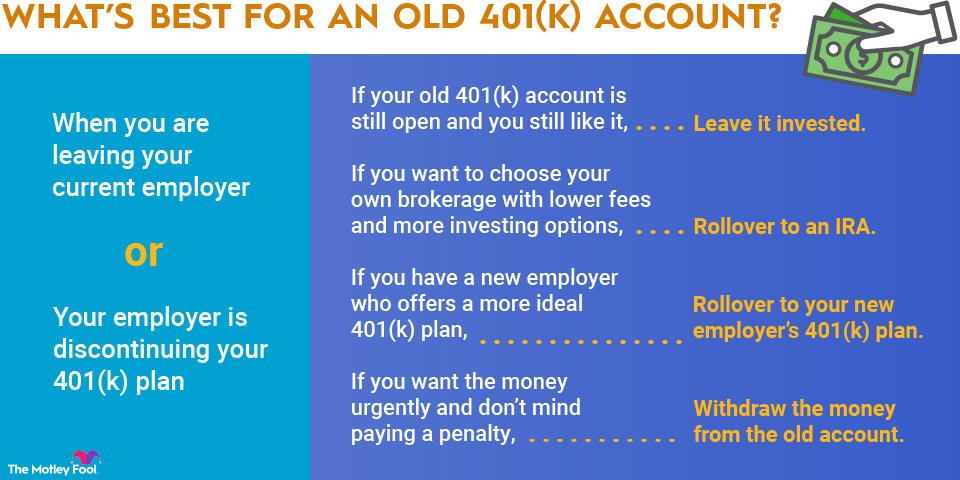
While rolling over an existing 401(k) into an IRA or a new employer's 401(k) is by far the most common, there may be additional options for you to consider if you qualify.