A whopping 61% of U.S. adults say they need to continue working late in life because they don't earn enough from Social Security benefits, according to a 2025 survey from the Nationwide Retirement Institute.
While working longer isn't preferred by many people, it is a smart way to increase your income amid Social Security uncertainty. The downside, however, is that if you continue to work while receiving benefits, your monthly payments could be slashed significantly. Starting in 2026, here's how much you can earn from a job before you begin facing benefit reductions.
How your income affects your benefit amount
First, it's important to note that you'll only be affected by benefit reductions if you haven't yet reached your full retirement age (FRA) -- which is between ages 66 and 67, depending on the year you were born.
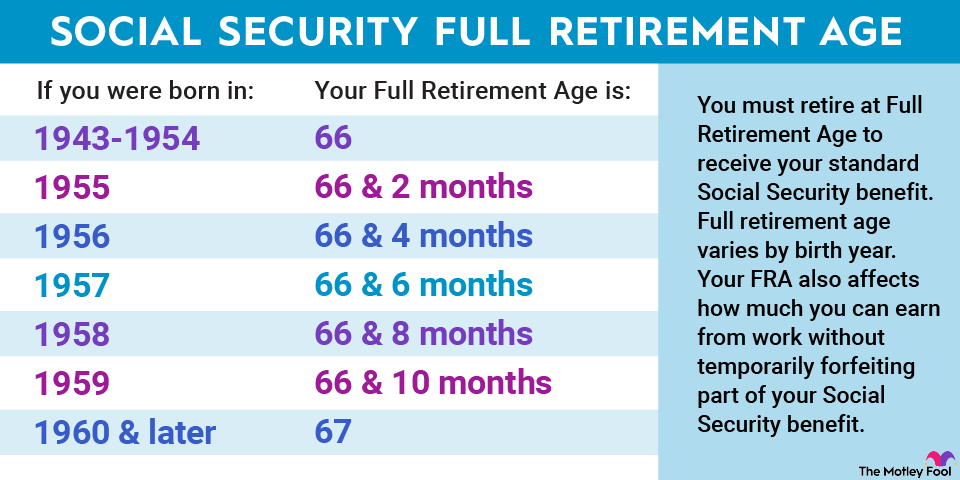
Image source: The Motley Fool.
If you've already reached your FRA, your wages will have no impact on your benefit amount. But if you'll be under your FRA or will reach your FRA in 2026, your income will be subject to the retirement earnings test.
The earnings test is an income cap that determines how much, if any, of your benefit will be withheld due to your wages from a job. The greater your income, the steeper the reductions will be. In some cases, the majority of your benefit could be withheld.
These income limits change from year to year, and the good news is that retirees can expect higher caps in 2026 -- meaning you can earn more before your benefits are withheld.
| 2025 Income Limit | 2026 Income Limit | Benefit Reduction | |
|---|---|---|---|
| If you'll be under FRA in 2026 | $23,400 | $24,480 | $1 reduction for every $2 over the limit |
| If you'll reach FRA in 2026 | $62,160 | $65,160 | $1 reduction for every $3 over the limit |
Data source: Social Security Administration.
For example, say you're 65 years old with an FRA of 67, and you're earning $30,000 per year while working part-time. Because you won't reach your FRA in 2026, you'll be subject to the smaller income limit. In this case, your income exceeds the limit by $5,520, resulting in a yearly benefit reduction of $2,760 -- or $230 per month.
If you will reach your FRA in 2026, only the income leading up to the month you reach that age will count toward the income limit.
The silver lining of benefit reductions
The good news for retirees is that these reductions are only temporary, and you'll receive an adjusted benefit once you reach your FRA. Your new benefit amount will account for all of the money that was withheld due to your income, and you'll receive a higher monthly payment going forward.
In total, then, you should receive the same amount from Social Security regardless of how much was withheld. But it's still wise to ensure you know how much you might face in potential reductions, especially if money is going to be tight in retirement.
If you have no choice but to continue working for financial reasons, your options will likely be limited. But if you choose to work longer to increase your income, and then your benefits are reduced substantially because of your income, it may or may not be worthwhile in the short term -- even if you earn larger checks down the road.
Working in retirement can be a smart way to improve your financial security, but it's essential to understand how your wages will impact your Social Security benefits. By understanding the income limits and estimating your potential benefit reductions in advance, you can ensure you're as prepared as possible.