Retirees have been dealing with a problem with Social Security benefits for many years. It's an issue that many seniors may believe has been fixed.
Sadly, that's not the case. The problem will continue to affect the finances of seniors in 2026 and could leave them with less money to spend.
Here's what seniors need to know so they can better understand what their financial situation will look like next year.

Image source: Getty Images.
A big Social Security problem is impacting a growing number of retirees
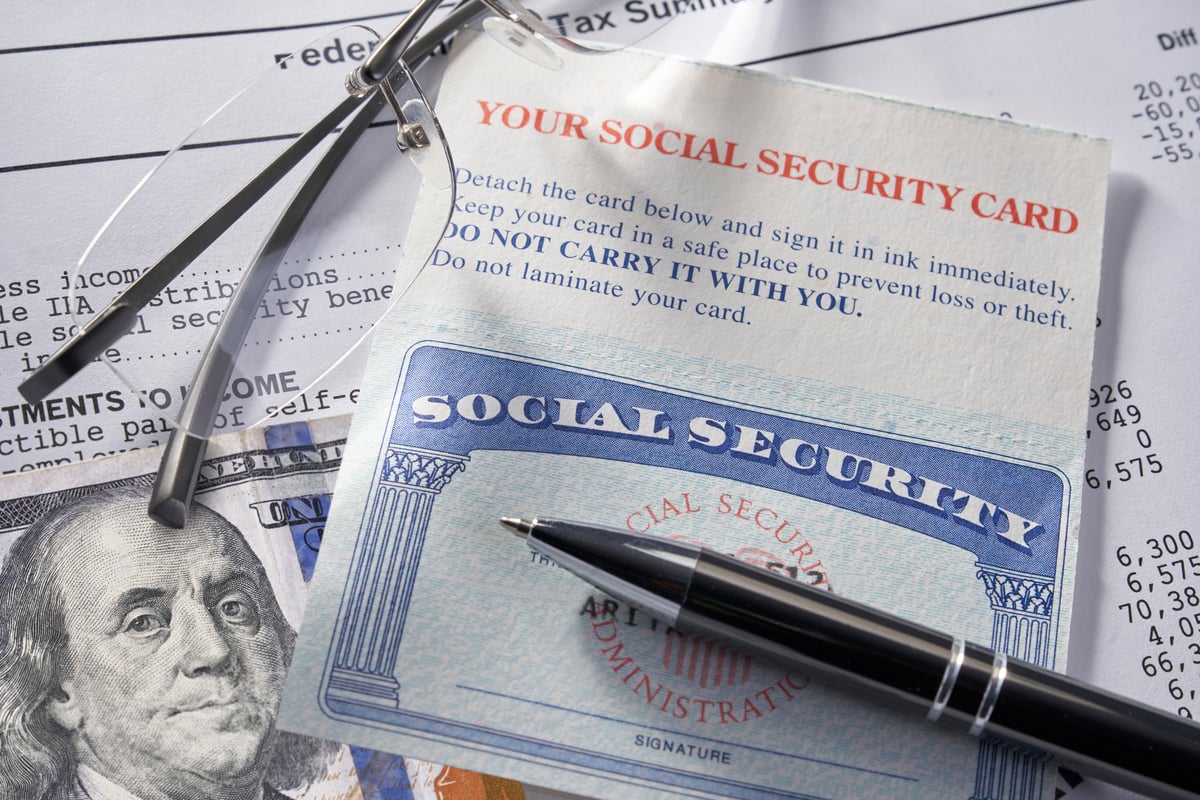
The problem that retirees must deal with in 2026 relates to the rules that determine when the federal government charges taxes on Social Security benefits. Specifically, a growing number of older Americans are getting hit with federal taxes on benefits, even though these taxes were intended only to hit higher earners.
Originally, there was no tax on Social Security benefits at all, but a tax was added due to reforms decades ago when Social Security was facing financial hardship. However, at the time, it was not a broad tax that hit most retirees. It was intended only to impose tax on the Social Security benefits of the wealthy.
When the Senior Citizens League analyzed this issue, the data showed that fewer than 10% of all Social Security beneficiaries paid the tax when it was first instituted. Unfortunately, that number has climbed to around 56% of beneficiaries, which means more than half of all retired seniors will lose part of their Social Security benefits to the IRS.
Given that many people don't really have enough money in their retirement plans and rely more on Social Security than they should, losing a portion of their benefits is bad news. It could leave seniors pulling more out of their 401(k) than they should. This could lead to retirees potentially draining their retirement plans too early, creating serious financial hardship for vulnerable seniors.
What is the cause of this Social Security problem -- and why would seniors assume it was fixed?
The cause of the Social Security problem is obvious. The threshold at which benefits become subject to taxation has not been indexed to inflation. And, it has not been changed since the laws imposing taxes on benefits were passed decades ago.
When the laws on taxation of Social Security were created in the 1980s and 1990s, the rules were that:
- Single tax filers would be taxed on up to 50% of benefits if provisional income was between $25,000 and $34,000, and would be taxed on up to 85% of benefits once income exceeds $34,000.
- Joint tax filers would be taxed on up to 50% of benefits once their provisional income was between $32,000 and $44,000, and would be taxed on up to 85% of benefits once their provisional income exceeded $44,000.
Although provisional income isn't all income (it's half of Social Security, all taxable, and some non-taxable income), these are still low limits. Someone at this income level probably doesn't have millions in their 401(k) and IRA, and can't necessarily afford to give up some of their Social Security checks.
Now, many seniors will assume this problem has been fixed because President Trump promised that he would eliminate taxes on Social Security. And the president has largely declared victory on this issue in repeated statements following the passage of the One Big Beautiful Bill Act. However, President Trump didn't actually change the rules governing the taxation of Social Security benefits.
The thresholds remain the same as they always were, and benefits are still taxed. Seniors simply get an additional standard deduction until 2028, and that standard deduction is not even linked to Social Security benefits in any way.
Since the president has declared victory, it's unlikely there will be further legislation on this issue, at least for the foreseeable future. The problem will still exist in 2026 of a growing number of seniors getting hit with tax on Social Security benefits, and that's likely to be the case for the coming years as well.