One of the main appeals of using retirement accounts like 401(k)s and traditional IRAs is the tax break you receive. With both accounts, your contributions are deducted from your taxable income in the year you make them, reducing your tax bill (traditional IRAs have qualification requirements).
In return for this upfront tax break, the IRS expects to receive its taxes on the back end when you make withdrawals in retirement. For people who need those funds for retirement, withdrawals are guaranteed. However, some people can survive on other means (such as investments) and don't need to make withdrawals from a 401(k) or a traditional IRA.
The former happening means the IRS would never get its cut, and to avoid that, it enacts required minimum distributions (RMDs) that begin the year you turn 73.
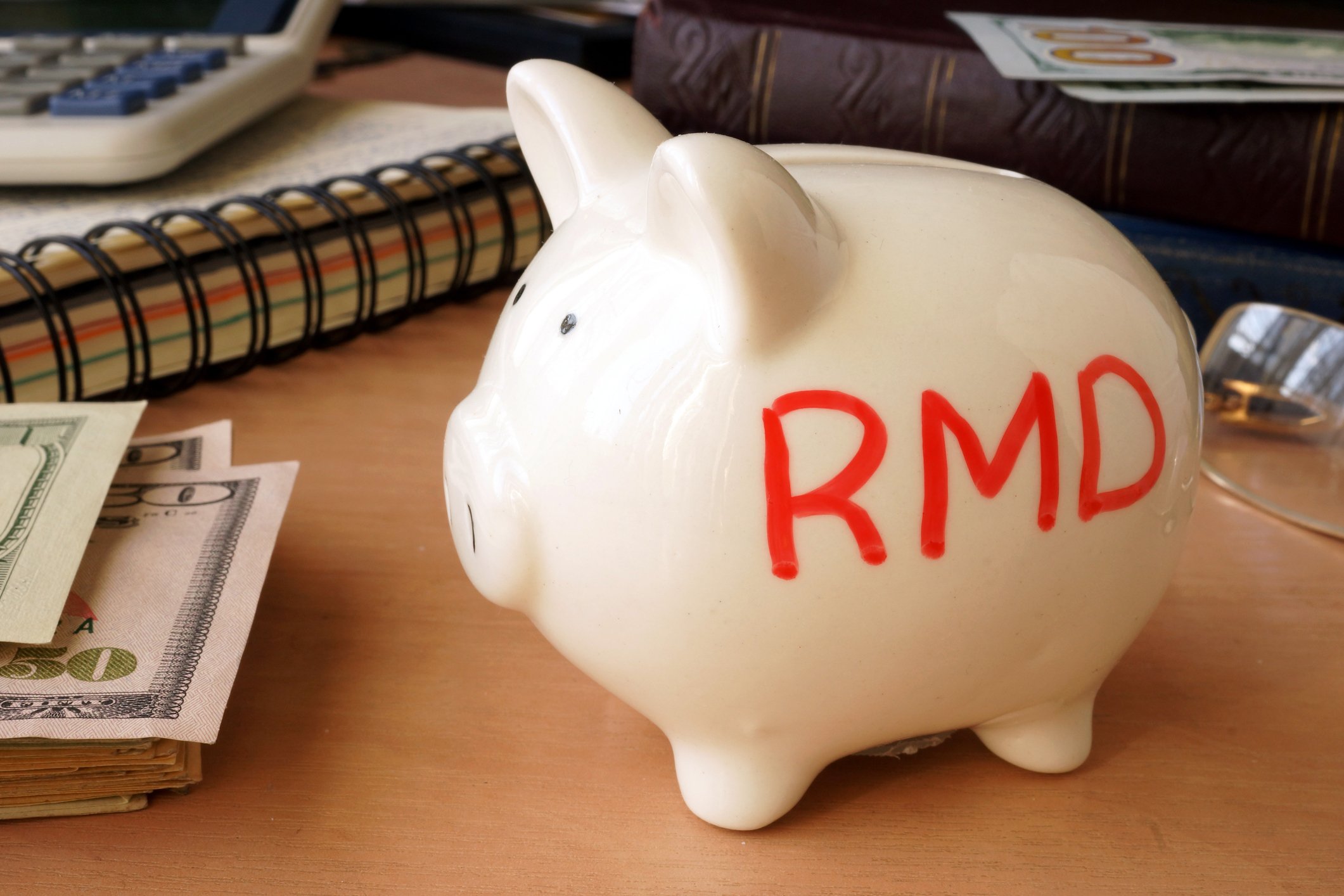
Image source: Getty Images.
How RMDs are calculated
Calculating the exact amount of your RMD is a three-step process.
- Find your account balance at the end of the previous year.
- Look for the life expectancy factor (LEF) corresponding to your age and marital status. Most people will use the Uniform Lifetime table, unless your sole beneficiary is your spouse who is more than 10 years younger than you. In that situation, you'll use the Joint Life and Last Survivor Expectancy table.
- Divide your account value by your LEF.
As an example, let's assume you're using the Uniform Lifetime table and had $500,000 in a retirement account at the end of 2025. Below are RMDs for ages 73 to 80:
| Age | Life Expectancy Factor | RMD On $500,000 |
|---|---|---|
| 73 | 26.5 | $18,868 |
| 74 | 25.5 | $19,608 |
| 75 | 24.6 | $20,325 |
| 76 | 23.7 | $21,097 |
| 77 | 22.9 | $21,834 |
| 78 | 22.0 | $22,727 |
| 79 | 21.1 | $23,697 |
| 80 | 20.2 | $24,752 |
Data source: IRS. RMDs rounded to the nearest dollar.
What happens if you don't take your RMD?
If you don't take your RMD, you'll be subject to a 25% penalty on the amount you failed to withdraw. For example, if you were supposed to withdraw $25,000 and only withdrew $15,000, the penalty would be $2,500 (25% of $10,000).
If you correct the mistake within two years, the penalty can be reduced to 10%. In this example, the penalty would be lowered to $1,000 (10% of $10,000).
In either case, it's best to stay on top of your RMD requirements to avoid unnecessary penalties and keep more money in your pockets during retirement.