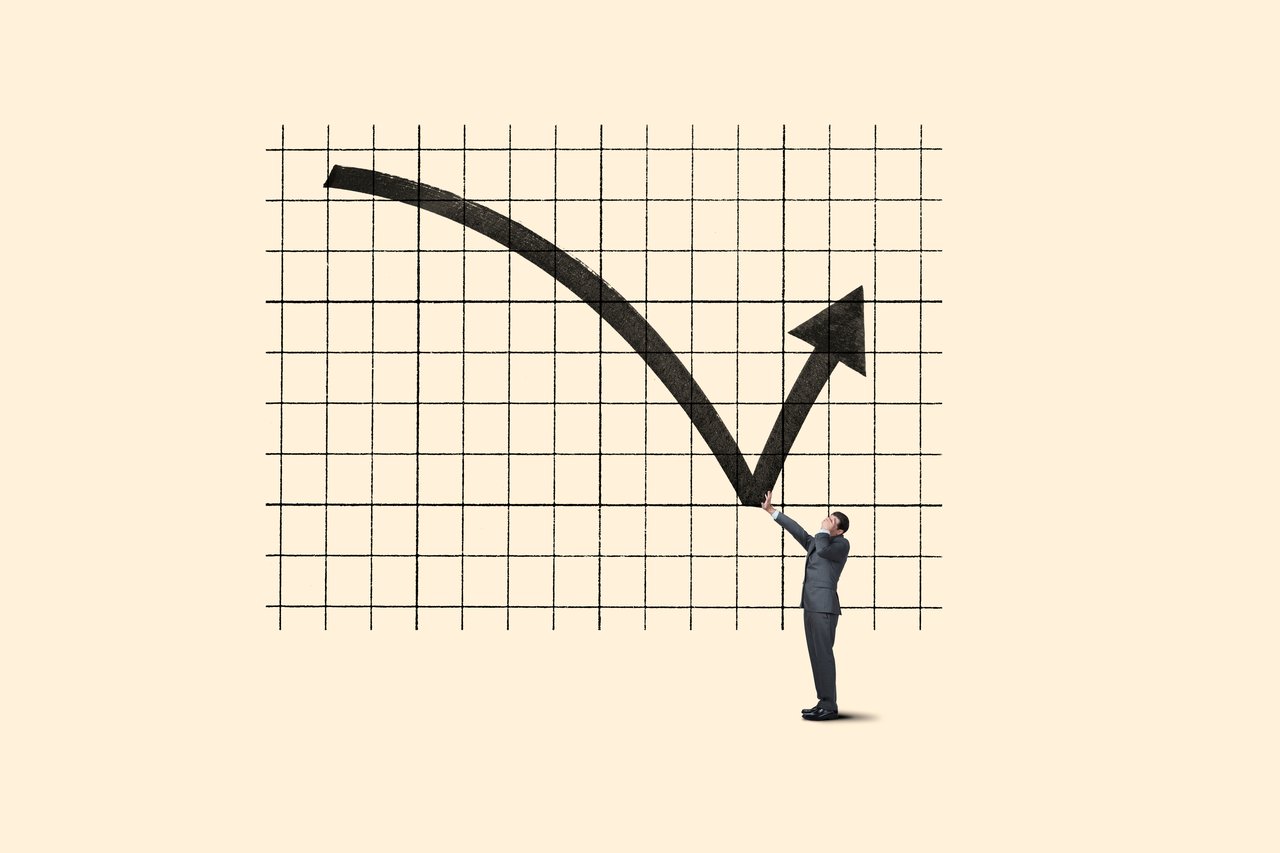
It's notoriously difficult to predict when the next recession -- commonly defined as at least two consecutive quarters of negative economic growth -- will occur. The last official recession in the U.S. occurred in early 2020 during the onset of the COVID-19 pandemic. That was 11 years after the end of the Great Recession, which lasted from 2008 to 2009.
The U.S. economy experienced a "technical" recession in 2022, as its GDP contracted for two consecutive quarters. Yet, the National Bureau of Economic Research (NBER) -- which officially dates U.S. business cycles -- refused to call it a recession. The NBER argued that the downturn, triggered by inflation and soaring interest rates, wasn't deep enough because the labor market was healthy and consumer spending remained robust.

Image source: Getty Images.
Today, elevated Treasury yields, inflation, unresolved trade conflicts, and geopolitical crises could all spark a new recession. The S&P 500 is also trading near its all-time highs, thanks to the buying frenzy in AI stocks, but it looks historically expensive at 33 times earnings. Therefore, investors shouldn't be too surprised if an abrupt recession triggers an ugly market crash.
If you're young and have decades left before your retirement, you shouldn't fret too much about a potential market crash. After all, the S&P 500 has generated an average annual return of 10% ever since its inception in 1957 -- even through 11 official recessions. Therefore, it's still a good time to invest in the Vanguard S&P 500 ETF (VOO -0.53%) and tune out the near-term noise. But if you're approaching your retirement and can't afford to wait for the market to recover, you can take these precautions to insulate your portfolio from a potential recession.
VOO Vanguard S&P 500 ETF
NYSEMKT · As of 4:00 PM ET 10/23/26
Can you really "recession-proof" your portfolio?
It's practically impossible to truly "recession-proof" your portfolio, but you can mitigate that damage with a few strategies.
First, you should trim some of your holdings in higher-growth sectors, like technology, or cyclical ones, like energy, and reinvest that cash into more defensive sectors -- including consumer staples, healthcare, and utilities. Consumer staples giants like Coca-Cola (KO -2.76%), healthcare giants like Pfizer (PFE -1.28%), and utility leaders like Vistra (VST -0.48%) are all better insulated from the macro headwinds than more discretionary sectors. Many of these blue chip stocks will also reward your patience with predictable dividend payments.
Second, you should avoid any unprofitable companies, those with high debt-to-equity ratios, or those that are issuing a lot of new shares to raise fresh cash. These speculative stocks might soar during bull markets, but they're usually the first to crash during bear markets.
Third, you should allocate more of your portfolio to fixed-income investments, such as CDs, T-bills, and investment-grade bonds. These low-risk investments won't generate bigger returns than stocks, but they'll preserve your capital and provide you with a steady stream of income. Keeping enough of your savings in these investments, which are easily converted to cash, ensures you have enough liquidity to enjoy your retirement.
Lastly, you shouldn't simply liquidate all of your stocks. Doing so will permanently cap your gains, reduce your dividend income, and trigger capital gains taxes. Instead, it's smarter to accumulate more shares of your top holdings during a market downturn to take advantage of dollar-cost averaging -- which smooths out your returns by buying more shares at lower prices.
Will the market crash in the second half of 2026?
It's impossible to tell if a recession will strike this year, but stocks are certainly on shaky ground. The market is arguably overvalued, its growth is too dependent on AI stocks, and the Trump Administration's protectionist trade policies could hurt both domestic and international stocks.
However, it's still a matter of when -- not if -- the recession finally happens. If you plan to retire within the next year, it would be prudent to protect your portfolio with these simple strategies.