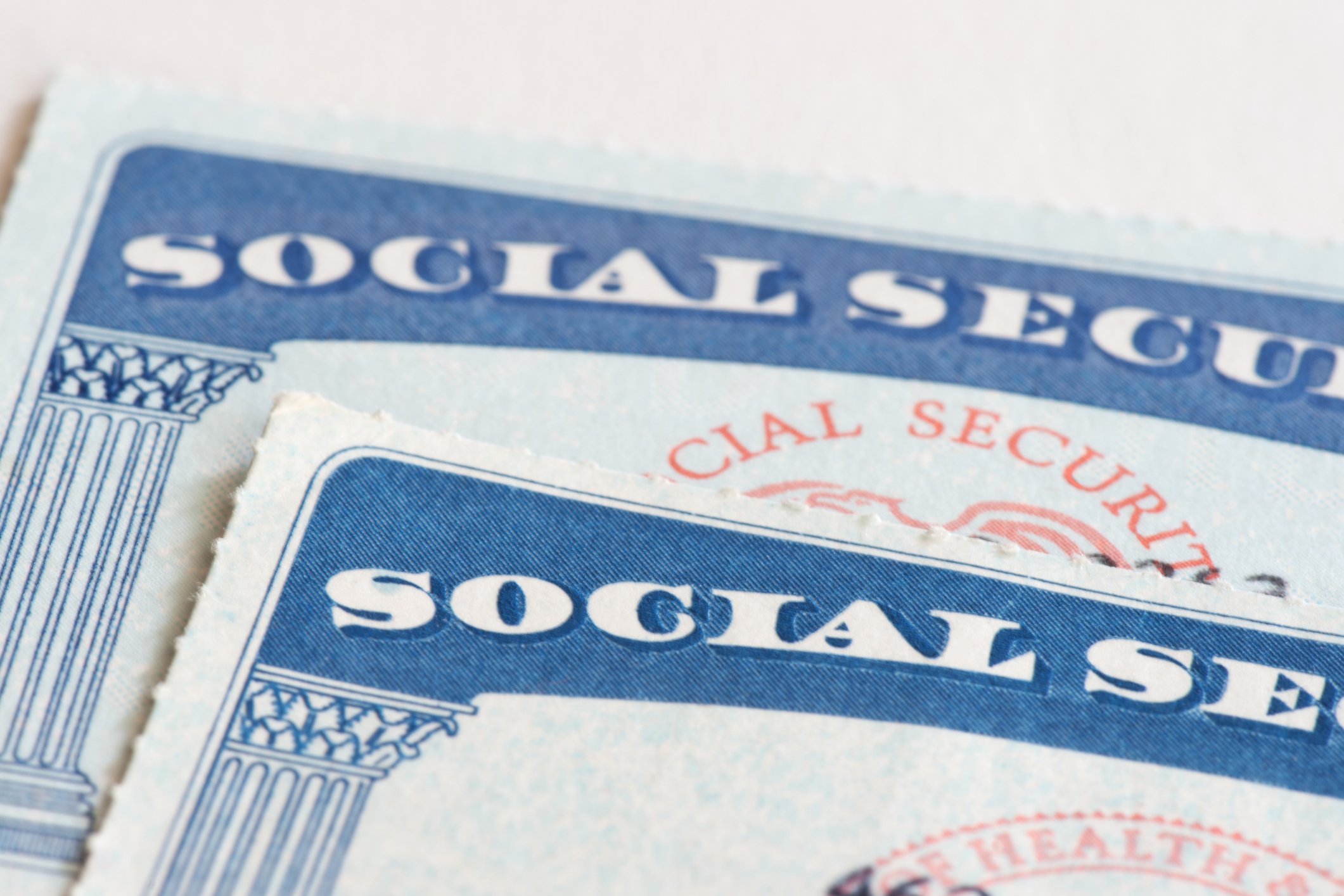
If you're thinking of filing for Social Security at 62, you're not alone. A lot of people choose 62 as their filing age because it's the earliest point to sign up for Social Security. But as you're probably aware, claiming Social Security at 62 comes with a big drawback.
Each month you claim Social Security ahead of your full retirement age results in a permanent cut to your monthly benefits. Full retirement age is 67 for anyone born in 1960 or later. If you file at 62, you're looking at a 30% self-imposed benefit reduction.

Image source: Getty Images.
A cut of that nature may not upend your retirement plans. But there's only one way to find out.
See how a benefit cut affects your budget before filing early
You might assume that if you have savings or income outside of Social Security, you can afford to reduce your benefits and get the money early. But until you actually run the numbers, filing at 62 is a dangerous move.
Before you file, take the time to create an actual budget that accounts for your various costs. First, cover the basics like housing, food, utilities, and healthcare. Then move on to discretionary expenses like cable, dining out, entertainment, and travel.
From there, look through your bank and credit card statements to identify non-recurring expenses. Do you pay an insurance premium once a year? That needs to be accounted for.
Finally, bake in some room for unplanned expenses. If you plan to own a home in retirement, it might need repairs. The same applies if you own a car. Have room in your budget to absorb those unanticipated costs.
Once you've done that, figure out how much non-Social Security income you can reasonably rely on. If you have a $2 million IRA, for example, and you're comfortable with a 4% withdrawal rate, that gives you $80,000 in income. It also shows you how much money Social Security needs to provide you with.
Using this example, let's say you determine that your recurring monthly expenses require $6,000, bringing your baseline income needs to $72,000 per year. Let's also assume you want to budget $10,000 a year for travel, $3,000 for one-time expenses, and $10,000 for emergencies or unplanned costs. That brings your annual income needs to $95,000.
If your IRA can provide you with $80,000, you only need $15,000 a year from Social Security. And if your full retirement age benefit is $2,000 but you file at 62, you'll get $14,000 a month instead. On an annual basis, that's $16,800 -- a little more than the $15,000 you need out of Social Security. So with these numbers, the early claim works.
On the other hand, let's keep your annual spending needs the same but shrink your IRA balance to $1.8 million. In that case, a 4% withdrawal rate gives you $72,000 a year from retirement savings.
If you file for Social Security at 62, reducing your annual benefit from $24,000 to $16,800, you'll end up short of your $95,000 income goal. You'll only be looking at about $89,000. Filing at full retirement age, on the other hand, gives you $24,000 a year to add to your $72,000 from savings, putting you at $96,000 -- right above where you need to be.
Do all of the math ahead of time
The numbers above are obviously a hypothetical. Your retirement income needs may look completely different. Or, they may look similar, but you might have so much retirement savings you can cover your costs without Social Security, making an early claim a virtual non-issue.
The point, though, is that claiming Social Security at 62 has consequences. So it's important to make sure the math supports that decision. Running the numbers ahead of time is the only way to know if you're making a mistake by filing early or not.