While mutual funds often pass capital gains to investors, ETFs tend to be more tax-efficient due to their in-kind creation and redemption processes, which minimize capital gains distributions. Most REIT dividends, in theory, would be considered ordinary income and will be taxed at personal income tax rates, just as if you were to own the property producing the rental income and yield. However, under the Tax Cuts and Jobs Act of 2017, as much as 20% of REIT dividends can qualify for a Section 199A deduction for qualified business income (QBI), effectively reducing the tax rate on those dividends.
Should you consider investing in a PIE?
Here are some things you should always consider when investing in PIEs.
1. Assess your investment goals and risk tolerance
Before investing in a PIE, it is crucial for investors to assess their investment goals and risk tolerance. Understanding what you aim to achieve with your investments and how much risk you are willing to take on will help you choose the most suitable PIEs. For instance, an investor looking for steady income might opt for a PIE focused on bonds, while an investor seeking higher returns might choose a PIE that invests in stocks.
2. Research investment holdings
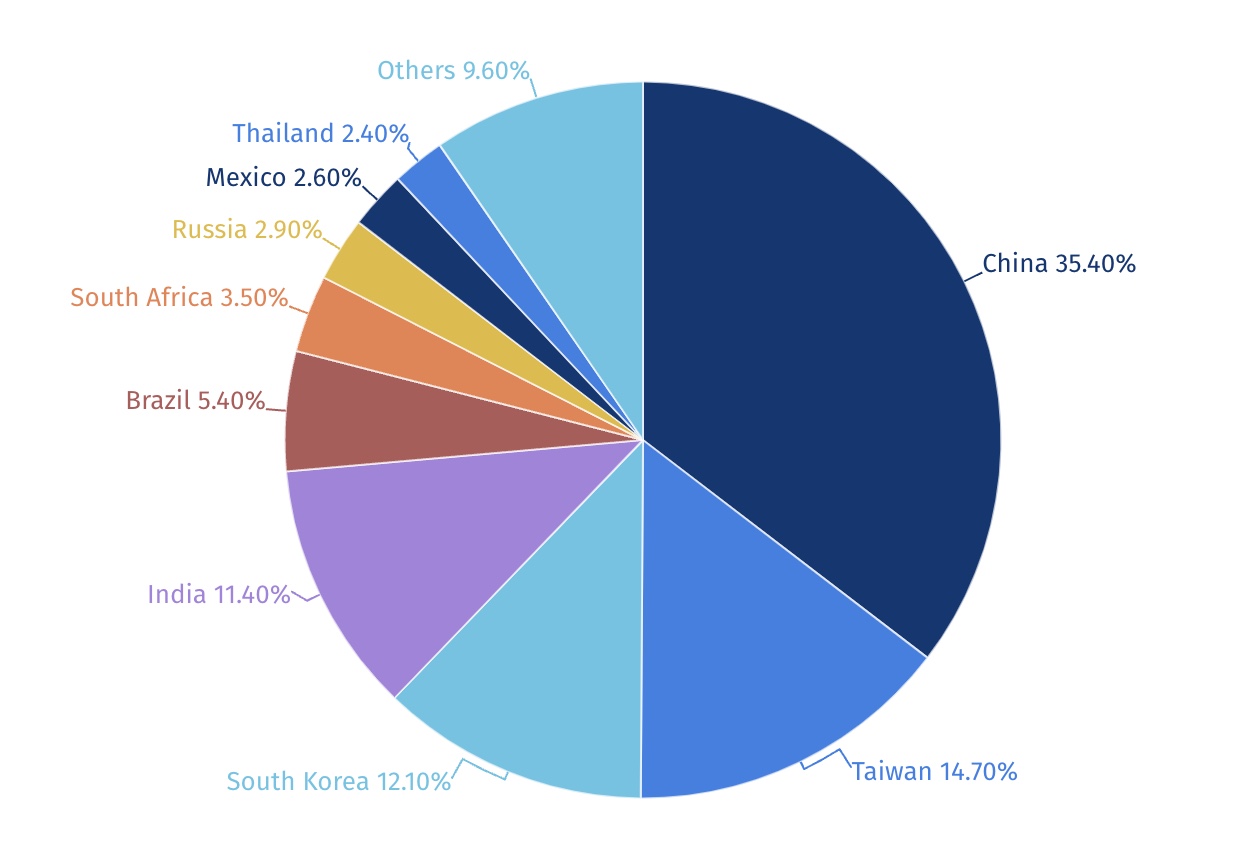
One of the advantages of PIEs is that they can hold multiple types of assets in multiple countries, which is great for diversification. You can get a great picture of the risks and advantages of any PIE based on their portfolio of holdings. Take the iShares MSCI Emerging Markets ETF (EEM -1.89%), for example, which invests across an array of industries such as information technology, finance, and consumer goods in emerging markets. Below is a breakdown of their emerging market exposure by country.
iShares MSCI Emerging Markets ETF global exposure