If the stock market were a predictable beast, we'd all be breezing through our days with pockets full of Wall Street-won cash. With perfect information available to everyone all the time, the true value of every stock would be obvious to every investor. In this world, there would be no room to make a profit in stocks.
However, the truth is far more complex, and for many, that's where the random walk hypothesis strolls into the picture. It's a financial theory with plenty of academic backing, suggesting that the stock market's moves are quite random in nature.
But what does this really mean for your investment portfolio? Let's unpack this interesting hypothesis.
Walking without a map
In simple terms, the random walk hypothesis is an investment theory that argues that stock market prices evolve according to a random walk -- in the statistical sense of that term. For statisticians, a random walk is more than a lovely stroll through the park. It refers to a variable that follows no detectable pattern, and each move made is completely unpredictable. Physicists call it Brownian Motion and use it to describe the movement of molecules in a warm liquid, for example.
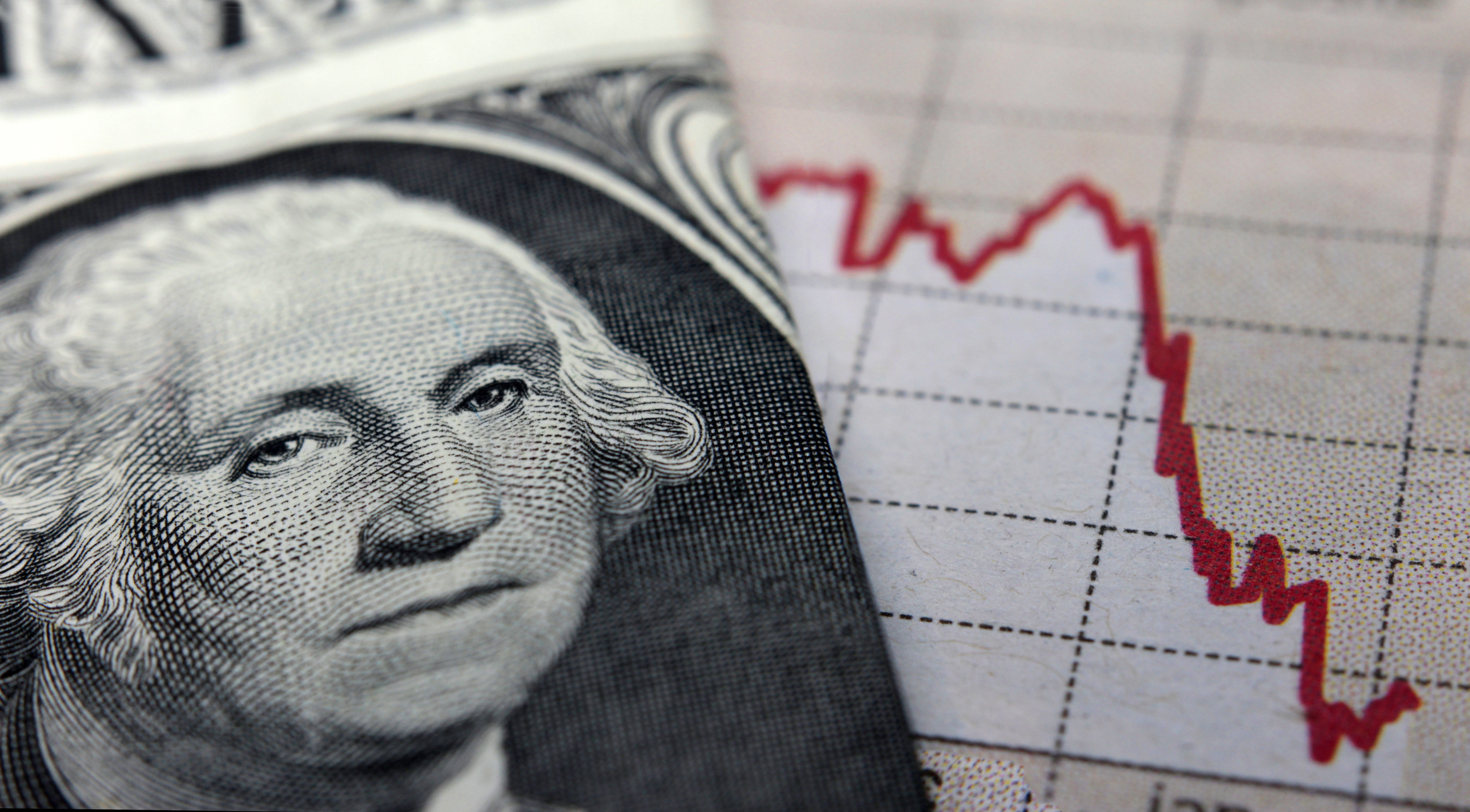
When applied to the stock market, this hypothesis states that the past movement or trend of a stock price cannot be used to predict its future movement. Furthermore, the short-term blips of day-to-day price changes or intraday trends cannot be determined with the help of trading data or stock charts.
In essence, the random walk theory throws a wet blanket over the notion that technical analysis of stock market trends will help investors outpace the market.
We Fools tend to agree.
In reality, a stock will gain or lose value based on how the underlying business is doing, what's going on in the American and global economy, and other game-changing factors. The stock chart can only show data in the rear-view mirror and has no power to generate future price moves.
Tracing the Random Walk Hypothesis back to its origins, we uncover its inception in the 1900 doctoral thesis of French mathematician Louis Bachelier. His groundbreaking work, "The Theory of Speculation," was a cornerstone in financial theory, yet it simmered quietly in academic circles for years. The hypothesis might have remained in the shadows had it not been for the midcentury contributions of scholars like Jules Regnault, whose 1863 book, "Random Chance Calculation and Stock Philosophy," provided early empirical observations of market volatility, a concept integral to the Random Walk Hypothesis.
As the hypothesis meandered through the decades, it was further molded by Paul Cootner in the 1960s, whose work amplified the discussion around the unpredictability of stock prices. Yet, it was Burton Gordon Malkiel who ushered the Random Walk Hypothesis onto Wall Street with his 1970s bestseller, A Random Walk Down Wall Street.
Stock Market Volatility
Why does the random walk hypothesis matter?
So why should you care about the random walk hypothesis? You should care because it challenges the very foundation of active trading strategies.
If stock movements are indeed random, then it makes the case for a buy-and-hold strategy and presents a strong argument for the efficiency of markets. It shows that stocks always incorporate and reflect all information available -- with the caveat that important information changes over time, and every investor sees the data pool in a different light. Hence, trading stocks becomes a tug-of-war between buyers and sellers with different interpretations of the same basic data, often aiming for different results. And past results have no bearing on future moves.
The implications here are huge: If true, it would mean that beating the market consistently over the long term is more about luck than skill. This hypothesis is the bedrock of the efficient market hypothesis and has inspired index fund investing, which aims to mirror market returns rather than outsmart them.
Related investing topics
Let's take a random walk down Wall Street
After the theory's academic journey through the 20th century, Burton Malkiel's book, A Random Walk Down Wall Street, became the clarion call that finally resonated with individual investors. While Malkiel's book did more than just analyze the theory, it proposed that embracing market randomness could be advantageous for the average investor.
Vanguard founder and index fund pioneer John Bogle, influenced by these ideas, found the key to unlocking the potential of the markets for everyday people. He saw in Malkiel’s work not just a confirmation of the unpredictable nature of the markets but a strategic treasure map for long-term investment success. Bogle's vision materialized in the form of the first index fund for individual investors. This was not just a product but a paradigm shift since the index fund didn't attempt to chase the market's erratic movements but instead moved in tandem with them, capturing the essence of the entire market's long-term growth.
The legacy of Malkiel's insights, as interpreted by Bogle, lies not just in the methodology but in the message it sent to investors worldwide: In the long run, aligning with the market's broad performance could be more fruitful than trying to outguess the next turn, every day. Vanguard's index funds epitomized this, proving that sometimes, the best way to deal with randomness is to embrace it wholeheartedly.
About the Author