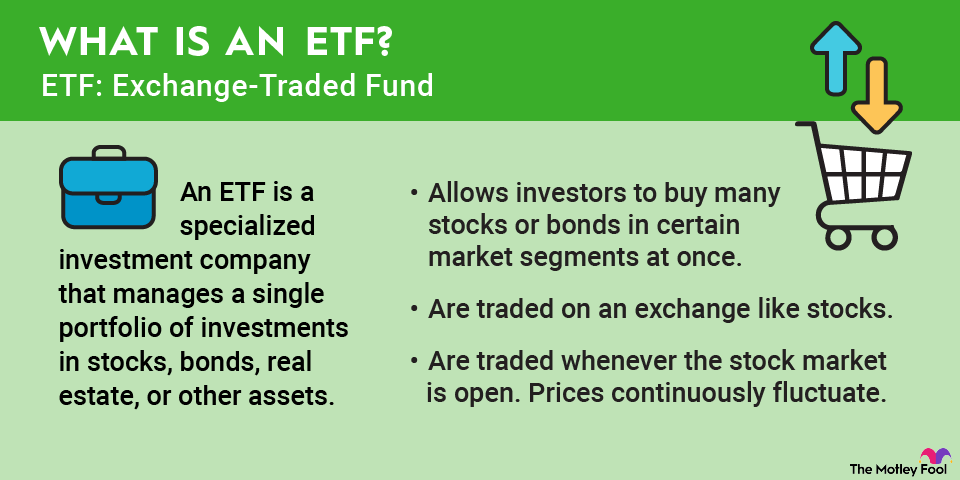
The choice between Vanguard High Dividend Yield ETF (VYM -0.59%) and iShares Core High Dividend ETF (HDV -0.41%) involves balancing the lower cost and broader diversification of the Vanguard fund against the higher current yield of the iShares fund.
Both exchange-traded funds (ETFs) focus on domestic stocks with attractive payouts, yet they employ very different screening methods. While the iShares fund targets a concentrated group of sustainable high-yielders, VYM tracks an index of U.S. companies forecasted to have above-average dividend yields, producing a much broader dividend portfolio than HDV.
Snapshot (cost & size)
| Metric | HDV | VYM |
|---|---|---|
| Issuer | iShares | Vanguard |
| Expense ratio | 0.08% | 0.04% |
| 1-yr return (as of June 1, 2026) | 19.40% | 26.50% |
| Dividend yield | 2.88% | 2.24% |
| Beta | 0.37 | 0.73 |
| AUM | $13.57 billion | $94.63 billion |
Beta measures price volatility relative to the S&P 500; beta is calculated from five-year monthly returns. The 1-yr return represents total return over the trailing 12 months. Dividend yield is the trailing-12-month distribution yield.
The Vanguard fund is more affordable with a 0.04% expense ratio, which is cheaper than the 0.08% charged by the iShares fund. Investors seeking higher immediate income may prefer HDV, which recently offered a distribution yield of 2.90%.
Performance & risk comparison
| Metric | HDV | VYM |
|---|---|---|
| Max drawdown (5 yr) | -15.40% | -15.80% |
| Growth of $1,000 over 5 years (total return) | $1,625 | $1,718 |
What's inside
Vanguard High Dividend Yield ETF (VYM -0.59%) provides broad exposure to more than 600 holdings, leaning into financial services at 20.00%, technology at 18.00%, and healthcare at 12.00%. Its largest positions include Broadcom (NASDAQ:AVGO) at 8.03%, JPMorgan Chase (NYSE:JPM) at 3.35%, and Exxon Mobil (NYSE:XOM) at 2.72%. Launched in 2006, the fund has a trailing-12-month dividend of $3.51 per share and currently manages $94.6 billion in assets under management (AUM).
In contrast, iShares Core High Dividend ETF (HDV -0.41%) is significantly more concentrated with 74 holdings. It emphasizes consumer defensive at 24.00%, energy at 22.00%, and healthcare at 16.00%. Its top holdings include Exxon Mobil (NYSE:XOM) at 8.06%, Chevron (NYSE:CVX) at 6.16%, and Abbvie (NYSE:ABBV) at 5.69%. Launched in 2011, this fund has paid $0.79 per share over the trailing 12 months and oversees $13.3 billion in assets under management (AUM).
For more guidance on ETF investing, check out the full guide at this link.
What this means for investors
A higher dividend yield may seem advantageous, but with VYM and HDV, it is important to consider how that income is produced. The Vanguard High Dividend Yield ETF provides broad exposure to U.S. companies with above-average yields, while the iShares Core High Dividend ETF focuses on a smaller group of high-yield stocks that meet quality and financial health criteria.
VYM’s primary advantage is its broad diversification. By holding hundreds of dividend-paying companies across various sectors, it reduces reliance on any single income-heavy segment and serves well as a core dividend allocation. In contrast, HDV is more selective, concentrating on traditional income sectors such as energy, consumer staples, and health care. This narrower focus contributes to HDV’s higher recent yield but also increases its exposure to specific sectors and companies.
For investors, the decision involves more than seeking higher immediate income. VYM provides lower-cost access to a broad range of dividend-paying stocks, appealing to investors who value diversification more. HDV offers a more concentrated high-dividend strategy, delivering a higher current payout supported by quality screens, but with increased reliance on fewer holdings and sector concentrations.