Image source: The Motley Fool.
DATE
Tuesday, April 28, 2026 at 9 a.m. ET
CALL PARTICIPANTS
- President and Chief Executive Officer — John L. Stauch
- Chief Financial Officer — Nick Brazos
TAKEAWAYS
- Sales -- $1 billion, up 3%, with growth driven by Flow (+2%) and modest increases in Water Solutions and Pool (+1% each).
- Adjusted Operating Income -- $259 million, an increase of 7%, supported by $21 million in net productivity gains and cost actions.
- Return on Sales (ROS) -- 25%, a 100 basis-point expansion, marking the sixteenth consecutive quarter of margin improvement.
- Adjusted EPS -- $1.22, representing a 10%-11% increase, with double-digit year-over-year growth explicitly cited.
- Flow Segment -- Sales rose 11% to $258 million (benefiting from the HydroStop acquisition), with segment income up 22% and ROS expanding 210 basis points to 23.7%.
- Water Solutions Segment -- Sales declined 1% to $391 million due to a commercial services exit, while the pro channel grew "mid teens" and segment income increased 6% to $100 million; ROS rose 160 basis points to 25.5%.
- Pool Segment -- Sales grew 1% to $387 million; segment income up 2% to $128 million, with ROS increasing 30 basis points to approximately 33%.
- Return on Invested Capital (ROIC) -- Improved to 16.6% from 15.8% the prior year, reflecting a strengthened capital position.
- Net Debt Leverage Ratio -- 1.7x, supporting ongoing investments and capital return.
- Share Repurchases -- $200 million bought back during the quarter, with management signaling intent for further repurchases in 2026 (not included in current EPS guidance).
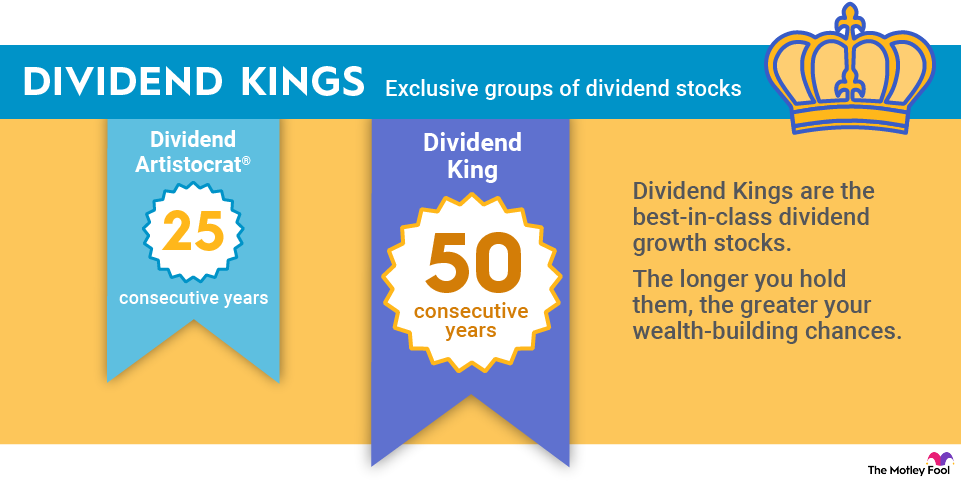
- Dividend Growth -- Dividend increased by 8%, marking the fiftieth consecutive annual increase and reaffirming Dividend King status.
- Adjusted EPS Guidance (2026) -- Narrowed to $5.30-$5.40, with the midpoint ($5.35) raised by $0.05, representing about 9% year-over-year growth.
- Total Sales Guidance (2026) -- Expected to rise 2%-4%, with Flow segment up mid-to-high single digits, Water Solutions approximately flat (core sales up low single digits), and Pool up 1%-3%.
- Adjusted Operating Income Guidance (2026) -- Targeting a 6%-8% increase, with ROS to expand by 100 basis points to approximately 26%.
- Pentair Business System Productivity -- Projected to deliver $70 million, net of investment for 2026.
- Q2 Sales Guidance -- Sales expected to increase 1%; Flow up high single digits (including ~$10 million from HydroStop at ~30% ROS), Water Solutions down low single digits, Pool flat to up 1%.
- Q2 Adjusted EPS Guidance -- $1.47 to $1.50, implying 6%-8% year-over-year growth.
- Pricing Trend -- Low single-digit price increases expected for the full year, with volume approximately flat overall.
- Tariffs and Inflation -- Net neutral effect forecasted for 2026 after offsetting with pricing actions; tariffs expected to be "slightly more than currently expected," but "priced appropriately to the channel."
Need a quote from a Motley Fool analyst? Email [email protected]
RISKS
- John L. Stauch stated, "We are watching housing and related markets closely along with the pace of nonresidential investment," referencing ongoing macroeconomic uncertainty affecting demand visibility.
- Potential for reduced Pool segment shipments in Q2 and Q3, as "sell-through levels for this Pool season, which concludes in 2026, may require our channel partners to reduce purchases in Q2 and Q3 to reflect 2026 pool industry growth," leading to a wider revenue and income scenario range incorporated into guidance.
- Guidance reflects "a little bit lower outlook" for Europe and Asia due to supply chain challenges connected to events in the Middle East, with North America mix partially offsetting the lower-margin international mix.
- Management cited, "we are not seeing overall volume growth across the pool industry as a whole," and referenced "de-featuring in the aftermarket or push-outs from consumer discretionary," indicating demand softness within key segments.
SUMMARY
The company set new post-spin records for first-quarter sales, adjusted operating income, and consecutive margin expansion, while emphasizing continued productivity and strategic cost actions. Core sales growth was delivered despite softness in residential markets, aided by Flow segment strength and pro channel gains within Water Solutions. Management highlighted progress in capital allocation through $200 million in share repurchases and the achievement of Dividend King status. Full-year 2026 guidance was updated, reflecting a narrowed and slightly raised adjusted EPS range, explicit segment growth targets, and a net neutral inflation and tariff impact. The outlook incorporates cautious commentary on the Pool segment regarding channel destocking and persistent global supply chain disruptions affecting international sales mix.
- Management confirmed ongoing digital and AI investment initiatives, including commercial building and data center infrastructure opportunities, as part of long-term strategic growth efforts.
- John L. Stauch said, "We expect to continue to expand the TAM with the automation capabilities that we deliver and are expecting to deliver in the future," referencing new product innovation to support segment opportunities in Pool and Water Solutions.
- No further headwinds from 80/20 walk-away revenue actions are anticipated for the year, with QuadOne (top customer) relationships cited as contributing positively to growth initiatives.
- Nick Brazos clarified that "none of those additional share repurchases are reflected in our current 2026 full-year guide," indicating that future buyback activity may represent further upside not included in the provided outlook.
INDUSTRY GLOSSARY
- QuadOne: Designation for Pentair plc's top-tier customers purchasing the most strategic, prioritized products, used as a focus segment for margin and growth initiatives.
- 80/20: Portfolio strategy emphasizing focus on the top 20% of customers or products that drive 80% of profit, with intentional reductions in less profitable segments ("walk-away" revenue).
- TAM (Total Addressable Market): The total revenue opportunity available from all potential buyers of a firm's products or services within a defined market.
Full Conference Call Transcript
John L. Stauch, our President and Chief Executive Officer, and Nick Brazos, our Chief Financial Officer. On today's call, we will provide details on our first quarter performance as outlined in this morning's press release. On the Pentair plc Investor Relations website, you can find our earnings release and slide deck which is intended to supplement our prepared remarks during today's call and provide a reconciliation of differences between GAAP and non-GAAP financial measures that we will reference. The non-GAAP financial measures provided should not be considered as a substitute for or superior to the measures of financial performance prepared in accordance with GAAP.
They are included as additional clarifying items to aid investors in further understanding the company's performance and the impact these items and events have on the financial results. Before we begin, let me remind you that during our presentation today, we will make forward-looking statements which are predictions, projections, or other statements about future events. Listeners are cautioned that these statements are subject to certain risks and uncertainties, many of which are difficult to predict and generally beyond the control of Pentair plc. These risks and uncertainties can cause actual results to differ materially from our current expectations. We advise listeners to carefully review the risk factors in our most recent Form 10-Q and Form 10-Ks.
Please note that during the presentation today, we will be making references to record financial results. These references reflect the time period post the nVent separation in 2018, unless noted otherwise. Following our prepared remarks, we will open the call up for questions. Please limit your questions to two and reenter the queue to allow everyone an opportunity to participate. I will now turn the call over to John.
John L. Stauch: Let us start with our long-term strategy on slide four. At our Investor Day in March, we outlined our long-term strategy, growth initiatives, favorable secular trends, innovation pipeline, and our financial growth outlook. We are very excited about the next level of growth and profitability that we expect will build upon the structural improvements we have made to our operating model over the last several years to drive more durable financial performance during economic cycles. We believe our balanced water portfolio is uniquely positioned to drive superior value across our Move, Improve, and Enjoy water segments. We are focused on accelerating growth through innovation and elite customer experiences.
We expect to continue to see strong execution drive profitable growth and accelerate operational efficiencies over the next few years. And our strong cash flow and ROIC provide flexibility for enhanced value creation. Let us move to the executive summary on slide five. In Q1, we delivered another solid quarter supported by disciplined execution and continued focus on our Pentair plc Business System tools. Sales increased 3%. Adjusted operating income increased 7%. ROS expanded by 100 basis points to 25%, our sixteenth consecutive quarter of margin expansion, and adjusted EPS rose double digits to $1.22. Flow delivered strong financial and operational performance in the quarter, and Water Solutions and Pool also contributed to core sales growth and margin expansion.
Our strategy, supported by our Pentair plc Business System tools, including transformation processes inclusive of 80/20, continues to guide our execution across the company. At our Investor Day in March, we introduced new long-term financial targets through 2028. Reflecting our confidence in our value creation model, we repurchased $200 million of outstanding shares in the open market during Q1. We also achieved Dividend King status, marking our fiftieth consecutive year of higher dividends. We continue to see a range of underlying demand drivers, including aging U.S. infrastructure, population growth in Sunbelt states, evolving customer demand in beverage, premiumization in food service with an emphasis on reliability and serviceability, and growth in the aftermarket.
We also had several key wins in Q1: sales growth with our top customers, QuadOne, strong productivity driven by the Pentair plc Business System, a solid innovation pipeline across our segments, and continued execution against our strategy. Our 2026 outlook reflects our current expectations and continued confidence in our business model and the resilience of our end markets. We plan to continue investing in digital and AI-enabled solutions, strengthening our portfolio, and returning capital to shareholders while advancing our efforts in sustainable water technologies. For full year 2026, we narrowed our adjusted EPS guidance range to $5.30 to $5.40, raising the low end by $0.05 versus our initial outlook. At the midpoint, this represents 9% growth year over year.
We remain focused as we navigate macro volatility and the broader operating environment. We are watching housing and related markets closely along with the pace of nonresidential investment, and we remain focused on prudent pricing, productivity, and execution to manage through the environment. Now let us turn to our strategic actions driving performance on slide six. We are off to a solid start in 2026, with Q1 performance supported by targeted growth initiatives, strong productivity execution, and disciplined delivery across our water portfolio. Q1 also reflected strong segment income and return on sales performance across all three segments. We delivered 3% sales growth despite ongoing headwinds in the residential markets, driven by execution on our growth initiatives.
We are investing in technology and capabilities to expand Pool's total addressable market, accelerate growth in commercial buildings and data center infrastructure, and support U.S. water infrastructure needs. We have also strengthened digital capabilities and leveraged our global technology and R&D resources across the portfolio. And we continue to maintain a strong balance sheet and a disciplined capital deployment strategy. Before I turn it over to Nick, I want to thank Jerome Pedretti for 20 years of outstanding leadership. Throughout his career, Jerome has delivered superior results in all of the roles he has held. He has taken on difficult challenges, and has always optimized the businesses and engaged employees in the Pentair plc way.
I and the ELT will personally miss his passionate debates with me and, of course, his enthusiasm for French and Italian food and wines. I also want to thank Shelly Hubbard for over three years of superior and professional engagement with shareholders. She has elevated our investor outreach and discussions, and we wish her well in her new role. Shelly has accepted a new position as VP of Investor Relations for a much larger company that helps her to further her development and broaden her experience. An announcement regarding Shelly will be issued by her new company in the near future. Shelly will continue with Pentair plc through May 1.
We are using this opportunity to rotate Jeff Thompson, the CFO of our Flow and Water Solutions segments, into the Investor Relations role, and we are confident that Jeff will learn quickly and be able to share unique insights regarding our PBS playbook and business positioning. With that, I will turn it over to Nick to walk through our financial results and our 2026 guidance in more detail. Nick?
Nick Brazos: Thank you, John, and good morning, everyone. Let us start on slide seven. We delivered a first-quarter record for Pentair plc sales and adjusted operating income. Additionally, we enhanced return on sales across each of our three segments. In Q1, we reported sales of over $1 billion, up 3%; adjusted operating income of $259 million, up 7%; return on sales of 25%, an increase of 100 basis points; and adjusted earnings per share of $1.22, up 10% to 11% year over year. Core sales were up, driven by a 2% increase in Flow, and a 1% increase in both Water Solutions and Pool.
Moving to adjusted operating income, driven by our long-term plan, our Pentair plc Business System, and our targeted ongoing structural cost improvement actions, we achieved 100 basis points of margin expansion in Q1. Price offset inflation and we delivered net productivity of $21 million while continuing to invest in targeted growth initiatives and our innovation pipeline. Please turn to slide eight. Flow sales were up 11% year over year to $258 million, driven by our HydroStop acquisition, growth in QuadOne accounts, a focus on growing flow control equipment and aftermarket sales for the aging U.S. water infrastructure, data centers, and other commercial buildings.
As a reminder, last quarter, we announced that we have strategically combined our Flow residential business and our residential business within Water Solutions beginning Q1 2026. Additionally, our long-range plan as communicated in Q1 aims to deliver mid single-digit growth within our Flow segment, with margin and income expansion driven by structural cost improvements and a focus on growth within our QuadOne customers. Segment income grew 22% and return on sales expanded 210 basis points to 23.7%, driven by strong sales growth, which, as mentioned, includes the acquisition of HydroStop in Q3 last year. Finally, price offset inflation. Please turn to slide nine.
In Q1, Water Solutions sales declined 1% to $391 million, driven primarily by our targeted portfolio shaping and exit of the commercial services business in 2025. The pro channel grew mid teens during the quarter, reflecting gains supported by our decision to combine the residential Flow and residential Water Solutions businesses to both drive structural cost improvements and bring targeted QuadOne channel synergies to our pro channel. We continue to drive ongoing structural cost improvements and our make/buy strategies and tools. We have made progress on our structural cost initiatives but remain early in those actions and opportunities as we continue to deploy our Pentair plc Business System.
Segment income grew 6% to $100 million and return on sales increased 160 basis points to 25.5%, primarily driven by our Pentair plc Business System productivity savings. Price contribution offset inflation. Please turn to slide 10. In Q1, Pool sales increased 1% to $387 million. Segment income was $128 million, up 2%. Return on sales increased 30 basis points to approximately 33%. Price offset inflation, and our Pentair plc Business System drove continued net productivity.
We are focused on investing in this business through a regional focus with targeted programs in sales and marketing, field service and customer service support, new product innovation, and breakthrough innovation that we believe should grow the total addressable market for Pool and elevate our brand and offerings. Please turn to slide 11. Our balance sheet remains strong, and our return on invested capital increased to 16.6% from 15.8% a year ago, reflecting our strong commitment to ongoing shareholder value creation. Our net debt leverage ratio is 1.7x. In Q1, we repurchased $200 million of shares, reflecting continued confidence in our strategy, our Pentair plc Business System, and our team's ability to execute.
We have also increased our dividend by 8% and achieved our fiftieth consecutive year of dividend increases, making Pentair plc a Dividend King while maintaining our Dividend Aristocrat status. Our significant annual free cash flow generation has enabled us to strategically deploy capital via dividends, debt paydown, share repurchases, and strategic acquisitions. We plan to remain disciplined with our capital and have flexibility to strategically allocate capital to areas with the highest shareholder return, and we are planning additional share repurchases during 2026 reflecting our confidence in our ability to execute on our long-term strategy. Let us turn to our outlook on slide 12.
For the full year, we are increasing our adjusted EPS guidance midpoint to approximately $5.35, with a range of $5.30 to $5.40, which is up roughly 8% to 10% year over year. Also, for the full year, we expect total Pentair plc sales in 2026 to be up approximately 2% to 4%. We expect Flow sales to be up approximately mid single digits to high single digits and in line with our long-term plan. Water Solutions sales are expected to be approximately flat with core sales up approximately low single digits and in line with our long-term plan. Pool sales are expected to increase approximately 1% to 3% in 2026.
While we are encouraged by sell-through dynamics in Q1, sell-through levels for this Pool season, which concludes in 2026, may require our channel partners to reduce purchases in Q2 and Q3 to reflect 2026 pool industry growth. Therefore, we evaluated a wider range of Pool revenue and income scenarios and have incorporated these assumptions and scenarios into our guidance update. We expect total Pentair plc adjusted operating income to increase approximately 6% to 8%, with return on sales expansion of roughly 100 basis points to approximately 26%. We expect price to offset inflation and expect another strong year of Pentair plc Business System-driven productivity of approximately $70 million, net of investment.
We continue to evaluate and respond to ongoing changes in U.S. tariffs, inflation, and global supply chain impacts. We expect tariffs and inflation to have a net neutral impact over the year. For the second quarter, we expect sales to be up approximately 1%. We expect Flow sales to be up approximately high single digits, which includes our HydroStop acquisition, approximately $10 million of sales in the quarter at approximately 30% return on sales. We anticipate Water Solution sales to be down approximately low single digits, with core sales approximately flat, reflecting the commercial services sale in Q2 2025. Commercial Water core sales are expected to be up approximately low single digits.
Pool sales are expected to be approximately flat to up 1%, reflecting our active management of sell-in and sell-out dynamics. We expect second-quarter adjusted operating income to increase approximately 5% to 6%. We are also introducing adjusted EPS guidance for the second quarter of approximately $1.47 to $1.50, up roughly 6% to 8%. We are pleased with our performance in Q1. We have a balanced water portfolio and a global team with a proven track record of delivering our near and long-term strategies, and we are focused on delivering our new near and long-term plans for our shareholders, our customers, and our employees.
I would like to now turn the call over to the Operator for Q&A, after which John will have a few closing remarks. Operator, please open the line for questions. Thank you.
Operator: We will now begin the question and answer session. To ask a question, you may press star and then one on your touchtone phones. If you are using a speakerphone, we ask that you please pick up the handset prior to pressing the keys. To withdraw your questions, you may press star and two. We ask that you please limit yourselves to one question and a single follow-up. Please note that you may rejoin the question queue if you have additional questions. Again, that is star and then one. At this time, we will pause momentarily to assemble the roster. Our first question today comes from Nathan Hardie Jones from Stifel. Please go ahead with your question.
Analyst: Good morning. This is Adam Farley on for Nathan. My first question is on the full-year sales guidance. Price and FX tailwinds are likely to fade through the year as we lap last year's increases from price, with volume likely needing to make up a shortfall. Could you talk about areas of the business that are expected to see volume improvement as the year progresses?
John L. Stauch: Yes, thanks for your question. We are seeing green shoots in our Commercial Water, Water Solutions business. We are seeing volume improvements across pockets of our Flow business as well. Several of our innovation and targeted market efforts in those businesses are reading out. As communicated at our Investor Day back in Q1, we are working to drive both margin expansion and volume expansion in our Commercial Water Solutions business and, of course, in our Pool business as well, with margin expansion from our Flow and Water Quality Management businesses coming more from our structural cost efforts.
Analyst: Thank you for that. Following up on that margin expansion, could you talk about where you are seeing better-than-expected productivity, and then maybe talk about the impact of volume on that productivity?
John L. Stauch: We saw productivity gains that exceeded our plan across the enterprise, but specifically within our Commercial Water Solutions and within our Water Quality Management business. So our Water Solutions business in aggregate drove incremental net productivity. I would just remind everyone that our transformation and productivity numbers are net of investment. Driving that margin expansion within Commercial Water and incremental volume beyond what we had originally planned for Q1 really read out nicely in the Water Solutions business. In pockets of our Flow business, we saw additional productivity gains, and then, of course, about 30 basis points of margin improvement in Pool.
We really drove nice productivity gains within the Water Solutions business in Q1, and we are working to continue to drive that through the year.
Operator: Our next question comes from Steve Volcan from Jefferies. Please go ahead with your question.
Analyst: Hi. Good morning, guys. Thank you for taking my question.
John L. Stauch: Good morning.
Analyst: I wanted to focus a little on the Pool segment. I was a little surprised by the decline there given what we hear from other players in the channel doing some strong early buys. Maybe that is consistent. Do you think they overdid it on the early buys? You had some commentary about some potential destocking as the year progresses. Can you tease that out a little for us?
John L. Stauch: We have two components to our growth. First, we measure and manage sell-through growth, which is equal to what you see as the channel distribution measurements, so generally aligned with those external pulse points that you are hearing. But we also have ship-in growth or sell-in growth that goes into the channel. As we shared at the end of Q4 and into our full-year guidance, we think that the current sell-through activity does not warrant a big pickup in the sell-in activity. We are expecting that to work its way out through Q2 and Q3 with lower shipments in for us. Ultimately, that sets up better long-term dynamics as we head into the 2027 pool season.
Analyst: Great, that is helpful. Any comment on any trends you are seeing relative to market share in the Pool business?
John L. Stauch: We feel good about our positions. We have high-end premium pools, mid-range pools and remodeling, and then the aftermarket. The challenge is that we are not seeing overall volume growth across the pool industry as a whole. You are seeing some de-featuring in the aftermarket or push-outs from consumer discretionary. Overall, we are looking at overall volume flat on the sell-through side, and we are taking a lot of activity and energy to achieve that. Ultimately, we are hanging in there in what I would say is a flattish market.
Operator: Our next question comes from Nigel Edward Coe from Wolfe Research. Please go ahead with your question.
Nigel Edward Coe: Thanks. Good morning. Maybe we could just touch on the tariffs. We have seen some changes in the regime during the quarter. I think you said $30 million of impact this year. How might that be changing?
John L. Stauch: Tariffs are net-net slightly more than we currently expected, not by a lot, Nigel, but a little bit more. We feel that we have pushed that price appropriately to the channel. I also want to mention that there are tariffs and then what I would call incremental inflation. We are seeing some commodities running hotter right now than they were initially expected. Again, we have taken price actions to neutralize those in our full-year guidance forecast. A little bit of benefit from one side of the tariffs, and then the incremental 232 tariffs offset it, and then we priced effectively on both of those elements.
Nick Brazos: And just to add to that, Nigel, about 70% of our sales go through two-step distribution. When we think about the year, we are planning for price to offset those inflationary headwinds, whether they be tariff, commodity, or otherwise.
Nigel Edward Coe: Great. How is price looking over the balance of the year from here?
Nick Brazos: For the aggregate of Pentair plc, we are looking at low single-digit price across the year and expect approximately flat volume across the full year.
Operator: Our next question comes from Patrick Baumann from J.P. Morgan. Please go ahead with your question.
Analyst: Hi. Good morning. A quick question on your assumptions related to sell-through for the Pool markets this year. What is embedded in your new guide of 1% to 3% for the segment for industry sell-through?
John L. Stauch: Flattish on volume plus price. That is generally what we have assumed in this current outlook.
Analyst: Flattish volume sell-through for the industry?
John L. Stauch: Plus price. Yes, so you have price plus flattish volume for sell-through.
Analyst: Understood. And then a quick one on the capital allocation side. Did I hear you say you are going to do additional share repurchases this year? Is that embedded in guidance, or did I mishear that?
Nick Brazos: It is a great question. We expect to generate strong free cash flow in 2026, like we have historically, about 100% of our net income converting into free cash flow. We did buy $200 million worth of shares in Q1, and we expect to remain active in 2026 in share repurchases, but none of those additional share repurchases are reflected in our current 2026 full-year guide.
Operator: Our next question comes from Deane Michael Dray from RBC Capital Markets. Please go ahead with your question.
Deane Michael Dray: Thank you. Good morning, everyone, and also want to wish Shelly all the best. A question that came up at the Analyst Day: you said there are still lots of opportunities in 80/20. Part of it is walk-away revenues, walking away from some customers, shutting down some product lines. Have we seen any of the net effects on those revenues going away? What is baked into the guide there? Thank you.
John L. Stauch: We saw some of that in 2025, Deane, and we are actively managing our QuadOne customers, which are our top-tier customers buying our top-tier products, and ultimately seeing really good results across the portfolio. There are temptations of the businesses to go back after some of those twenties, as we mentioned, and we are pushing back on those efforts unless it is a misplaced twenty—maybe they were a big customer regionally and we looked at them nationally. That would be the only reason that we would go back to that, Deane. We are not seeing further headwinds from 80/20 actions in 2026 results.
Nick Brazos: In pockets of our businesses, we are seeing growth with our QuadOne customers. You have that balance of the exits we made and then the growth with QuadOne. I mentioned it in the prepared remarks: in our Water Solutions business, we grew mid teens with our pro channel while we continue to drive out some of the structural cost opportunities within Water Quality Management. Those QuadOne growth opportunities are starting to read for us, and we are excited about what that is going to continue to deliver.
Deane Michael Dray: Good to hear. A second question on Pool: can you expand on the point on some of the new product innovation and expansion of the TAM? I know there are some product areas that you said Pentair plc is not interested in, like chemicals, for example. Where are attractive areas? Is it in the automation side, and how much does the TAM increase?
Nick Brazos: It is partially in the automation side. We have a great and sticky product offering already with our IntelliCenter and with our pumping technology. We expect to continue to expand the TAM with the automation capabilities that we deliver and are expecting to deliver in the future. Additionally, at our Investor Day, we talked about some new purification and membrane technologies that we are excited about bringing to market. Both of those are TAM expanders for us. We are excited to continue to develop those in addition to the digital connectivity of the pad.
Operator: Our next question comes from Julian C.H. Mitchell from Barclays. Please go ahead with your question.
Julian C.H. Mitchell: Hi. Good morning, and best wishes to Shelly. First off, trying to understand the overall company-wide slight guidance changes. You have a slightly lower sales guide because of the Pool uncertainty, but I think you pushed up your op profit guide slightly, with an unchanged productivity savings guide at $70 million, and that is with the sales guide coming down. Help us understand the moving parts within that and anything by segment that has changed versus prior guide.
John L. Stauch: Just to remind you, we are a $4-plus billion company, and we do have revenue in Europe and Asia as well. In this guide, we have reflected a little bit lower outlook to those regions relative to some of the supply chain challenges related to what is going on in the Middle East. We are seeing those and reflected those in the guide. Some of that is being made up by North America, and you have a positive mix on U.S. revenue offsetting what is lower-margin mix in Europe and Asia. I wanted to share that insight as to what is in the guide as well that is helping margin.
Nick Brazos: That is right. It is a combination of mix, transformation, and a little bit of benefit below the line, but these are really strong transformation efforts net of investments that we are driving within the businesses.
Julian C.H. Mitchell: That is helpful. Thank you. Circling back to the Pool business, is the core assumption that market sell-through is pretty flat year on year each quarter in terms of volumes, and then the sell-in has a bit of pressure in the second quarter from channel partners, with sell-in returning to growth later in the year? Just trying to understand the sell-in versus sell-through as we go through the year, understanding it is a very seasonal business.
John L. Stauch: You nailed it. We expect most of the sell-in pressure to be Q2 and Q3. We reflect that in this guide, and we are continuing to drive sell-through actions. Right now, the assumption is flattish. We are looking to drive higher than that on the volume side. We are encouraged by what could be there in Q4 next year. This industry has been hoping for volume growth for the last couple of years. With all the price activity happening in tariffs and inflation, they generally bought ahead at a pace that we do not think will continue, which is why we are addressing that in Q2 and Q3 this year.
Operator: Our next question comes from Andrew Jon Krill from Deutsche Bank. Please go ahead with your question.
Andrew Jon Krill: Hi, thanks. Good morning, everyone. Going back to margins, could you give us some directional help on which segments you expect to lead the margin expansion this year? For Pool, in particular, I believe before it was going to be one of the lower expansions of the three. Can you expand margins there this year with the modestly lower sales outlook?
Nick Brazos: What we guided at Investor Day is that our long-term plan is that Pool will modestly expand margin, whereas our Water Quality Management and Flow businesses will have margin expansion that outpaces the aggregate of Pentair plc. When you look for margin expansion within our businesses, it is really that Water Quality Management and Flow businesses that will drive the additional structural cost improvement. The remainder of our businesses effectively see margin expansion in line with the portfolio.
Andrew Jon Krill: Okay, great. For productivity, the $21 million in the quarter—if you annualize that, you are tracking nicely above the $70 million for the year. For the remaining three quarters, should we expect the remaining ~$50 million to be linear, or is there any reason it is going to vary by quarter?
Nick Brazos: I think a linearization is appropriate, and we are still holding to the $70 million for the year.
Operator: Our next question comes from Andrew Alec Kaplowitz from Citigroup. Please go ahead with your question.
Andrew Alec Kaplowitz: Good morning, everyone. Morning, Shelly, thanks for everything. I think Flow revenue was slightly ahead of forecast for Q1. Maybe give a little more color on what you are seeing out of your CapEx businesses there. You are also focused on significant commercial initiatives in that segment. What are you seeing in the market versus your own improvements towards growth?
Nick Brazos: The Flow business did generate a little bit of incremental top line in Q1. We are expecting full year for Flow to be up approximately mid single digits to high single digits, which is in line with where we guided for the full year. There are green shoots because of our efforts specifically focused on commercial buildings—that is K-12, hospitals, universities, and even a little bit of data centers in the pumping technology space. We have targeted technology and market investments. We feel good about the full-year guide to continue to grow Flow, and those are reading out for us. You saw that in Q1.
Andrew Alec Kaplowitz: Helpful. Maybe give us a little more color about what is going on in Water Solutions with Manitowoc Ice and Everpure. You did return to very modest growth. You talked about North America leading the charge. Are you seeing international stabilize? What are you seeing in that business?
Nick Brazos: Some of the changes we have made within Water Solutions, particularly our Commercial Water Solutions business, are reading out nicely. The targeted efforts we talked about at Investor Day—as we are seeing some retail shoppers moving from stopping at a drive-through to stopping at a convenience store—are reading out for us in both the commercial filtration and the commercial ice space. We expect those to continue. We have ongoing efforts across North America to continue to develop those channel partnerships and to drive sales in that space.
Operator: Our next question comes from Scott Graham from Seaport. Please go ahead with your question.
Scott Graham: Yes, hi. Good morning. Thanks for taking the question, and Shelly, you have been excellent—best of luck to you. I wanted to ask about the quarter's pricing. With your guide for the year for pricing being up low single, does the decline as we move through the quarters reflect Q1 having maybe two points of carryover price from last year?
Nick Brazos: There is a little bit of carryover, and then there is the year-over-year comp as well between Q1 of this year and last year. We expect, again, low single-digit price take on the year, so you are right on Q1.
John L. Stauch: To add to that, keep in mind that the tariff impact came at us and most of the price increases were put in Q2 last year. That is why you are seeing a slightly higher readout in Q1.
Scott Graham: Understood. The other question was on the Flow business. In the past, you have talked about markets specifically with percentages. You indicated some of your initiatives, but could you delineate specifically how industrial versus commercial performed?
Nick Brazos: Both businesses performed well in the quarter, both from a top-line and a margin expansion perspective. Both the commercial businesses and the industrial businesses, and the businesses underneath them, are expected to continue on that track, specifically with the margin expansion initiatives that we have already seen read out and continuing to drive that into the rest of 2026 and into our 2028 longer-term plan horizon.
Operator: Our next question comes from Amit Mehrotra from UBS. Please go ahead with your question.
Amit Mehrotra: Thanks. Morning. I want to start on Pool and get your commentary on whether there is evidence that price is affecting demand elasticity or even share. Within categories—new pool, remodel, replacement, aftermarket—any noteworthy inflections, positive or negative?
John L. Stauch: Pool is playing out generally the way we anticipated it. We have decently high interest rates in the United States right now that did not get any better after the Middle East war started. We have higher levels of HELOCs on home remodeling, which would affect remodeling. We have pressure on consumers in the form of overall cost of living. If you play that out over new pool builds, mid-market pools and remodels, and the service side, what we are seeing is people focused on break/fix repair but not taking the opportunity to upgrade. Those upgrades are a big part of the long-term growth drivers. We are going to have to work harder to build programs around it.
Prices over the last three to four years are pretty high. We needed to level off at these levels, and then we have to go work and drive the growth actions by region. In a region, you look at new pool builds separately than aftermarket and service, making sure you have the right product availability and lineup, the right value propositions, and the right marketing and sales programs to penetrate the opportunities. That is the playbook. We are encouraged by the way that we flattened out on sell-through on volume plus price. We think that is more balanced as we look into 2027 and beyond.
We will get this sell-in behind us, and we will be off to mid single-digit growth plus in the future.
Amit Mehrotra: Thank you. You mentioned green shoots. Maybe give more color—products, regions—on why you feel comfortable that they are actually green shoots.
John L. Stauch: For clarity, when I say green shoots, I mean a result of our Pentair plc efforts—what we are doing to win commercial building opportunities, municipal opportunities, and industrial opportunities, even if there are not green shoots in those macro markets, including in Europe. Our teams are doing a good job with targeted selling efforts by region and by city within those commercial and industrial opportunities for municipals and commercial buildings and by project. Green shoots there are really the result of our team's efforts to take those opportunities and to drive growth at healthy margins that are a nice mix balance within each of those Flow businesses.
Amit Mehrotra: Got it. Thank you very much. Appreciate it.
Operator: Our next question comes from Jeffrey David Hammond from KeyBanc Capital Markets. Please go ahead with your question.
Jeffrey David Hammond: Hey. Good morning, everyone.
John L. Stauch: Morning, Jeff.
Jeffrey David Hammond: Looking at the Q2 guide, the first half is a little bit lower than the midpoint of your revenue growth. Talk through the moving pieces that get you to a better second half to start.
John L. Stauch: I will simplify Q2 by reminding everyone that is when we started to see the heavier price increases that followed the tariff actions last year. In our Q2 guide is the anticipation that people jumped ahead of those price increases and bought a little bit more in Q2, and we need to be mindful that our year-over-year results reflect that. As you head into Q3 and Q4, things leveled out. We should have some easier compares across the portfolio across those actions last year.
Jeffrey David Hammond: Perfect. Then on capital allocation, it seems like the preference is buybacks over deals. Talk about the pipeline and where the focus is. Historically, you were not doing much at Flow, but that was your last deal. Do we start to see more activity in the Flow business going forward?
John L. Stauch: We are actively in the pipeline, but it is hard to say that it is a robust pipeline at the moment. A lot of sponsor-based deals are waiting for a better backdrop and climate to come out. The deals that are in the market today we are looking at, but we have to be thoughtful and careful about the returns on those assets. We have to look at them in the tariff environment, the inflation environment, the regional impacts, and also across the vertical market landscape. We are active, but we want to make sure that we are always looking at long-term value creation and comparing that against our own organic growth opportunities.
Operator: Our next question comes from Joseph Craig Giordano from TD Cowen. Please go ahead with your question.
Joseph Craig Giordano: Hey, guys. Good morning. Thanks for taking my questions. When we look at your performance in Pool versus your biggest channel partner, historically it was a tight relationship in terms of their tracking—your performance versus their purchases of inventories. It has not been nearly as reliable an indicator over the last year plus. How should we think about that relationship going forward?
Nick Brazos: I think you should use that indicator as how sell-through is tracking for us. I would say that we are very mindful of that one channel partner's sell-through. I would remind you that there are other channel partners as well. From our equipment performance, it was slightly higher than their equipment sell-through in the quarter. Then you have to think about our sell-in, and that should be equal to sell-through over time. We have been clear that our sell-in outpaced our sell-through at the end of last year—probably in anticipation of what the 2026 full year would look like and also people trying to get ahead of incremental tariff and pricing.
That needs to come back in line, which is why we are adjusting Q2 and Q3 appropriately.
Joseph Craig Giordano: If I think about automation, can you talk about how much this causes a lock-in of equipment? If I use Pentair plc automation as an overarching solution, how much does that lock you into using Pentair plc equipment underneath it? I have heard there has been more ability for other companies' automation solutions to sit on top of an agnostic hardware platform. How has that changed or evolved, and how do you think you are positioned there from a lock-in from automation?
John L. Stauch: Where we are really well positioned is on a premium pool—multi-body, large water features, high-end aspects. When you talk about automation at that level, you have a lot of optimization of products. You turn on a spa, you want to move valves to change the flow of water, you want to toggle between heat pumps and natural-gas heat to optimize your energy capability, and you want to optimize energy of pumps. That is what high-end automation looks like. If you are looking for simple control features—on/off and time—there are a lot of lower-cost automation solutions, and we will also have a low-end automation solution in 2027 to address that small or simple pad.
I am optimistic that it could change the automation penetration, but you still need a consumer to want automation, a service provider that wants to utilize that automation, and you ultimately have to create value at a certain price point and have the channel to sell it. We have it in our pipeline. It is an opportunity. We talked about the TAM that will be produced at Analyst Day, and we are going to work very hard to get that automation of simple pools to breakthrough levels.
Operator: With that, we will be concluding today's question-and-answer session. I would like to turn the floor back over to management for any closing remarks.
John L. Stauch: Thank you for joining us today. In closing, I would like to reinforce some key takeaways on slide 13. We have a balanced and resilient water portfolio that has delivered superior value over the last several years. We have a clear strategy, proven operating model, and an energized leadership team. We expect to accelerate long-term growth through innovation and elite customer experiences. We expect our focused water strategy and strong execution to continue to strengthen our foundation and drive operational efficiency, supporting long-term growth, profitability, and shareholder value. We believe that we are well positioned to participate in growth opportunities supported by long-term water-related trends consistent with our focused strategy. Thank you, everyone, and have a great day.
Operator: Ladies and gentlemen, with that, we will conclude today's conference call and presentation. We thank you for joining. You may now disconnect your lines.