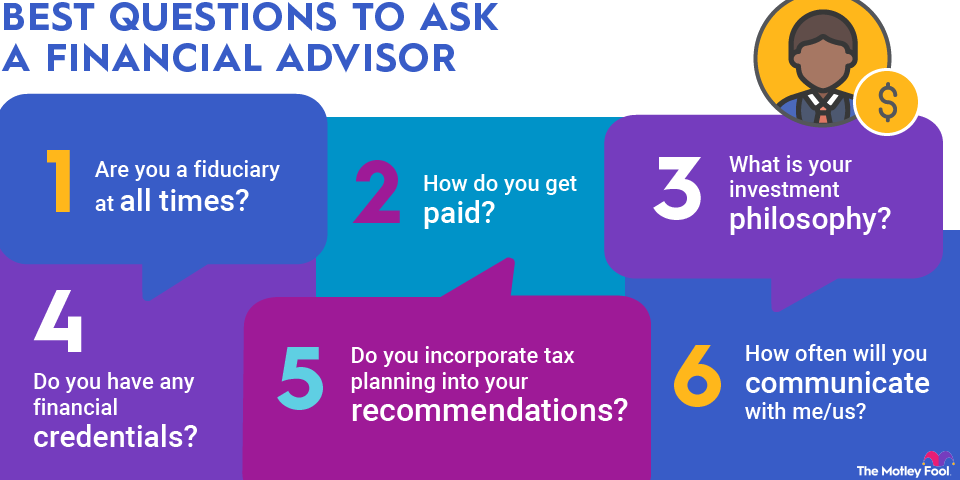
3. What is your investment philosophy?
Asking about an advisor's investment philosophy is an important way to learn how they think about risk. It's also an opportunity to have them showcase their knowledge about investing and financial planning.
You may not necessarily agree with the advisor's philosophy right off the bat. But it's important to see that they actually have a philosophy to offer.
You'll know quickly if the advisor displays fluency in the topic. They should be able to give you opinions about stocks, bonds, exchange-traded funds (ETFs), mutual funds, and insurance products in addition to explaining their personal philosophy around investing.
4. Do you have any financial credentials?
Credentials are not necessarily the be-all and end-all for an advisor. But they do signal a commitment to the study of financial topics and to their professional craft.
Most financial credentials, like the chartered financial analyst (CFA) designation or the certified financial planner (CFP) mark, are voluntary. This means the advisor put in the effort to earn the credential, even when it may not have been required.
Many credentials take hundreds of hours of dedicated study to complete, and some exams, like the vaunted CFA exam, are given infrequently. It's not uncommon for a candidate to take several years to complete the CFA program.
In general, take the advisor's credentials in the context of their entire picture as an individual. Alone, a few letters after someone's name may not mean much to you. But paired with a track record of fiduciary guidance and varied experience, credentials can carry quite a bit of weight.
5. Do you incorporate tax planning into your recommendations?
Like it or not, taxes are an ongoing expense for all investors. A tax-aware advisor will recommend products (and accounts) that help you minimize your lifetime tax liability.
Simple changes to your investment plan can make things simpler and reduce costs. For example, holding dividend-paying stocks in a taxable brokerage account will lead to taxable income every time a dividend is paid. Holding growth stocks in a taxable account, on the other hand, won't generate as much taxable income unless you begin to realize gains.
Your advisor's knowledge about these tax issues can add a ton of value over the long haul, so be sure that your advisor has some knowledge of tax planning before you hire them.