One month from today, a new era will begin for conglomerate Berkshire Hathaway (BRK.A 0.76%)(BRK.B 0.28%).
In May, at Berkshire's annual shareholder meeting, billionaire CEO Warren Buffett announced his intention to retire from the CEO role at the end of the year and hand the reins over to his predetermined successor, Greg Abel. In the 60 years the Oracle of Omaha has been at the helm, Berkshire's Class A shares (BRK.A) have increased in value by just shy of 6,200,000%, as of the closing bell on Nov. 26.
Warren Buffett's candidness in his annual letter to shareholders and during his company's meetings in Omaha will undoubtedly be missed.
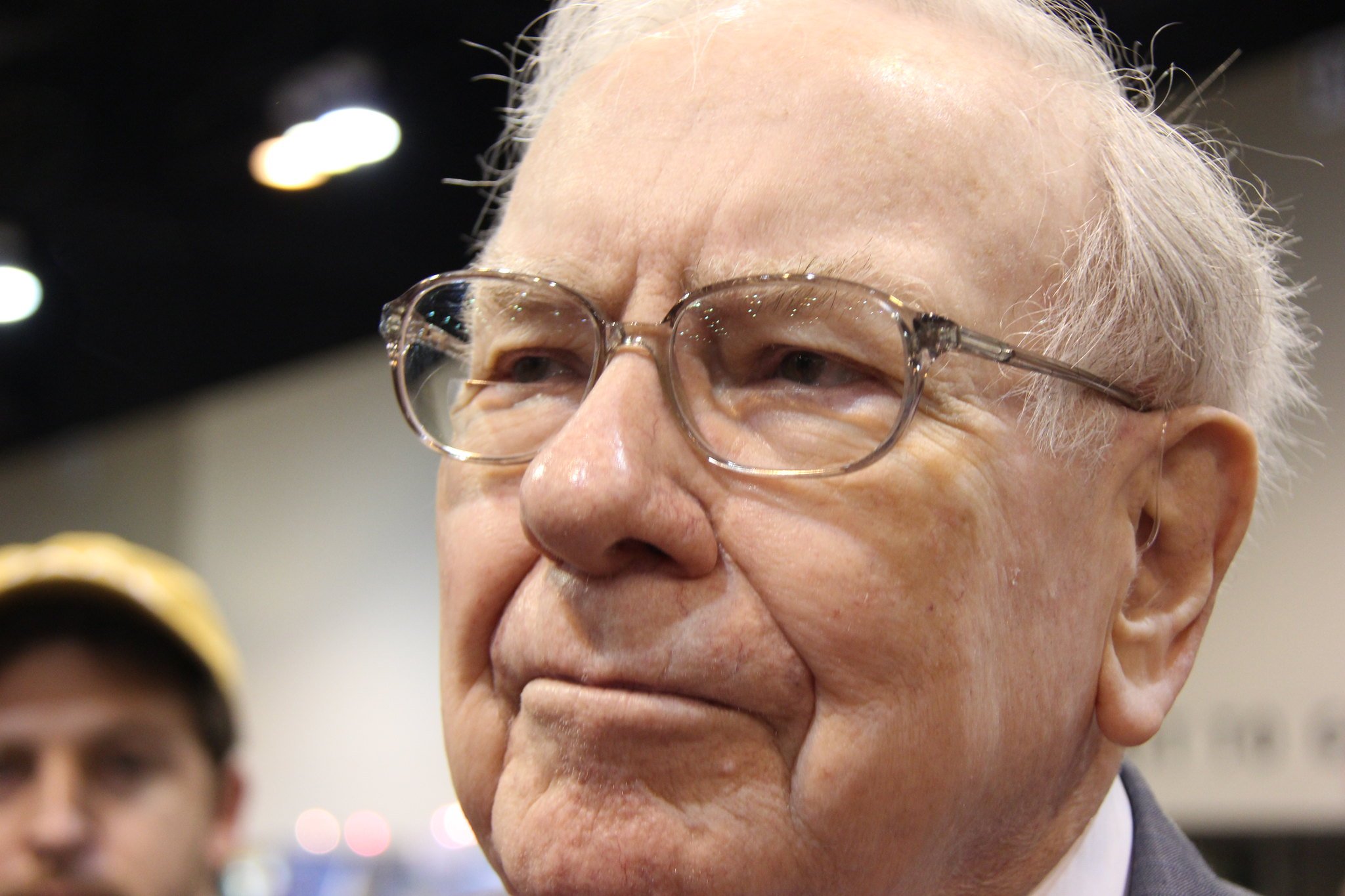
Berkshire Hathaway CEO Warren Buffett. Image source: The Motley Fool.
But just because Berkshire's billionaire boss is retiring at the end of 2025, it doesn't mean he's done making moves for his company's nearly $312 billion investment portfolio.
According to required Form 13F filings with the Securities and Exchange Commission, Buffett has been a persistent seller of Bank of America (BAC +0.39%) stock since mid-2024. However, these filings also show that Berkshire's outgoing investment head absolutely piled into a virtual monopoly during the September-ended quarter.
Billionaire Warren Buffett has given nearly 465 million shares of BofA the boot
There's not a sector Buffett has been more comfortable or confident investing in for decades than financials. Banks are the backbone of the American economy, and Berkshire's chief has stated multiple times that he wouldn't bet against America.
Buffett is also well aware of the nonlinear nature of economic cycles. In other words, periods of economic expansion last substantially longer than recessions. Even though it's impossible to predict when economic downturns will occur, staying the course gives investors the best statistical opportunity to profit. Companies like Bank of America benefit from long-winded periods of growth and can prudently grow their loan portfolios over time.
Despite these long-term advantages, the Oracle of Omaha has pared down his company's stake in BofA, as Bank of America is also known, for five consecutive quarters. A total of 464,781,994 shares have been sold since July 2024, representing a 45% reduction from the more than 1.03 billion shares once held.

NYSE: BAC
Key Data Points
The logical explanation for this selling is profit-taking. BofA stock has more than tripled over the trailing decade.
Additionally, Berkshire's billionaire boss opined during his company's 2024 shareholder meeting that historically low corporate income tax rates were likely to rise at some point in the future. Although his commentary was used to explain selling activity in No. 1 holding, Apple, BofA represents a sizable chunk of Berkshire Hathaway's unrealized investment gains.
What's concerning is that profit-taking may not explain the whole story.
For instance, Warren Buffett is unwavering when it comes to stock valuations. While he'll bend some of his unwritten investing rules on rare occasions, he's unwilling to buy or hold stocks when he doesn't believe he's getting a good deal.
When Berkshire Hathaway purchased $5 billion worth of Bank of America preferred stock in August 2011, BofA's common stock was trading at a 62% discount to its listed book value. As of the closing bell on Nov. 26, Bank of America's common stock was valued at a 39% premium to book. While this isn't historically pricey, it's clear that BofA isn't the phenomenal deal it once was.
Furthermore, we're in the midst of a Federal Reserve rate-easing cycle. No money-center bank is more sensitive to changes in interest rates than Bank of America. Continuing to pare down Berkshire's stake in BofA may signal that Buffett recognizes the potential for a significant drop-off in net interest income for Bank of America in future quarters.

Image source: Getty Images.
The Oracle of Omaha wagers over $4 billion on a virtual monopoly
With the stock market being historically pricey, it's perhaps no surprise that Warren Buffett has sold more stocks than he's purchased in each of the last 12 quarters (Oct. 1, 2022 – Sept. 30, 2025), to the cumulative tune of $184 billion. But amid this consistent selling, the Oracle of Omaha has found a few gems.
The one purchase that truly raised eyebrows during the third quarter was that of "Magnificent Seven" member Alphabet (GOOGL 1.04%)(GOOG 1.00%), whose shares have soared close to 13,000%, including dividends, since its initial public offering (IPO) in August 2004. The 17,846,142 Class A shares (GOOGL) purchased totaled more than $4.3 billion in market value, as of the end of September.
Alphabet is the sum of many parts, none of which is better known than internet search engine Google. According to data from GlobalStats, Google accounted for a 90% worldwide share of internet search in October 2025. Looking back over a full decade reveals that it's held a virtual monopoly on the global internet search landscape, with its share ranging from 89% to 93%.
Being the clear go-to for businesses seeking to advertise and target their messages results in significant pricing power for Google and an abundance of operating cash flow for its parent, Alphabet.
But this isn't Alphabet's only dominant operating segment. It's also the parent of streaming service YouTube, which is the second most-visited social website on the planet. Growing viewership and the introduction of Shorts (videos under three minutes in length) have bolstered YouTube's ad-pricing power and the demand for YouTube Premium subscriptions.

NASDAQ: GOOGL
Key Data Points
Alphabet is also the parent of the world's No. 3 cloud infrastructure service platform by total spend, Google Cloud. It's busy incorporating artificial intelligence (AI) capabilities, such as generative AI, into Google Cloud for its subscribers. These efforts appear to be accelerating an already robust segment growth rate, which clocked in at 34% in the third quarter compared to the prior-year period. Google Cloud's annual sales run rate is currently above $60 billion.
On top of these seemingly sustainable competitive advantages, Alphabet is flush with cash. The company ended September with $98.5 billion in combined cash, cash equivalents, and marketable securities, and has generated a whopping $112.3 billion in cash flow from its operating activities through the first nine months of the year. It's a cash-generating machine that has the luxury of investing in high-growth initiatives.
Warren Buffett appreciates public companies that reward their shareholders through dividends and buybacks, as well. Alphabet has spent more than $40 billion repurchasing its stock since the beginning of 2025, and it issued its first-ever quarterly dividend in June 2024.
Last but certainly not least, Alphabet's valuation was attractive. When Buffett was overseeing the purchase of more than 17.8 million shares of Alphabet's Class A stock during the third quarter, shares were valued between 16 and 22 times forward-year earnings per share. This is a reasonable forward price-to-earnings (P/E) multiple given its near-monopoly in internet search and the accelerating growth rate for Google Cloud.