Bitcoin (BTC 5.01%) may be down 3% for the year, but that doesn't mean you should forget about it entirely.
According to billionaire investor Ray Dalio, founder of the hedge fund Bridgewater Associates, the optimal allocation to Bitcoin right now is 1%.
Diversification benefits
Bitcoin can still deliver important diversification benefits, even in a down market for crypto. That's because, for much of its history, Bitcoin has been completely uncorrelated with any major asset class. In other words, it can zig when other assets zag. If the broader stock market is down, Bitcoin can still deliver phenomenal returns.
The problem now, quite frankly, is that investors are starting to view Bitcoin as a risky tech stock and ignoring Bitcoin's long-term track record. So, in an environment where investors are selling tech and AI stocks, they are also selling their Bitcoin. This is nothing new for Bitcoin, which has always been a highly volatile asset.

CRYPTO: BTC
Key Data Points
There's plenty of data to back up Bitcoin's portfolio diversification benefits. In 2024, for example, WisdomTree (WT 1.25%) examined the correlation between Bitcoin and the S&P 500 during a 12-year period. Although the correlation between the two asset classes sometimes reached 0.4, the long-term average was in the range of 0.2 to -0.1.
That's very low. A reading of 1.0 means two assets are moving in lockstep, while a reading of -1.0 means the two assets are moving in opposite directions. So a reading of near zero means there's little correlation, either positive or negative.
Potential hedging benefits
In a recent CNBC interview, Dalio said 1% of his portfolio is now in Bitcoin. He's been making big waves lately with his recession prognostications. His new book, How Countries Go Broke, is filled with dire economic warnings, and Bitcoin fits into this broader narrative.
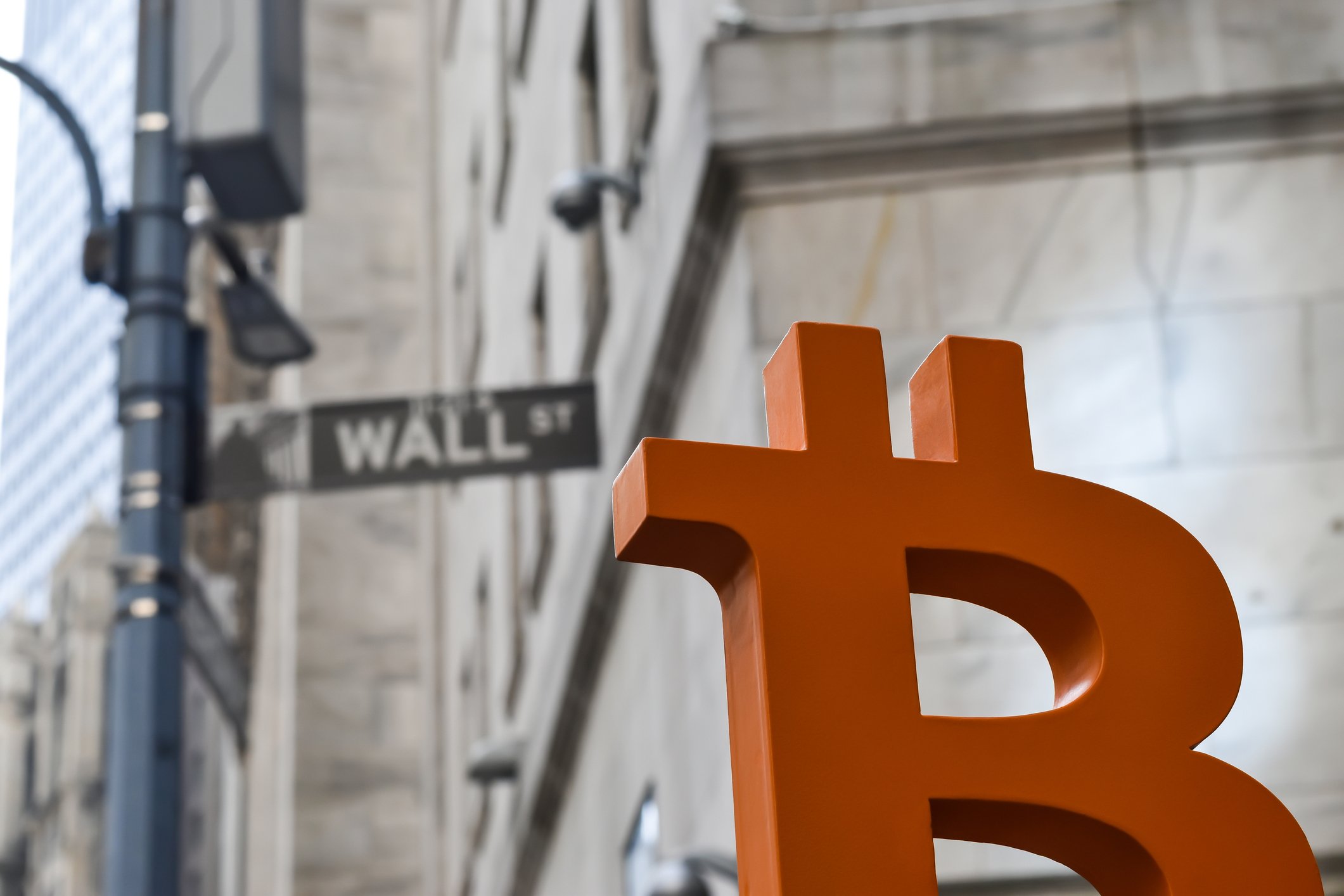
Image source: Getty Images.
From Dalio's perspective, Bitcoin can serve as a store of value, even in difficult economic conditions. And that's what he sees now. Record-high government debt levels, combined with the government's propensity to print more money, are eroding the value of the dollar and all dollar-denominated assets. At the same time, the recent federal government shutdown, combined with the ongoing uncertainty about tariffs, is pushing investors to explore potential dollar alternatives.
Bitcoin, for all of its potential flaws as a digital asset, has a limited lifetime supply. According to the original Bitcoin algorithm, the total supply is capped at 21 million coins. Right now, the total circulating supply is 19.95 million coins, so we've almost reached a point where all the Bitcoin that will ever exist now exists. There's no way to inflate away the value of Bitcoin. As a result, Bitcoin might be able to act as a potential hedge against dollar-denominated assets losing their value over time.
Bitcoin or gold?
This doesn't mean Bitcoin is the only hedge against macroeconomic uncertainty. As Dalio sees it, gold is a potentially even better hedge. In fact, in the past, he has suggested that investors should hold as much as 15% of their portfolios in gold.
Given that Bitcoin is down 3% for the year, while gold is up more than 60%, it's easy to see why investors are likely choosing gold over Bitcoin right now. Moreover, as Dalio points out, there are still hurdles to Bitcoin becoming a major reserve currency.
But, over the long haul, a 1% allocation may not make as much sense. Again, it goes back to Bitcoin's historical track record. Over that 12-year period analyzed by Wisdom Tree, Bitcoin was the top-performing asset in the world in nine of those years. In three of those years, gold did outperform Bitcoin -- but that was only when Bitcoin's collapsed.
Getting the Bitcoin allocation right
So, even though Bitcoin has been on a major slide of late, it's still worth allocating at least 1% of your portfolio to it. In a down year for crypto, that's a safe allocation. You're still getting some diversification benefits, and you may be able to insulate your broader portfolio against a sustained market slide.
Over time, though, you might think about boosting your allocation to Bitcoin. Last year, for example, some investors were boldly suggesting that the optimal allocation to Bitcoin might be 5% or higher.
At the end of the day, it comes down to your risk-reward profile. The more risk you are willing to take on, the higher your Bitcoin allocation should be. And vice versa.
If history is any guide, Bitcoin should reverse course soon. There's no need to panic and sell what has historically been a phenomenal investment.