The Federal Reserve will finish its two-day meeting on Dec. 10. The market expects another interest rate cut. Futures traders currently put the probability of a 25-basis-point (0.25%) cut at 87%. But investors will also look for signs of division, and the S&P 500 (^GSPC 0.14%) could fall if there are concerns about the Fed's independence being compromised.
Additionally, policymakers will update their summary of economic projections. With the economy already under pressure from President Donald Trump's tariffs, investors will pay attention to forecasts for GDP growth, inflation, and unemployment. Any sign that stagflation has become a more likely outcome would also be bad news for the stock market.
Here's what investors should know.

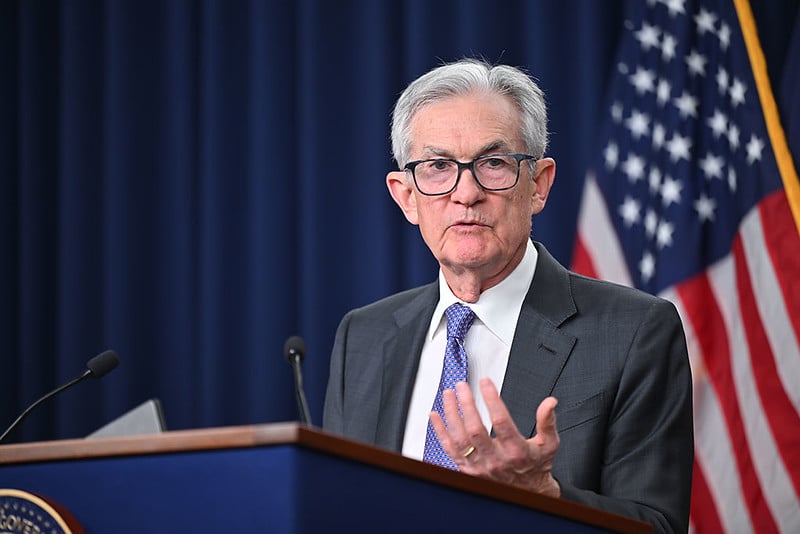
Image source: Official Federal Reserve Photo.
The Federal Reserve is abnormally divided on monetary policy
The Federal Open Market Committee (FOMC) has 12 voting members: the seven members of the Federal Reserve Board of Governors, the president of the Federal Reserve Bank of New York, and four presidents from the remaining 11 Federal Reserve banks.
The FOMC meets eight times per year to review economic and financial conditions, and to adjust monetary policy based on its dual mandate: to maintain stable prices and maximum employment. The FOMC's primary monetary policy tool is adjusting the target range on the federal funds rate, a benchmark that influences other rates throughout the economy.
The FOMC is abnormally divided about the most appropriate path forward. Policymakers held rates steady in July, but two governors dissented in favor of a 25-basis-point cut. That last happened in 1993. Subsequently, when policymakers lowered rates by 25 basis points in October, two voting members dissented in opposite directions.
Specifically, Governor Stephen Miran argued for a more aggressive 50-basis-point rate cut, while Kansas City Fed President Jeffrey Schmid argued no cut was necessary. Two FOMC members have dissented in opposite directions only once before in the last 35 years.
Interestingly, Miran (nominated by President Trump in September) has dissented in favor of larger rate cuts at both meetings in which he has participated, raising questions about whether the Federal Reserve's independence has been compromised.
Trump has made it abundantly clear -- often by lashing out at Chairman Jerome Powell -- that he wants lower rates. There is no evidence that Miran's votes reflect input from Trump, but it is still a curious coincidence that Trump's latest nominee has consistently voted against the majority in favor of more aggressive cuts.
Investors may get nervous if that pattern continues in December. Any sign that the Fed's independence has been compromised would almost certainly push Treasury yields higher due to concerns that political pressure would lead to inflationary monetary policy. Higher yields are usually bad for the stock market because they make Treasury bonds look more attractive.
The Federal Reserve is concerned about stagflation
Evidence that the Federal Reserve's independence has been compromised is not the only potential source of bad news. Investors will not only watch the FOMC's rate decision, but also listen closely to what policymakers say about the state of the economy.
Minutes from the FOMC meeting in October stated, "Participants generally judged that upside risks to inflation remain elevated and that downside risks to employment were elevated and had increased in the first half of the year."
Stagflation is a phenomenon where inflation increases while the labor market contracts and GDP growth stalls. We have not reached full-blown stagflation yet, but President Trump's tariffs have pushed the economy in that direction. Inflation has increased in every month since the baseline tariff took effect in April, unemployment hit a four-year high in September, and hiring has decelerated to its slowest pace in over a decade (excluding the pandemic).
Stagflation would put the FOMC in a tough position by rendering its primary monetary policy tool somewhat ineffective. Lowering interest rates would stimulate the economy and promote employment, but it would also make inflation worse. Alternatively, raising interest rates would curb inflation, but it would also suppress the economy and hurt employment.
In other words, stagflation would essentially force the Federal Reserve to prioritize either stable prices or maximum employment, rather than working toward both goals defined by its dual mandate. So, if economic projections from the December meeting suggest policymakers are more worried about stagflation, investors would likely interpret that as very bad news, and the stock market could fall sharply.