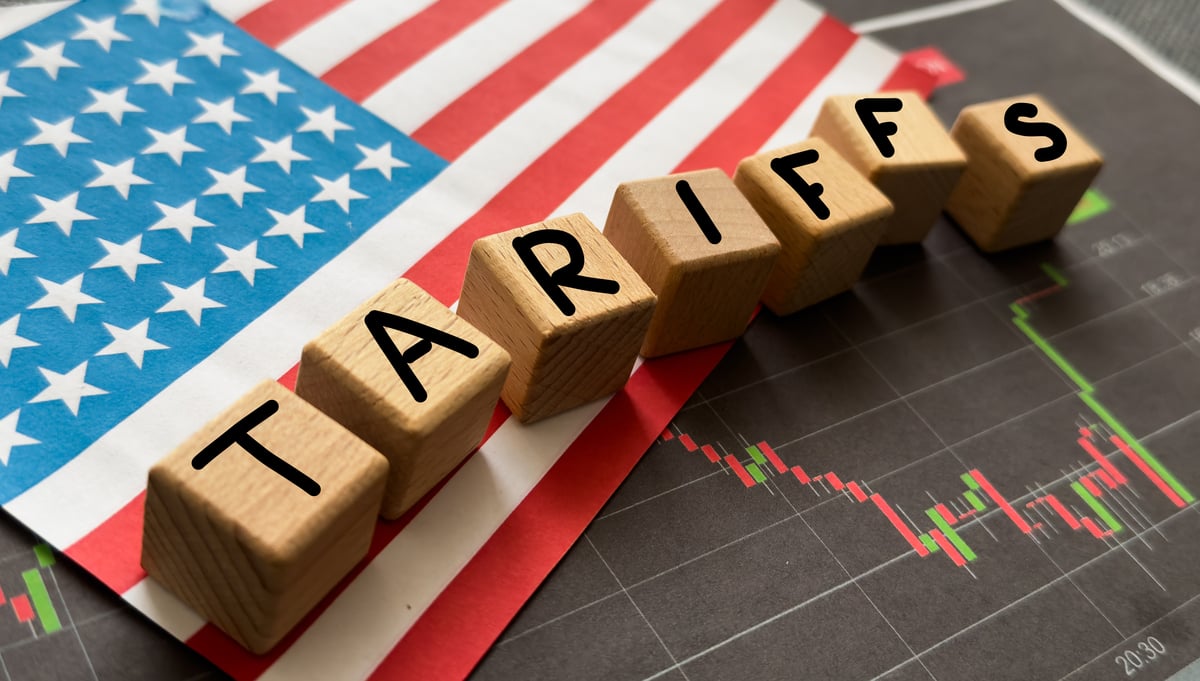
It's hard to believe that just about eight months ago, the stock market was reeling. President Donald Trump had just shocked the world by announcing high tariff rates on most of the United States' major trading partners, catching most investors off guard and sending the market into free fall. At one point, the broader benchmark S&P 500 index fell below 5,000.
However, Trump would eventually pause the implementation of some tariffs for a time, and while tariff rates are still high, inflation hasn't yet surged as much as the market perhaps thought. With just weeks remaining in the year, will the stock market do the unthinkable and post a third consecutive annual gain of at least 20%?
Wind at its back
It's been a volatile year for the market, but with little time remaining, the market appears to have several tailwinds at its back that could continue to lift the S&P 500.

Image source: Getty Images.
While it wasn't always a guarantee, the Federal Reserve ultimately proved more dovish than expected and has now cut interest rates three times to close out the year. The market anticipates one or two interest rate increases in 2026. The Fed has cut rates due to concerns about the labor market, and, as Fed Chair Jerome Powell mentioned at the Fed's September meeting, viewed the cut at that time as an "insurance policy" of sorts, in case economic conditions suddenly deteriorated.
But so far, just the opposite has happened. The economy appears to be on solid footing, consumer spending has remained resilient, inflation hasn't surged as much as many predicted, at least so far, and corporate earnings keep rising, as do future estimates for corporate earnings. All of this has led the market to rally, and to some extent broaden beyond a small group of high-flying artificial intelligence stocks that have carried the broader market for much of the past three years. The S&P 500 is up 17% this year.
The market, however, remains fragile, and a negative data point, whether on inflation or the labor market, could trigger a sell-off. Still, a year-end Santa Claus rally occurs more often than not, and with the market rising higher, many institutional investors often have to chase returns at the end of the year because these managers want to outperform the market in the good times. Otherwise, investors can often question why they are paying high fees.
History isn't necessarily on the market's side. After all, in the past 100 years, the stock market has only posted back-to-back gains of at least 20% in four different periods, and only once has the market continued its 20%-plus streak, during the 1990s internet boom. Now, many people associate the current AI rally with the incredible run that extended from the mid-1990s to 2000 when the dot-com bubble burst. It's possible that we are only in the middle of the artificial intelligence rally, although it's difficult to know for sure.
How investors can play it
The best way to play the market heading into the end of the year is simply to not play it at all. Timing the market is incredibly challenging, and even the most experienced investors often fail; therefore, I wouldn't recommend making any rash decisions at this time.
Rather, investors should consider their current strategy and investment time horizon. If you are still 10 to 30 years away from retirement, there is no need to take action, really, as the longer you hold stocks, the less likely you are to lose money. However, if you bet big on artificial intelligence stocks a few years ago and are up significantly, it may not be a bad idea to think about taking some gains.
Consider what valuations these stocks trade at and whether they are still reasonable or based on some very bold assumptions. Investors don't need to sell everything, either. They can create a strategy where they sell a little bit each month. The key is to consider your specific portfolio and do what makes sense for you based on your goals.