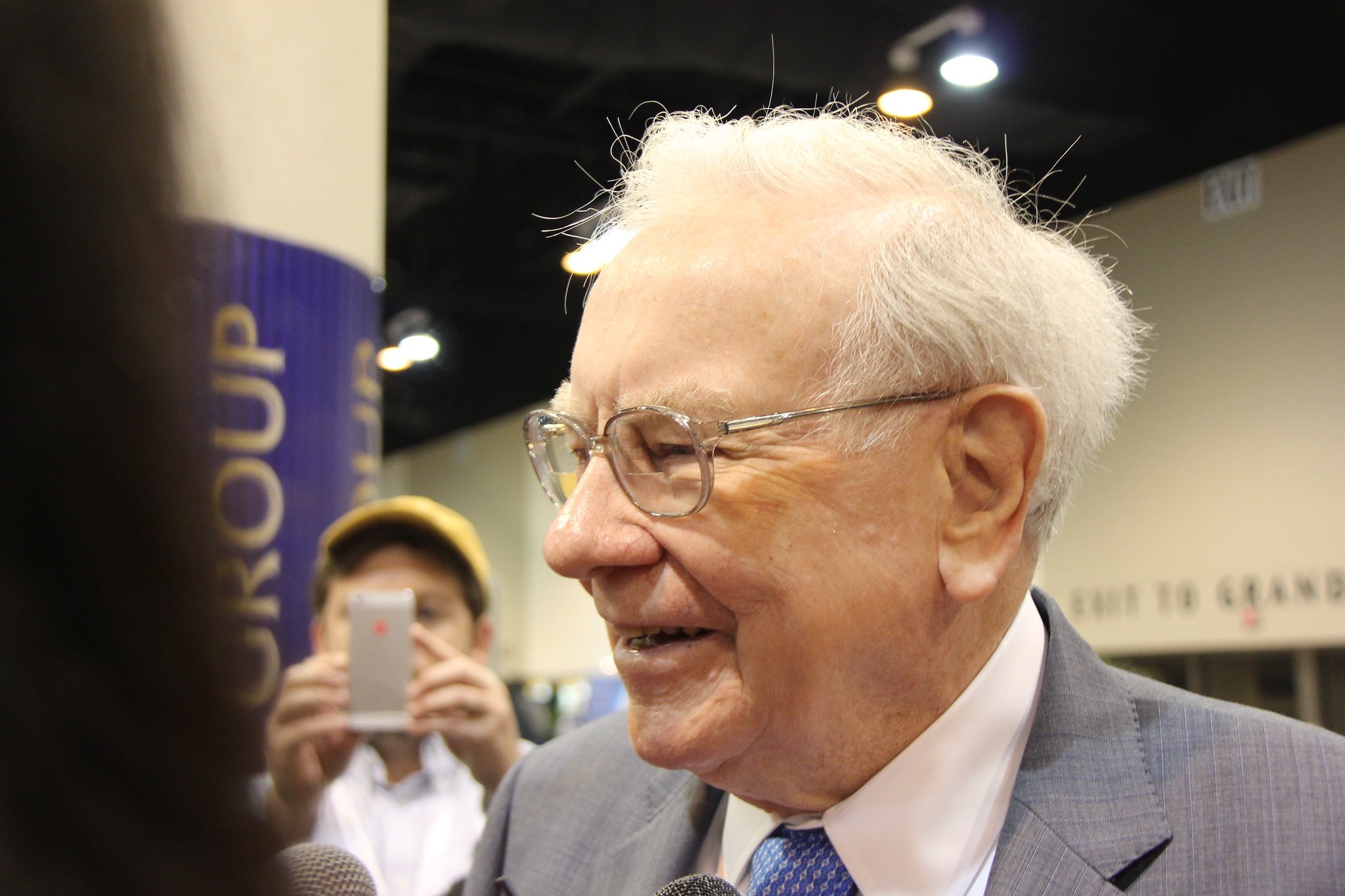
Berkshire Hathaway owns dozens of stocks in its massive $317 billion public equities portfolio. One of the leading positions for a long time has been Bank of America (BAC 1.39%). The Warren Buffett-led conglomerate owns 7.8% of the bank's outstanding shares, displaying his appreciation for the business.
In the past five years, this bank stock has generated a total return of 110% (as of Dec. 11), slightly outperforming the broader S&P 500 (^GSPC +0.03%). Where will Bank of America be in five years?
Image source: Getty Images.
Bank of America's business won't change much
Bank of America has its hands in all areas of the financial services industry. It's a dominant force in consumer and small business banking, with 69 million customers and top market share in U.S. retail deposits. It has $4.6 trillion in client assets in its wealth and investment management division. The bank also leads in U.S. commercial loans, is third in global investment banking fees, and has one of the best market research platforms.
This business possesses a wide economic moat. It has tremendous scale that gives it a cost advantage, providing better leverage expenses. And given its broad array of products and services, customers deal with switching costs, which helps keep them locked in. These qualities support Bank of America's competitive position.
Like other banks, Bank of America generates interest income from the loans that it originates and services. And it makes money from non-interest income from other activities.
If we envision what Bank of America looks like in 2030, I suspect not much will change. The banking industry is durable, has staying power, and is established. And facilitating the flow of capital will always be needed for an economy to function.
Technology will be a driving force
It won't all be static, however. One factor that will continue to shape Bank of America and the overall financial services industry is technology. Banking is one of the oldest activities in the world, but it's a market that isn't immune to tech-driven changes.
Among its money-center peers, Bank of America has been a leader when it comes to innovation. It has spent a whopping $100 billion on technology investments just in the last decade. Initiatives include data capabilities, artificial intelligence (AI), and cybersecurity.
Bank of America's tech advancements are finding notable success. For example, 49 million consumer banking customers are digital users, up from 39 million six years ago. Zelle transactions have also been soaring, while checks written have steadily declined. There's also Erica, the AI-powered virtual financial assistant that had over 20 million users and 175 million interactions in the third quarter. The business is also working on launching a stablecoin, as it looks to keep up with industry changes.

NYSE: BAC
Key Data Points
Will the stock beat the market over the rest of the decade?
An important driving force for stock returns is earnings per share (EPS) growth. Bank of America reported diluted EPS of $0.51 in Q3 2020, a figure that rose 108% to $1.06 in the most recent quarter.
Bank of America's profitability is certainly impacted by economic conditions, with interest rates being a big factor. But over time, the business has consistently been able to grow its bottom line. There's no reason to believe this will change as the deposit base and lending book expand, but it might be at a slower pace in the future.
Another major tailwind in the past was valuation expansion. The price-to-book ratio went from just over 1 in mid-December 2020 to more than 1.4 today. It's reasonable to assume that the current valuation isn't cheap, presenting investors with no margin of safety. Looking out five years from now, there's a very real possibility that valuation won't contribute that much to returns.
Bank of America outperformed the S&P 500 in the past five years. I'm not so sure that this will repeat itself over the next five years.