Brightstar Lottery (BRSL 3.51%), formerly known as International Game Technology, may be a suitable investment option for some investors, particularly those seeking a predictable business model and an attractive dividend yield. So it's by no means a bad idea, but for market participants seeking an off-the-beaten-path wagering idea, there are alternatives.
Those looking for a gaming stock with credible hidden gem chops may want to consider Accel Entertainment (ACEL 0.85%). To say this small-cap isn't flashy and doesn't get a lot of attention from sell-side analysts is an understatement. Just a handful of analysts cover this $936.9 million stock, confirming it's not on the radar of many market participants.
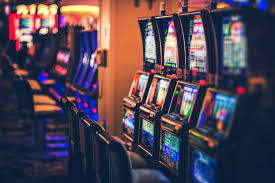
Image source: Getty Images.
Accel's anonymity is easy to understand. The corner of the gaming realm in which the company operates lacks the pizzazz of brick-and-mortar casinos or online sports betting. Accel is what's known as a distributed gaming or route operator, and the only publicly traded one at that. Put simply, the company places video gaming terminals (VGTs) in non-casino locations such as bars, convenience stores, and gas stations, among others. That positions it as an alternative to slot machine manufacturing, an industry in which the aforementioned Brightstar used to operate.

NYSE: BRSL
Key Data Points
Accel could be an awesome alternative
A point in favor of Accel is that it's not a standard casino stock. Operators of land-based gaming venues are beholden to factors such as consumer sentiment, convention business, and macroeconomic headwinds. Just look at how President Trump's tariff plans have compelled some international tourists to avoid visiting Las Vegas this year.
Accel isn't exposed to that volatility. Its core customers are older (age 55+), implying they're less paycheck-dependent than other gamblers, and they live close to the venues in which Accel machines are located. Most importantly, they're loyal.
Potentially adding to the long-term case for Accel is expansion. The company currently controls approximately 28,000 VGTs across 10 states, with Illinois accounting for about 75% of revenue. Gaming expansion is a lever some jurisdictions pull to boost tax collections. Chicago is worth an estimated $5 to $6 of Accel's share price. Some analysts suggest that increasing state budget deficits could spark a wave of VGT expansion, as it's less controversial than internet casinos (iGaming) and more economically beneficial to the states.

NYSE: ACEL
Key Data Points
The opening of new markets is considered a catalyst for Accel, and the company has the financial resources to act on future opportunities. It has one of the strongest balance sheets among gaming companies and could generate as much as $1.36 per share in free cash flow (FCF) next year.
Accel is taking steps to limit risk
Accel is arguably a diamond in the rough, but it's not a risk-free bet. As noted above, Illinois is its largest market, but it's a hyper-competitive gaming jurisdiction. There are 15 casinos located there, with one in Chicago set to open in late 2026.
The VGT distributor is using a prudent mergers and acquisitions strategy to defray some of that risk. In a deal that it says will be accretive to 2026 results, Accel announced the purchase of the route assets of Dynasty Games earlier this month. That bolsters the buyer's footprint in northern Nevada. A November 2024 deal cemented Accel's entry into Louisiana.
Investors may want to cheer for Accel to extend its push into new markets because prior moves are paying off. Since 2022, the company's latest market revenue has grown at a compound annual growth rate (CAGR) of 19%. That says Accel knows how to execute on its acquisitions.