The most resilient businesses constantly reinvent themselves, and Nvidia (NVDA 0.58%) is an excellent example of this phenomenon. Its ability to quickly dominate new technology opportunities is a big reason why it has soared to become the largest company in the world with a market cap of $4.4 trillion. And even though generative artificial intelligence (AI) is behind most of the recent expansion, the boom might not last forever. Let's explore what might come next for this legendary chipmaker.
Nvidia has a track record of reinventing itself
Since its founding in 1993, Nvidia has reliably banked on new use cases for the graphics processing unit (GPU) -- a technology that it named and pioneered for its proficiency in parallel processing, which involves breaking down large tasks into smaller parts and working on them simultaneously. Parallel processing turned out to be extremely useful for rendering video game graphics. And in the late 1990s and early 2000s, Nvidia became a major player in the industry, supplying consumer GPU chips for PCs and even Microsoft's early Xbox gaming consoles.

NASDAQ: NVDA
Key Data Points
Nvidia boomed again in the 2010s when people realized that its GPUs were also extremely good at cryptocurrency mining. Cryptocurrency miners relied on the same PC-focused GPUs as gaming, and both growth drivers were included in the company's gaming segment, which was historically the bulk of revenue. However, things have changed.
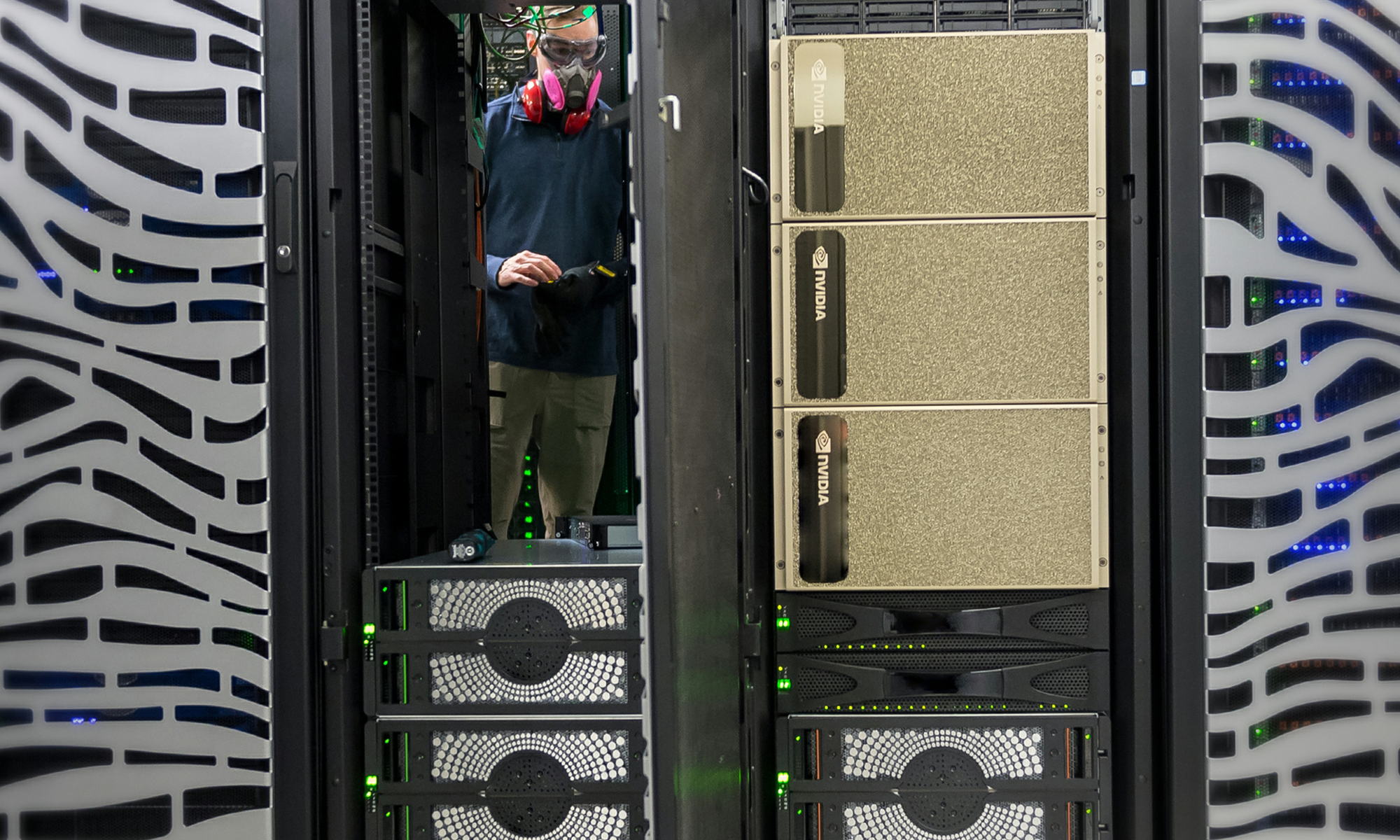
With the growth of generative AI, Nvidia's once-vital gaming segment has become an afterthought, representing a measly 7.5% of the company's $57 billion in third-quarter revenue. The company is now massively dependent on its data center segment, where it sells large enterprise-focused GPU systems to help clients run and train AI large language models (LLMs). This business represented around 90% of Q3 revenue, which suggests Nvidia lacks diversification and is extremely overexposed to a potential slowdown in this particular market.
The generative AI boom might not last forever
While AI-related demand continues to soar year over year, some cracks are forming in the foundation of this opportunity. For starters, many of Nvidia's customers are burning through mountains of cash -- the best example is OpenAI. The ChatGPT creator is estimated to have lost $11.5 billion in its most recent quarter alone. And analysts at Deutsche Bank think the situation could worsen with combined losses totaling $140 billion between 2024 and 2029. It's reasonable to assume that other LLM companies like Anthropic could be experiencing similar cash burn.
As a hardware provider, Nvidia operates on the picks and shovels side of the AI equation, shielding it from the challenges faced by some of its clients. That said, over the long term, this will eventually become Nvidia's problem, too. If the LLM clients continue burning money, they could run out of the funds needed to continue buying Nvidia hardware.

Image source: Getty Images.
Compared to pure plays like OpenAI, Nvidia's hyperscaler clients like Amazon, Google, and Microsoft are in a better position to absorb AI losses because of their diversified business models. However, over time, their shareholders could push back at their current levels of GPU spending. Furthermore, these companies are turning into major rivals for Nvidia because of their investments in custom chip design.
This month, Bloomberg reported that OpenAI signed a deal with Amazon to use its chips for training AI workloads. This development follows a similar agreement with Google.
What comes next for Nvidia?
Nvidia's challenges seem to be reflected in its rock-bottom forward price-to-earnings (P/E) multiple of 23. This valuation is low considering the company's strong growth, and it suggests the market is nervous about the sustainability of Nvidia's current business model. Over the next ten years, the company might have to reinvent itself yet again. The good news is that there are some compelling options.
In Q3, revenue in Nvidia's automotive and robotics segment grew 32% to $592 million. While this is a drop in the bucket compared to its total business, this could become a key growth driver if self-driving cars and humanoid robots become an important part of daily life.
The company is also working on quantum computing chips called quantum processing units (QPUs), which could help with things like materials science and drug discovery. That said, this all remains quite speculative, and investors may want to wait for more signs that Nvidia is diversifying its business model before considering a position in the stock.