Opendoor Technologies (OPEN 3.25%) stock has risen approximately 263% over the past year, largely driven by investor reaction to a change in the CEO suite. However, the stock has fallen nearly 43% from its 52-week high. Is this an opportunity for investors who missed the original rally, or is it a recognition among investors that the changes being contemplated involve material risk?
To understand the dip, you need to understand the rally
Wall Street is an emotional place, with exciting news often driving investors into a buying frenzy. That's basically what happened with Opendoor earlier in 2025 when its CEO stepped down, and a new CEO was brought in. That's a vast simplification, since there was an activist investor involved and artificial intelligence (AI) plays a role here, too. Unlike most CEO transitions, this one was more like a high-drama soap opera.

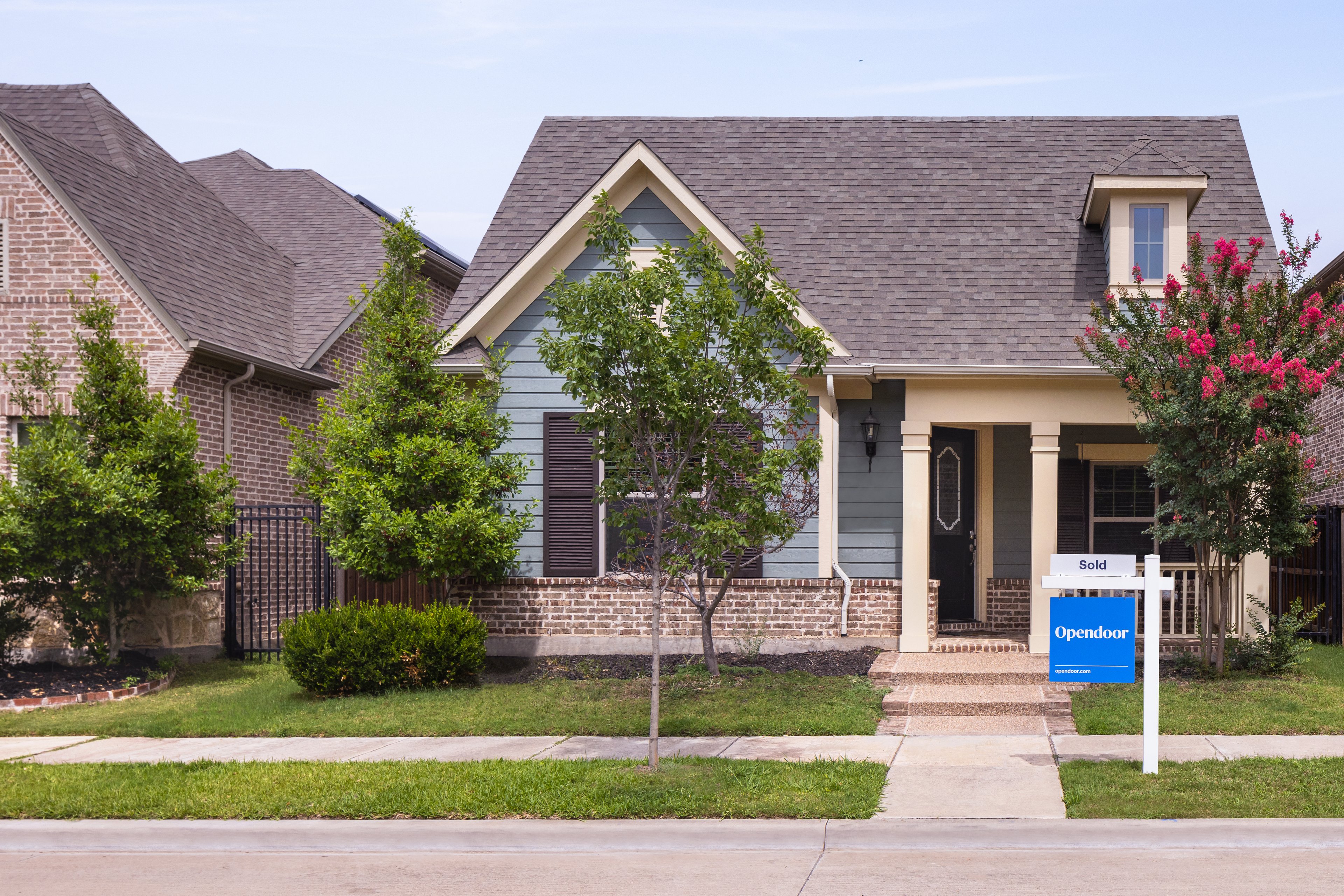
Image source: Getty Images.
In fact, before the CEO change, Opendoor's stock had fallen so low that it was a penny stock at risk of being delisted. The company was planning a reverse stock split to remain in compliance with listing rules and to ensure it could continue to tap the capital markets for money. The business was, and still is, struggling to turn a profit.
The business in question is, essentially, home flipping. Opendoor buys homes for cash, fixes them up, and then resells them at a, hopefully, higher price. The goal is to get a cheap purchase price by offering the seller the convenience of a quick and easy sale. The company hasn't yet found a way to make this a sustainably profitable business.
Opendoor has big plans, but will they work?
The new CEO is Kaz Nejatian, who formerly worked for Shopify. Practically the first words out of his mouth were artificial intelligence, a hot topic on Wall Street today. His big plan is, basically, to drastically reduce the company's staffing and use AI to handle most of the work.
Nejatian has laid out a series of benchmarks for investors to monitor over the next year, which is beneficial. This holds the company accountable and gives investors a way to see if his overhaul is working. And yet, there is a very significant problem for investors to consider here.

NASDAQ: OPEN
Key Data Points
If the new CEO's plan works, the company will survive and, perhaps, thrive. It could potentially scale up from the approximately 50 markets it is currently in, providing long-term growth as its geographic reach expands. That's a potentially huge opportunity. However, after a 275% price advance, a significant amount of good news has already been factored into the stock price. Although the shares are down 40% from their peak valuation, all the big changes are yet to come.
That fact must be juxtaposed against the not insignificant chance that the new CEO's plan will not work. It could turn out that AI isn't so good at home flipping. That wouldn't be shocking, given that each home it buys is unique, and each housing market in which it operates has its own distinct dynamics as well. If the overhaul fails, it is entirely reasonable to expect the stock to revert to its penny stock status.
And then what happens? The company is essentially shifting from relying on its human employees to relying on a sophisticated computer program. If all the employees are gone and the computer program isn't up to snuff, it will be very hard to rebuild the human intelligence that was lost when Opendoor's employees were let go. It might even be impossible, at least in a short enough time period, to keep the company from imploding.
Opendoor is a high-risk investment
It appears that Kaz Nejatian has put Opendoor into a situation with a binary outcome. If his plan works, the company could be a great success, although much of that potential good news seems to have already been priced into the stock. If his plan fails, the money-losing company may not be able to recover quickly enough to remain a going concern. Only the most aggressive investors should be considering Opendoor's stock right now. And even then, caution is warranted.