It's been a rough year for Bitcoin (BTC 0.56%). It's now down 7% for the year, and looks unlikely to reclaim the $100,000 price level before 2026.
Making it even more painful for crypto investors, gold continues to hit new all-time highs as it soars in value. It's now up more than 70% for the year, leading many investors to ask the obvious question: Shouldn't you just forget Bitcoin and buy gold instead?
Historical performance comparison
To answer that question, it's helpful to look at the annual performance of Bitcoin and gold in the period from 2012 to 2024. In 10 of those 13 years, Bitcoin dramatically outperformed gold. Bitcoin was the runaway top-performing asset class in the world during that time period.
In seven of those 10 years, Bitcoin posted triple-digit returns. In 2013, for example, Bitcoin soared by 5,428%. Gold will never have a year like that.

CRYPTO: BTC
Key Data Points
Yes, in three of those years, gold outperformed Bitcoin -- but not in the way you might think. Those three years were exactly the three years that Bitcoin absolutely cratered in value. In 2014, Bitcoin lost 57% of its value. In 2018, Bitcoin fell by 74%. And in 2022, Bitcoin collapsed by 64%.
By way of comparison, gold eked out narrow wins in those years. In 2022, for example, gold increased in value by only 0.4%. That's exactly what gold is supposed to do: hold the line when risk assets are collapsing in value.
That's what makes this year's performance from gold such an outlier. Over the past decade, gold has never had a year like this. The best previous year for gold was 2020, when it rallied by 25%.
Is the "digital gold" thesis still valid?
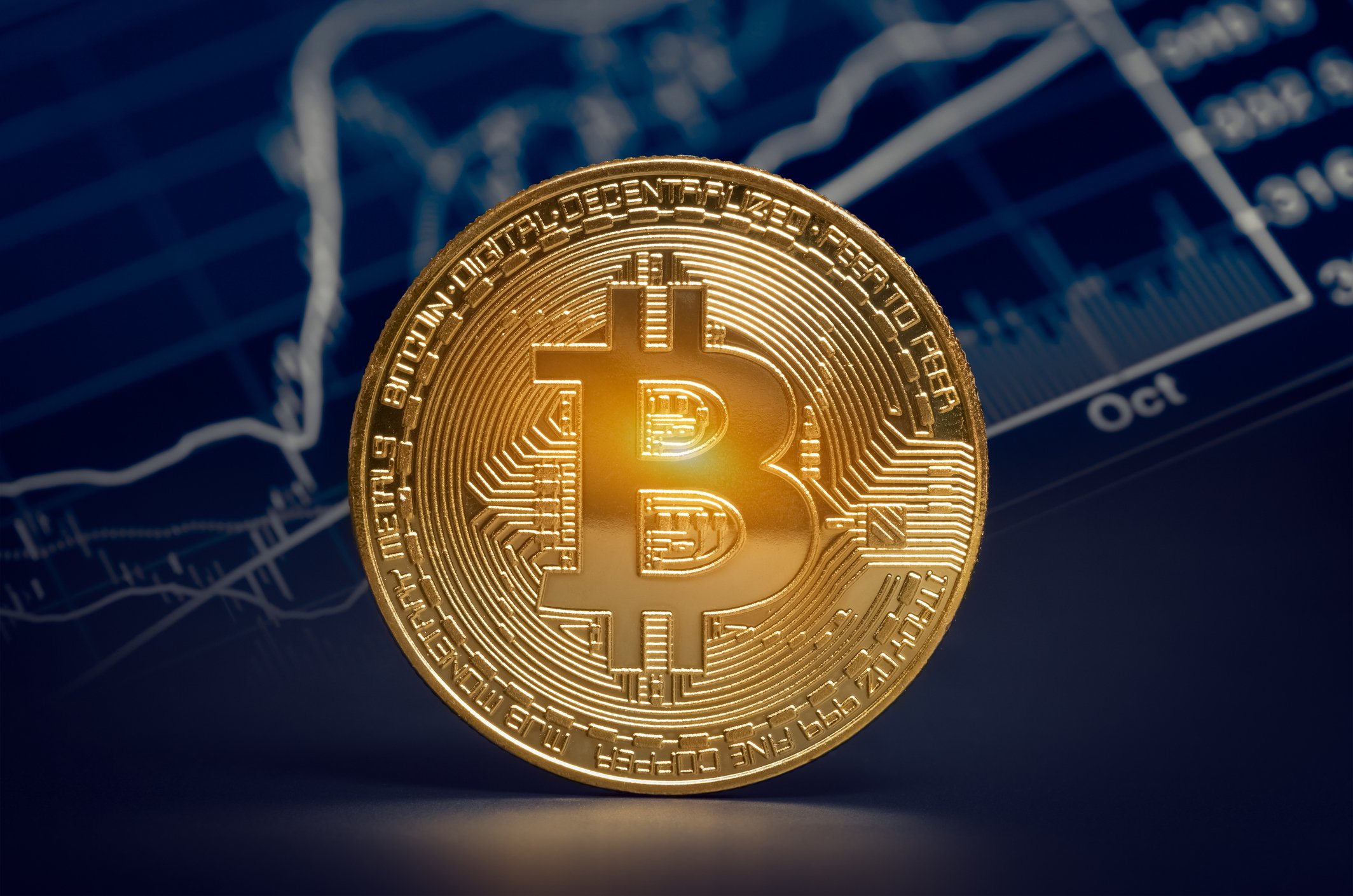
Making a comparison between these two assets even more interesting, Bitcoin is often referred to as "digital gold." While Bitcoin is completely digital and only exists as a series of ones and zeros in the ether, it is typically portrayed as a rather solid-looking gold coin.
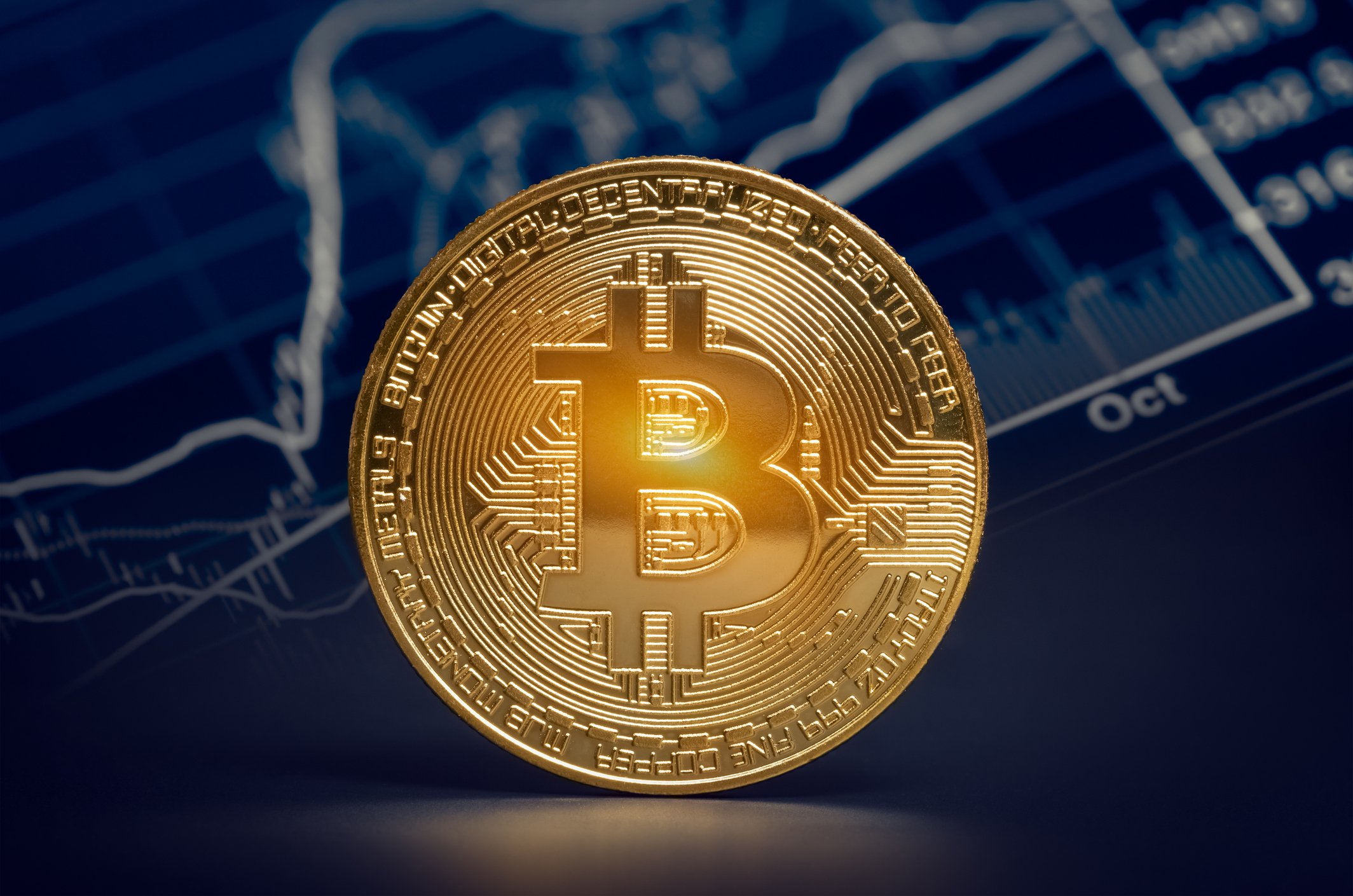
Image source: Getty Images.
That has made it easier for investors to buy into the argument that Bitcoin is the modern, digital version of gold. Just like gold, Bitcoin has a finite lifetime supply. The total supply of Bitcoin is capped at 21 million coins, and nearly 20 million coins have already been created. So we've almost reached a point where all the Bitcoin that will ever exist already exists.
As a result, it's easy to find investors and analysts ready and willing to compare Bitcoin with gold from a market cap perspective. The current market cap of gold is roughly $32 trillion, while the current market cap of Bitcoin is $2 trillion.
According to Michael Saylor, founder and executive chairman of Strategy (MSTR 3.01%), Bitcoin will eventually attain the same market cap as gold. Thus, with just a few back-of-the-envelope calculations, it's possible to show that Bitcoin should increase in value tenfold or even 15-fold over the next decade.
A 15-fold move would take Bitcoin from its current price of $87,000 to a price above the $1 million price level. Of course, there are other ways to show that Bitcoin will eventually hit a price of $1 million, but the Bitcoin-to-gold comparison is the easiest way to do so. Even Wall Street investment banks use this approach to determine if Bitcoin is undervalued or overvalued on a relative basis.
But now that entire line of reasoning is being called into question. If Bitcoin is truly "digital gold," shouldn't it be performing like physical gold? In other words, if gold is up 70% for the year, shouldn't Bitcoin also be up 70% for the year?
From my perspective, 2026 is shaping up to be a pivotal year for Bitcoin. If the performance of Bitcoin and gold continues to diverge over the next 12 months, it's hard to see how anyone can take the "digital gold" thesis seriously anymore. Bitcoin will return to being a highly volatile risk asset, and nothing more.
Are you a short-term or long-term investor?
At the end of the day, the decision of whether to pick Bitcoin or gold comes down to whether you are a short-term or a long-term investor. If your focus is just the next 12 months, then buy gold. It's the safer asset, and much more likely to retain its value amid a backdrop of macroeconomic uncertainty.
But if your focus is beyond a one-year time horizon, then buy Bitcoin. For more than a decade, Bitcoin has trounced the annual performance of gold on a regular basis. If history is any guide, there will be a return to form for Bitcoin next year. That's why I'm sticking with Bitcoin in 2026.