One of the issues plaguing Intel (INTC +0.00%) over the past few years has been an erosion of its PC CPU market share. Past manufacturing delays forced the company to use aging process nodes while rival AMD tapped TSMC's top-tier manufacturing technology. Intel later outsourced manufacturing for its Lunar Lake and Arrow Lake chips, but the latter was a mixed bag that rubbed reviewers and consumers the wrong way.

Image source: Intel.
Against this backdrop, Intel's share of the desktop and laptop CPU market has tumbled. Intel remains the market leader, but AMD controlled approximately one-third of the desktop CPU market and more than one-fifth of the laptop CPU market in the third quarter. A decade ago, this kind of progress from AMD would have been unthinkable.
In 2026, Intel could regain some of the lost market share. Panther Lake for laptops and Nova Lake for desktops look promising, and both will be built on the new Intel 18A process node. However, soaring memory chip prices will likely increase PC prices and potentially dampen demand.
Intel's 2026 roadmap shows promise
Panther Lake will be the first mass-produced chip to be manufactured using the Intel 18A process, and it is expected to begin shipping in volume in early 2026. Intel 18A moves Intel to a new type of transistor and introduces backside power delivery, a technology that can boost efficiency by moving power circuitry to the back of the chip. The Intel 18A process is the first in the industry to implement backside power delivery.
Nova Lake will come later in 2026 for desktops, succeeding the troubled Arrow Lake family. In the meantime, the company is rumored to be launching a refresh of Arrow Lake, although the core problems with Arrow Lake are likely to remain unresolved until Nova Lake arrives. While Nova Lake's specifications are still unclear, rumors suggest high core counts and large amounts of cache for some models, which could better compete with AMD's 3D V-Cache chips.
Launching a new architecture on a new process node is always a challenge, but if Panther Lake and Nova Lake deliver solid improvements in performance and efficiency, they could be big winners for Intel.
Memory prices could be a major problem
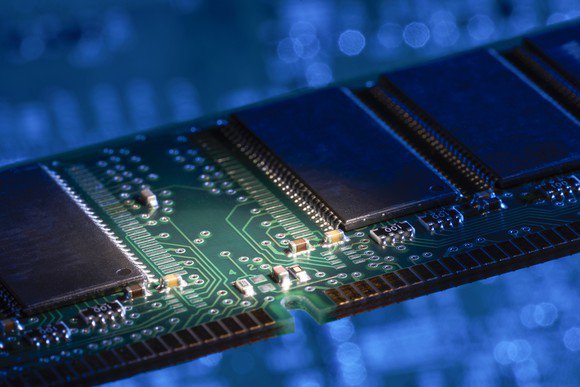
Unfortunately for Intel, its Panther Lake and Nova Lake launches coincide with a severe and escalating shortage of DRAM memory. AI data centers need both high-bandwidth memory and standard DRAM memory in copious quantities. Memory chip manufacturers have been shifting production to HBM chips while being cautious about expanding overall production, creating a shortage of DRAM chips.
PC prices are almost certain to rise in 2026 as OEMs grapple with rising component costs. Dell is reportedly raising commercial PC prices by 10% to 30% in response to the memory chip crisis, a move that will likely be followed by other OEMs. Businesses could slow down upgrade plans in response. On the consumer side, higher prices and configurations with less memory are likely to be the prevailing themes in 2026.

NASDAQ: INTC
Key Data Points
Beyond the potential for higher prices to hurt overall demand for PCs, lower memory configurations could hurt Intel's AI PC push. Panther Lake laptops will feature greater AI processing power than their predecessors, but a lack of memory could hinder usability. Microsoft requires at least 16 GB of RAM for a laptop to be labeled a Copilot+ PC, for example, because AI applications require significant amounts of memory.
Soaring memory chip prices put Intel in a tough spot. Even if Panther Lake and Nova Lake are home runs, delivering performance and efficiency that top AMD, high PC prices could spoil the party. AMD is also impacted, so Intel won't be at a relative disadvantage and could still win market share. However, the size of the market could temporarily shrink as businesses and consumers resist price increases.
With memory chip production unlikely to increase meaningfully anytime soon, and with the AI boom still going strong, Intel's PC comeback in 2026 may be weaker than it could have otherwise been.