Are you ready for a bold prediction (that's really patently obvious)? OK then, here goes: Rivian Automotive (RIVN +0.61%) and even more so Lucid Group (LCID 3.03%) are both going to zero.
And now, I'll tell you why.

Image source: The Motley Fool.
Rivian Automotive
There's a lot of optimism surrounding Rivian stock lately. Shares of the electric truck-maker are down a staggering 80% from their closing price on its IPO (initial public offering) day in 2021. However, they're up 55% from their recent low in early November, when the company reported its most recent financial report (for Q3 2025).
And yes, at first glance, that news was encouraging. Rivian grew its revenue 78% year over year in Q3. It cleared out old inventory, producing 10,720 electric vehicles (EVs) in the quarter but delivering 13,201 to customers. Rivian even earned a positive gross profit of $24 million -- the third time it's ever accomplished that feat.

NASDAQ: RIVN
Key Data Points
CEO RJ Scaringe boasted of "significant progress" the company's making with its operations, including advancing plans to introduce its new lower-priced R2 electric SUV, priced at $45,000, in the first half of 2026. To support the rollout, it has built a 1.1 million-square-foot R2 body shop and general assembly facility, a 1.2 million-square-foot supplier park and logistics center, and a paint shop capable of coloring 215,000 units per year. It has also broken ground on a second U.S. manufacturing facility in Georgia, which will be capable of producing an additional 400,000 units annually.
But here's the thing: Rivian sold 13,201 EVs in Q3. Annualized, that's about 50,000 units -- far fewer than it can paint at its existing facility and far, far fewer than the 400,000 units it's ramping up to build in Georgia. And yet, it took the expiration of federal EV tax credits in Q3, which drove buyers to snap up EVs last quarter, to boost demand for Rivians even to this still-low level.
With Q4 now underway, and the tax credits naught but a pleasant memory, can Rivian sustain its sales momentum in 2026 -- even with the R2 to help?
Personally, I'm skeptical. Q3 notwithstanding, the long-term trends don't currently favor Rivian. Moreover, Rivian is down to less than $2 billion in net cash on its balance sheet, and analysts polled by S&P Global Market Intelligence forecast the company must spend $3.6 billion on capital expenditures next year (and $2.4 billion more in 2027).
Unless R2 turns out to be a smashing success, Rivian's going to be running on proverbial fumes soon. Investors who've bid the stock up this past month don't appear to comprehend the risk they're running.
Lucid Group
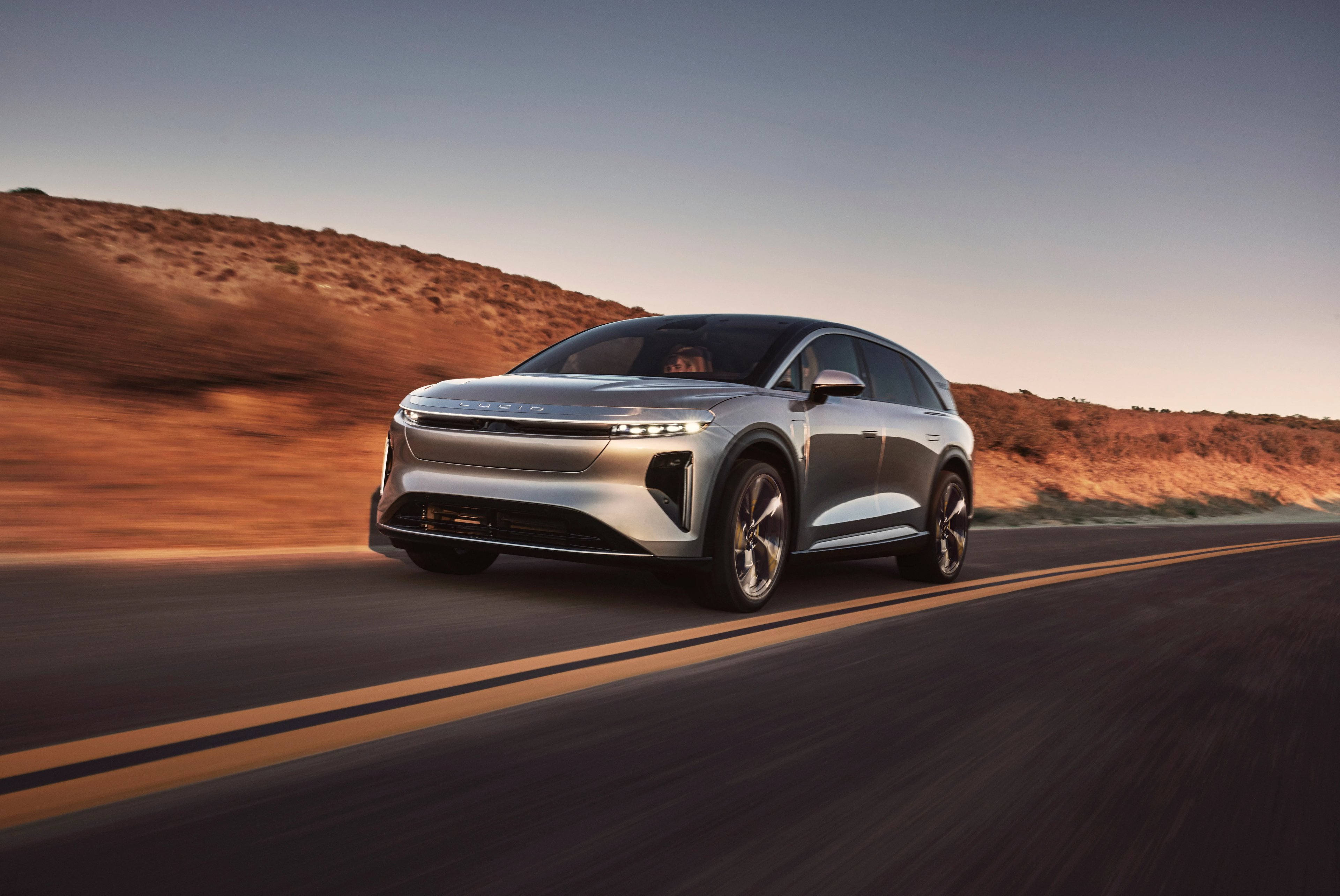
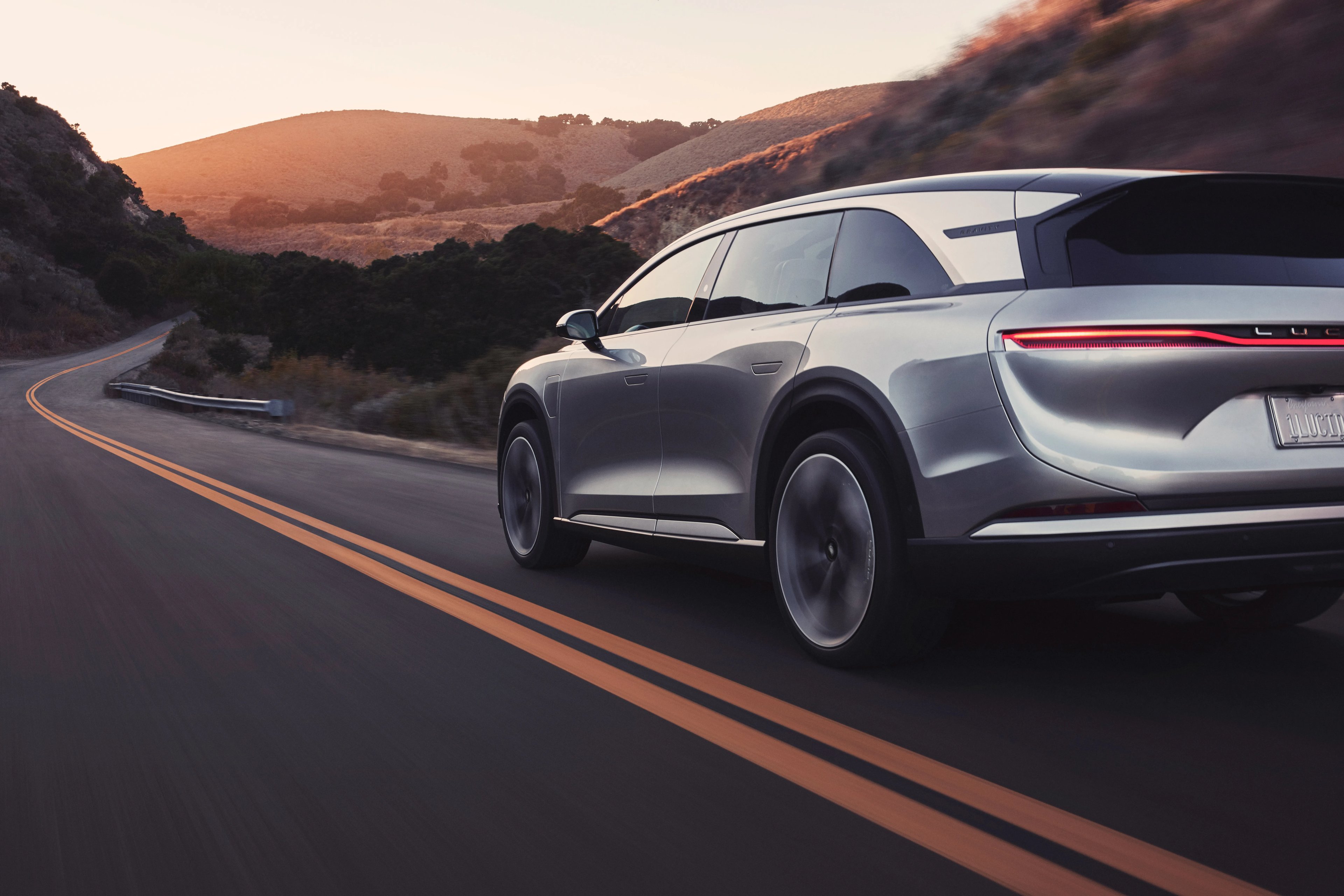
The situation with Lucid is similar -- but worse. On the one hand, Car and Driver just named the Lucid Gravity a 10Best for trucks & SUVs in 2026 and the Lucid Air Pure a 10Best car. However, the Gravity starts at $79,900, and the Pure is only slightly cheaper at $70,900 -- neither is particularly affordable.
Lucid's sales are up 45% so far this year, but its gross and operating losses are still climbing. It almost seems as if the more cars Lucid sells, the more money Lucid loses. The entire company is worth only $3.8 billion at current market prices, yet Lucid is burning through $3.4 billion in negative free cash flow annually, and its balance sheet is already in the red.

NASDAQ: LCID
Key Data Points
At last report, Lucid had only $2.3 billion in cash against $2.8 billion in debt. To stave off insolvency, the company had to sell $975 million worth of convertible senior notes -- debt that will likely be converted into shares, potentially diluting existing shareholders in the future.
Lucid's in even worse shape than Rivian, I fear -- and its stock is probably closer to zero.
Remember Tesla?
At this point, you may ask, "Is there any EV stock worth owning?" You may be surprised to hear that the first EV stock ever is also probably still the strongest bet on EV stocks today: Tesla (TSLA 1.02%).

NASDAQ: TSLA
Key Data Points
Is Tesla still suffering from an Elon Musk hangover? It is. The Tesla CEO remains a veritable perpetual motion machine, producing negative PR for his company. And yet, Tesla itself is still doing surprisingly well -- at least relative to the alternatives.
Bad PR or no, Tesla earned $4.8 billion in positive profit over the last 12 months, more than any of its EV rivals, with the exception of BYD, which reported earning $5.5 billion. Tesla has $28 billion more cash in the bank than debt on its balance sheet and remains free-cash-flow positive, generating $6.8 billion in positive cash profits over the past year. (BYD burned $3.5 billion in cash.)
It sounds surreal to say it in the current anti-Musk environment, but if you want to earn millions investing in EV stocks, Tesla is probably still your very best bet.