Rivian Automotive (RIVN 1.52%) reported that it delivered 9,745 vehicles in the fourth quarter of 2025, down 31% year over year from 14,183 deliveries in the year-ago quarter. The decline was even worse than Tesla's 16% year-over-year decline for the same period.
But the rough quarter was "in line with Rivian's expectations," management said in its Jan. 2 press release about the deliveries. So, what gives? Why were the electric vehicle company's fourth-quarter deliveries so weak, and should investors be worried?

Image source: Rivian.
A temporary setback
Some context is in order. Rivian's fourth quarter should be viewed alongside the company's third-quarter results, when deliveries jumped 32% year over year. The reason the two quarters should be viewed together is because the federal clean-vehicle credit was no longer available for vehicles acquired after Sept. 30, 2025, effectively putting a deadline at the end of the third quarter and urging some customers to rush their orders. This undoubtedly pulled some demand from Q4 into Q3.
This context helps explain why both electric vehicle companies, Tesla and Rivian, had great third quarters followed by bad fourth quarters.
Notably, Rivian's production actually increased sequentially. Rivian produced 10,720 vehicles in Q3 and 10,974 vehicles in Q4. The higher Q4 production likely reflected an effort to normalize inventory after delivering 23% more vehicles than it produced in Q3.
What comes next
For Rivian investors, the main focus right now is the company's upcoming vehicle launch. Investors are likely hoping a new vehicle model can help catalyze sales and reverse Rivian's trend of declining sales in 2025 (full-year 2025 sales fell 18% year over year).
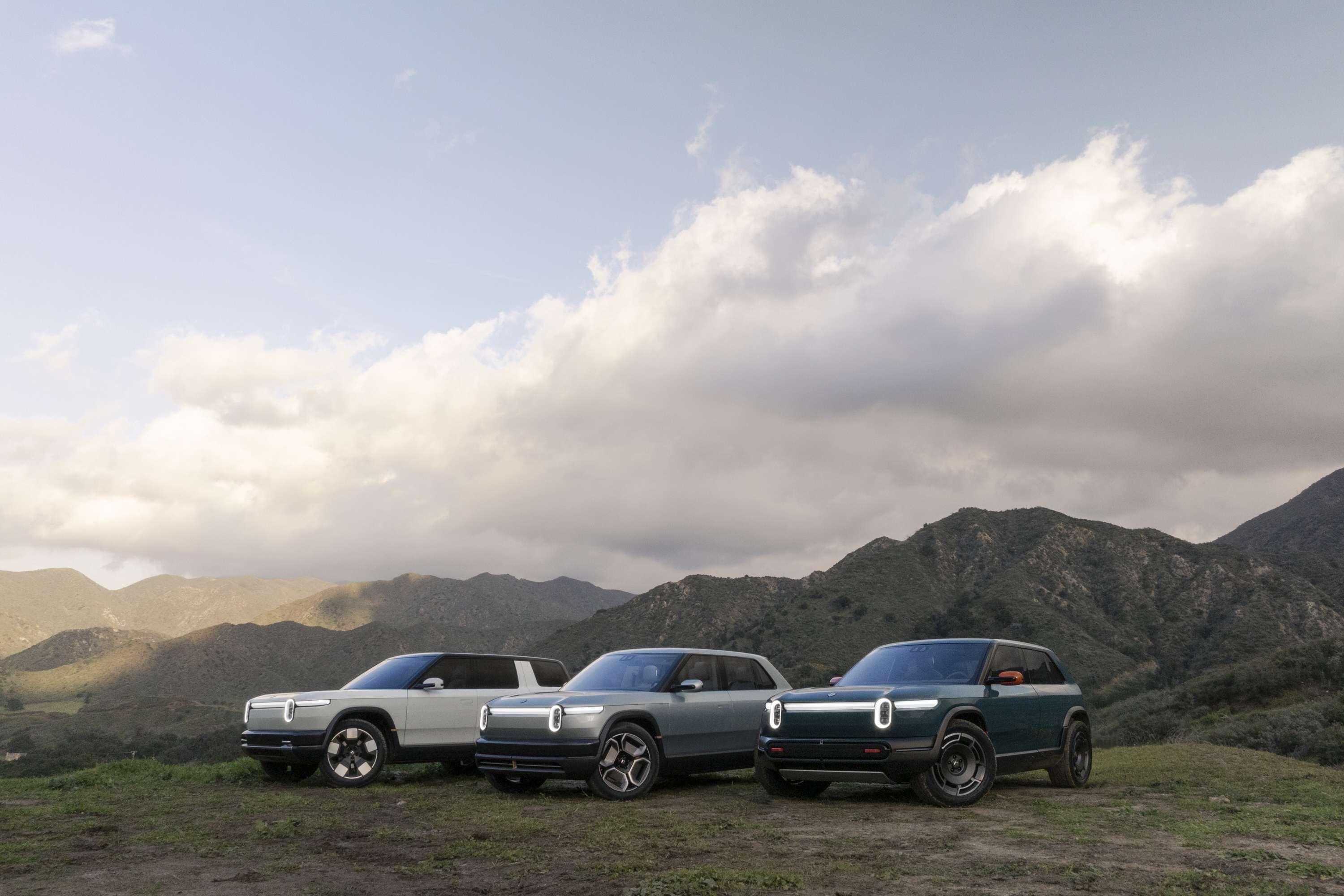
Rivian's upcoming R2 is still on track to begin deliveries in the first half of 2026, the company said in its third-quarter shareholder letter. This will open up Rivian to a larger addressable market, as the vehicle is supposed to be price meaningfully below its current lineup.
The new vehicle, which will be a midsized, 5-passenger SUV, will have a starting price of $45,000, management said in the company's third-quarter earnings call.
"The average price of new vehicles sold in the United States is around $50,000," said Rivian CEO RJ Scaringe during the call. "So we're really bullish, really confident on R2 and what that represents for us as a business."
Given the near-term noise of the now-expired federal clean-vehicle credit and its impact on quarterly deliveries, it would probably be wise for investors to zoom out and instead focus on Rivian's R2 plans.

NASDAQ: RIVN
Key Data Points
A risky financial profile
Making the stock somewhat risky, Rivian continues to burn through cash because it has not yet achieved profitability.
Despite reporting strong growth in deliveries in Q3, Rivian still reported an adjusted earnings before interest, taxes, depreciation, and amortization (EBITDA) loss of $602 million for the period. Even more, management's full-year 2025 guidance called for an adjusted EBITDA loss of $2.00 billion to $2.25 billion.
So, while it's encouraging to see the company building toward a potentially meaningful product cycle with R2, it's doing it while burning through a lot of money.
Rivian ended Q3 with $7.09 billion in cash, cash equivalents, and short-term investments, which gives it runway. But with free cash flow, which measures the company's cash from regular operations less capital expenditures, being negative $1.3 billion for the first nine months of 2025, the company will continue burning through this cash until its business becomes cash flow positive.
When investors look at Rivian through the lens of its upcoming R2 launch and its unprofitable business model next to its valuation, I personally think shares remain overvalued today. The company's market capitalization currently stands at about $24 billion. With the new R2 being priced lower than its current lineup, it may initially put pressure on the company's profit margins, further weighing on profitability.
Longer term, of course, the hope is that R2 demand and production are high enough to help the company achieve economies of scale, enhancing its overall profitability. To date, however, Rivian hasn't proven it's capable of profitability. And given the magnitude of its adjusted EBITDA losses, I don't think profitability will occur soon.
Overall, I think shares are overvalued -- even if we ignore the noise of disappointing fourth-quarter deliveries and look forward to the launch of the R2.