For years, BYD's (BYDDY +0.25%) investment story was easy to summarize: a Chinese EV champion benefiting from scale, cost advantages, and early bets on electrification.
But 2025 marked a clear shift. BYD didn't just grow bigger; it grew more complex. The company crossed a critical threshold, transitioning from a domestic leader to a global player, while also revealing the next set of challenges investors must address.
If you strip away the headlines and focus on what actually matters, three developments define BYD's 2025 story.
Image source: Getty Images.
BYD became a legitimate global EV player
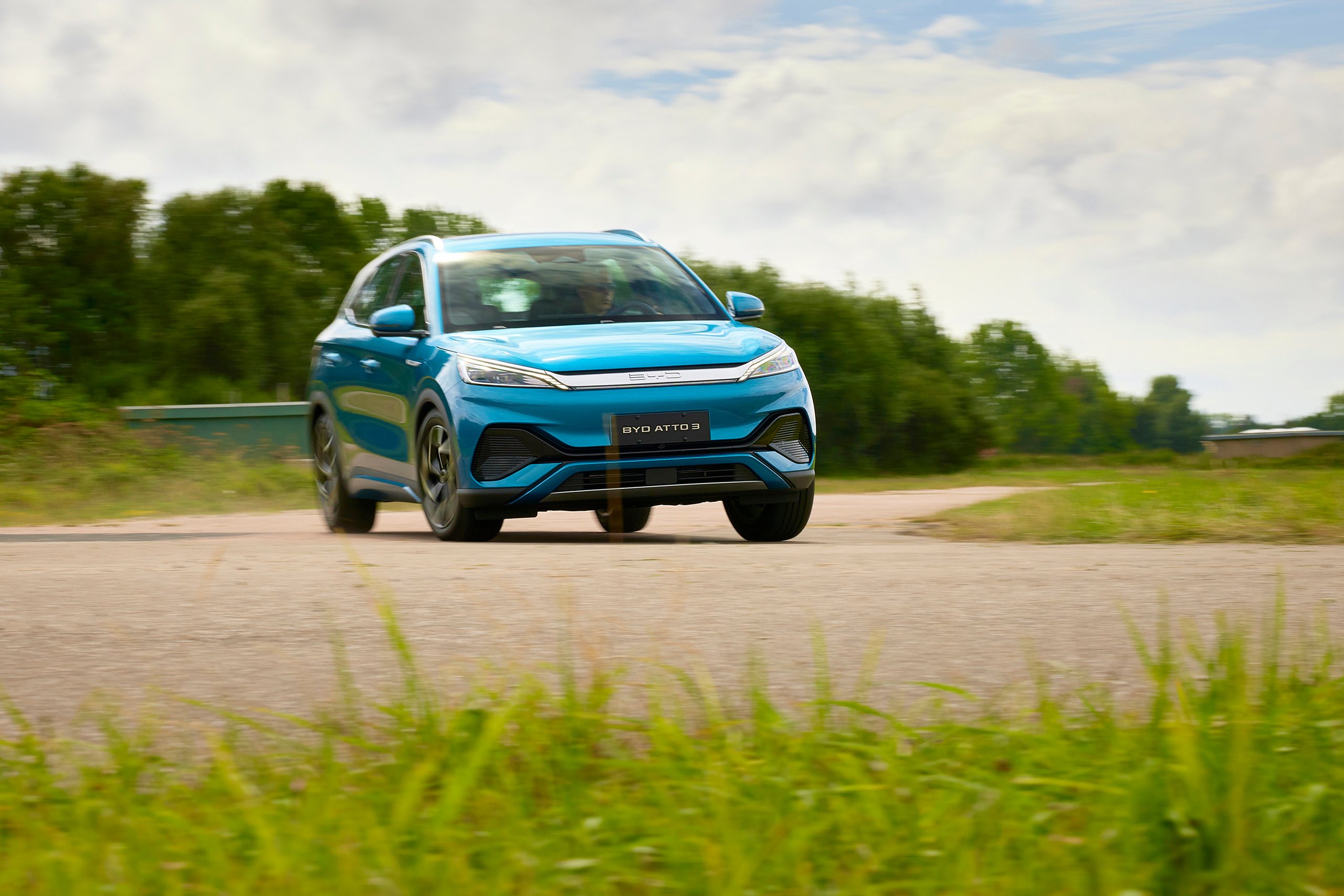
The most crucial change in 2025 is that BYD stopped being "China-first" in practice, not just ambition. Export volumes surged, overseas sales accelerated, and Europe emerged as a meaningful growth market rather than a test case. BYD is now on track to export close to 1 million vehicles annually, a scale that few automakers achieve outside their home markets.
This matters because China's EV market is maturing fast. Competition is intense, pricing pressure is relentless, and growth is no longer guaranteed. By expanding aggressively abroad, BYD is diversifying its revenue base and reducing its dependence on a single market.
More importantly, the expansion isn't limited to shipping cars overseas. BYD is localizing its production, building factories in regions such as Southeast Asia, Europe, and Latin America. That positions the company to sidestep tariffs, shorten supply chains, and embed itself more deeply in local markets.
For investors, this global push expands BYD's long-term opportunity set. The company is no longer constrained by China's demand curve alone -- it's now competing for a share of global EV adoption.

OTC: BYDDY
Key Data Points
Volume leadership, but not profitability
BYD remains the world's largest seller of new-energy vehicles by volume, and 2025 reinforced that position. The company's broad lineup -- spanning battery-electric cars and plug-in hybrids -- continues to resonate with cost-conscious consumers across different markets.
But 2025 also made one thing clear: Volume leadership doesn't guarantee earnings growth. Aggressive price competition, particularly in China, significantly impacted margins. Even as sales volumes rose, profitability came under pressure.
This marks a turning point in BYD's investment narrative. The easy phase -- growing volumes into an expanding market -- can no longer be the only strategy. From here, returns will depend on execution quality. That means defending margins, managing costs, and avoiding the temptation to sell growth at any price.
For investors, this shift is critical. BYD is no longer a pure growth story. It's becoming a scale-driven operator in a competitive global industry, where discipline matters as much as ambition.
BYD is building optionality beyond cars
One of the most underappreciated aspects of BYD's 2025 progress is what's happening outside its vehicle business. The company continued to expand its footprint in batteries, energy storage, and intelligent driving systems -- areas that could shape its earnings power over the next decade.
BYD's energy storage division secured large grid-scale projects, reinforcing its position as a key supplier in the global energy transition. At the same time, the company rolled out advanced driver-assistance features across a broader range of models, including mass-market vehicles.
This matters because it gives BYD multiple levers to pull. If vehicle margins remain under pressure, adjacent businesses like energy storage and software-enabled features could help stabilize earnings. Few automakers possess this level of diversification, and even fewer have achieved it on a large scale.
For long-term investors, this optionality adds resilience. BYD isn't betting everything on one product cycle or one market -- it's quietly assembling a broader mobility and energy ecosystem.
What does it mean for investors?
BYD's 2025 performance signals a company entering a new phase of its life cycle. It is already leading in the scale battle. The next chapter focuses on demonstrating its ability to operate as a disciplined global automaker while monetizing its technology stack more effectively.
For investors, the key questions in the future are straightforward:
- Can BYD sustain profitability as competition intensifies?
- Will overseas markets grow fast enough to offset China's slowdown?
- And can non-vehicle businesses meaningfully contribute to earnings over time?
If BYD executes well on these fronts, 2025 will be the year it graduates from regional dominance to global relevance. The upside from here may be steadier rather than explosive, but it could also be more durable. For investors, BYD is a maturing company worth watching in 2026.