Over the last few years, a growing number of investors have taken an interest in an ambitious, albeit speculative, company called Archer Aviation (ACHR +3.19%). Archer designs electric vertical takeoff and landing (eVTOL) aircraft and aims to disrupt the $9 trillion low-altitude market across urban mobility and military environments.
Last week at CES in Las Vegas, Archer announced that it is partnering with none other than Nvidia (NVDA +1.73%) in its pursuit of next-generation aviation systems.
Let's unpack how the king of the artificial intelligence (AI) realm is working with Archer and assess the significance of this partnership.
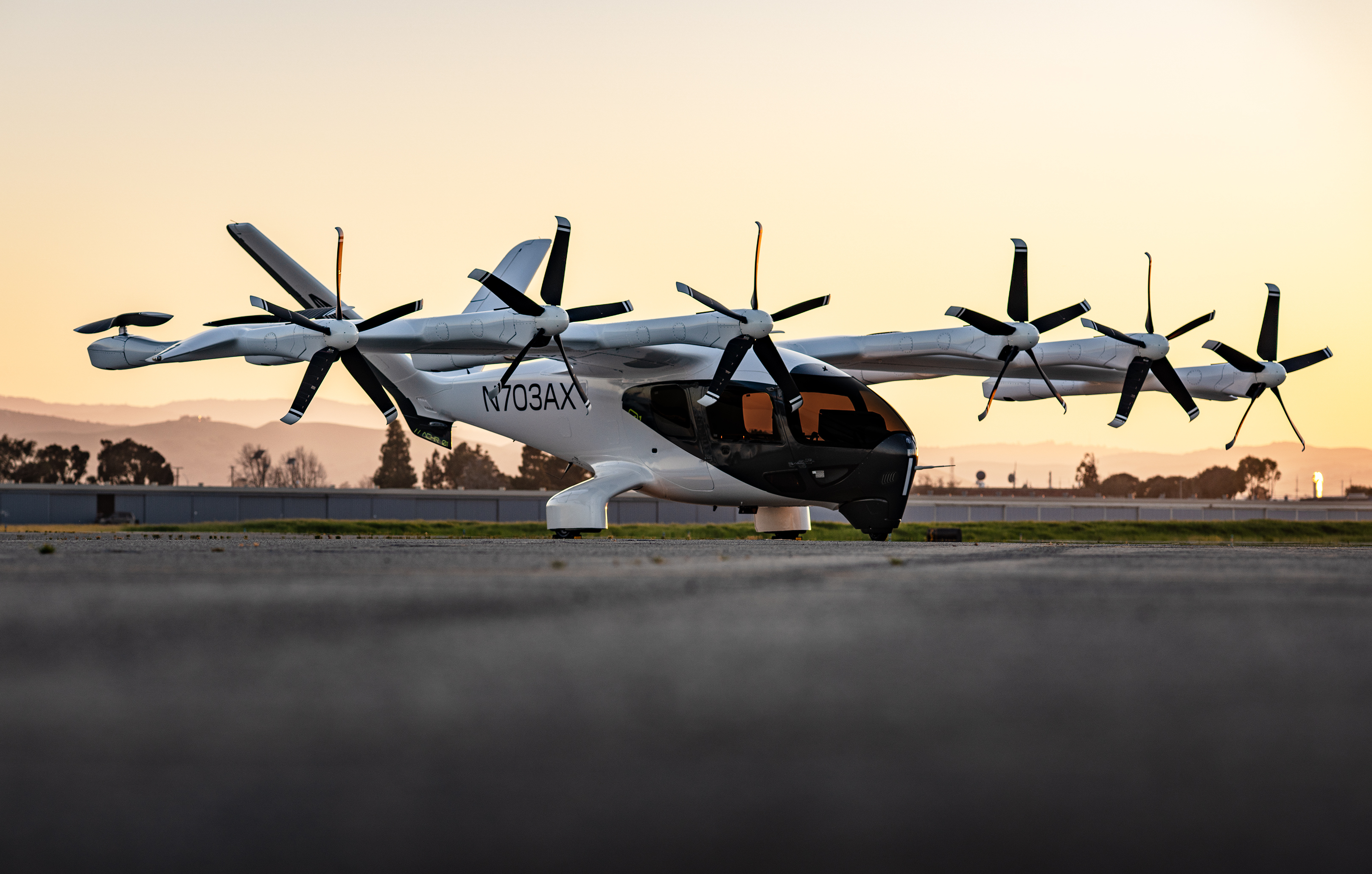
Image source: Archer Aviation.
How are Archer Aviation and Nvidia working together?
Archer is using AI to develop enhanced capabilities for aircraft safety. Specifically, the company is deploying Nvidia's IGX Thor platform to build a suite of tools aimed at pilot safety and predictive analytics of flight data.
In turn, these advancements could usher in a new wave of AI-managed air traffic routing, as well as serve as the foundation for new aerial autonomous systems.
What does this mean for the future of Archer and Nvidia?
Collaborating with Nvidia marks the second megacap AI leader to partner with Archer. Last year, the company announced a strategic relationship with data analytics specialist Palantir Technologies.
For years, Archer's share price has generally fluctuated based on headlines and narratives. Making investments in Palantir's software and Nvidia's comprehensive AI stack may help legitimize Archer in the eyes of institutional investors -- who largely view the company as akin to a highly speculative start-up.
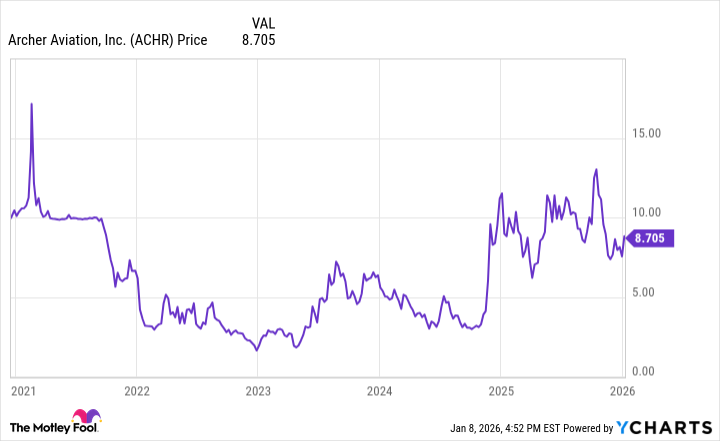
Data by YCharts.
For Nvidia, I think the relationship with Archer could carry meaningful upside. For the last three years, Nvidia captured enthusiasm for its dominant role in the GPU industry. However, competitive forces are rising from alternative AI accelerator designers -- namely Advanced Micro Devices -- and custom chip businesses, such as Broadcom.
Should Archer execute on its mission to deploy aircraft commercially in city environments, as well as in the defense landscape, Nvidia now has additional growth levers in the world of physical AI. Working with Archer should signal to investors that Nvidia is integrating its technology far beyond data centers and servers and generic generative AI models.
For quite some time, Nvidia's most obvious use cases in physical AI were related to robotics and autonomous vehicles. Now, the company has a unique opportunity to penetrate both the aviation and defense landscapes. Both environments expand Nvidia's total addressable market (TAM) in the broader physical AI narrative.
Is this deal a game-changer?
Considering how nascent Archer's business and technology is, I think getting the attention of Nvidia is impressive. That said, Archer still has a lot to prove as it moves toward commercializing its aircraft.
For Nvidia, partnering with Archer makes strategic sense. The company already has a relationship with Archer's top rival, Joby Aviation.
For now, I think calling this deal a game-changer is premature. Nevertheless, I'm optimistic that Nvidia's integrations with Archer's existing infrastructure could serve as a meaningful catalyst over the coming years as the aviation hopeful augments its technology capabilities.

NYSE: ACHR
Key Data Points
Thinking longer term, should eVTOLs become a complementary service to ride-hailing businesses as well as a new form of military operations, Nvidia appears well-positioned to benefit from additional investment in the low-altitude market -- both in the private and public sectors.
Against this backdrop, I see little downside to Nvidia's involvement with Archer's product road map and see this partnership as a subtle (yet important) stepping stone in the company's efforts to evolve into a diversified AI ecosystem.
As AI workloads grow and become more complex over the next several years, I think investors should expect Nvidia to forge similar relationships with businesses across all industry sectors. The company is on a mission to become a hallmark of the AI infrastructure era and become even more widely known for its expertise beyond GPUs and data centers.