Food delivery apps have become a go-to source of America's everyday meals. In 2024, Americans spent a total of $1.5 trillion on food consumed away from home and $1.1 trillion on food consumed at home.
The American Farm Bureau Federation says that delivered food made up 9.2% of all at-home food spending in 2024, up from 2.7% in 2012. The group says Americans spent $100.5 billion on food delivery in 2024, up 924% since 1997.
DoorDash (DASH 1.33%) has benefited from this trend, with $10.7 billion of revenue in 2024. But is up the only way to go?

NASDAQ: DASH
Key Data Points
Consumers are showing signs of weariness with the high cost of living. If inflation stays high, and if people get burned out on worrying about affordability, this could lead to people pulling back on food delivery orders. Struggles with affordability could be bad news for DoorDash's business model.
Let's look at the risk of reduced consumer discretionary spending on food delivery -- and how DoorDash is working to counteract affordability concerns.
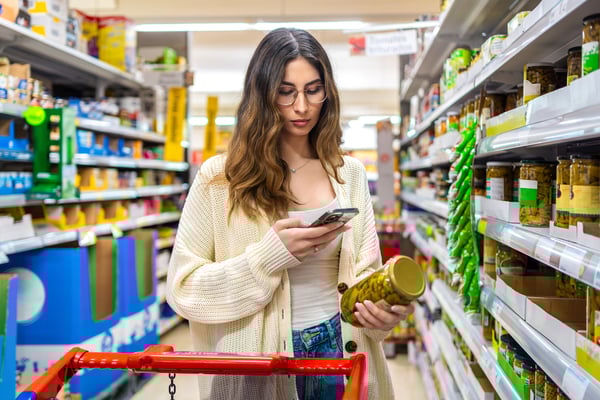
Image source: Getty Images.
Consumers say they're cutting back on food delivery
A recent survey from McKinsey found that people of all ages say they are less likely to order food delivery in the next three months. Some of the biggest declines in the intent to use food delivery are from people with "low" income (under $50,000).
That might sound like bad news for DoorDash, but the company is pushing back against perceptions that its service is unaffordable or only for higher-income people. In November, DoorDash announced a partnership with Family Dollar to deliver items from its 7,000 stores.
There are a few reasons why this partnership could be a valuable signal to investors.
DoorDash and Family Dollar: Affordable convenience?
Family Dollar is a discount retailer that says it often locates in "food deserts" where other options to buy food are lacking and "focus[es] on delivering top value for family essentials with merchandise that generally ranges from $1 to $10." As part of its new partnership with DoorDash, Family Dollar will sell cleaning supplies, groceries, health and beauty products, and household essentials through the DoorDash platform. Now, delivery is not free. DoorDash charges fees to customers, such as service fees, delivery fees, and other fees, which vary based on the order and location. DoorDash customers can receive reduced service fees and $0 delivery fees on eligible orders by joining DoorDash with a DashPass membership that costs $9.99 per month or $96 annually.
Many people might assume that DoorDash is only for higher-income households that can afford to spend for convenient restaurant delivery. Partnering with a discount retailer like Family Dollar might seem like an odd fit. But DoorDash customers are not just higher-income or upper-middle-class. Company survey data from 2024 shows that 33% of DoorDash consumers have annual household income below $50,000, which is in line with the overall U.S. population.
DoorDash is demonstrating that the issue of affordability is top of mind for its executives. In the company press release announcing its Family Dollar partnership, DoorDash VP Mike Goldblatt described the new partnership with phrases like "combining affordability with convenience" and "making everyday shopping easier and more accessible." On the Q3 2025 earnings call, DoorDash CEO Tony Xu said that throughout the company's history, DoorDash has been "probably the most aggressive on making sure that we are the most affordable platform."
Paying attention to which buzzwords are being mentioned by executives on earnings calls can be valuable to investors. Talking about affordability is a good sign that DoorDash leaders are aware of the possible risk of their business getting a reputation for being "unaffordable," and that the company is making efforts to be inclusive to a wider range of customers, even those who are earning less.
Family Dollar is not the only discount retailer offering household items and grocery delivery on DoorDash. Dollar General (DG +3.39%) is another DoorDash partner. In March 2025, DoorDash announced that Dollar General was letting SNAP electronic benefits transfer (EBT) recipients use those on the DoorDash app for its products. DoorDash said this gave it more than 35,000 stores in the DoorDash network that accept SNAP/EBT payments, and that more than 2.4 million consumers had added their SNAP/EBT cards on DoorDash. SNAP/EBT customers can use their SNAP/EBT debit cards to pay for SNAP-eligible items on DoorDash, but DoorDash fees and Dasher tips must be paid separately with other payment methods. DoorDash also offers a one-year discounted DashPass membership for SNAP/EBT customers, priced at $4.99 per month.
DoorDash is positioned to retain price-sensitive customers
Even if the economy gets weaker and lower-income consumers start to cut back on restaurant meals, that doesn't mean they will cut back on DoorDash orders, as it delivers more than just restaurant food. And company survey data from March 2024 shows that consumers with household income below $75,000 were more likely than higher-income customers to order from DoorDash multiple times per month.
The survey also showed a few signs of strong customer loyalty toward DoorDash among lower-income customers:
- 67% of customers with household income below $75,000 said "it's easy for them to order food through DoorDash on their budget."
- 71% said DoorDash "offers good promotions and discounts."
- Lower-income customers were more likely than higher-income customers to say that DoorDash has "gotten more affordable in the last year."
Even if DoorDash customers start cooking at home more often, the platform still might benefit from regular grocery orders. As of the 2024 survey, 43% of lower-income customers had used DoorDash to order grocery items, compared to only 35% of higher-income customers. And among all DoorDash grocery shoppers, 64% said that buying groceries on DoorDash made it easier to stick to their budget.
One of the biggest risks to DoorDash's business is the macro environment possibility of consumers getting cost-of-living fatigue. But DoorDash is taking proactive steps to prepare for this risk by making its platform more affordable, appealing, and essential to lower-income customers. In 2024, the company said that it had reduced fees for non-DashPass customers by 12%.
DoorDash is showing strong momentum that is unlikely to get seriously disrupted by a mild slowdown in consumer spending. In Q3 2025 , DoorDash reported 776 million orders (21% year-over-year growth) and $25 billion of marketplace gross order value, up 25% year-over-year. Investors are showing more confidence in DoorDash, with the stock up about 15% off a recent low in November.
Unless the economy enters a serious downturn, DoorDash is well positioned to retain its customers, even those with lower incomes. This company could keep growing strong in 2026 and beyond.