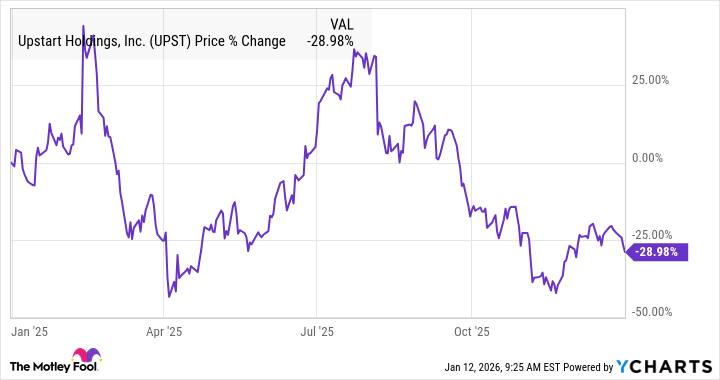
Shares of Upstart Holdings (UPST 7.80%), the volatile fintech stock, finished lower last year after a series of up-and-down movements. Despite strong growth in the underlying business due to the rollout of a new AI model and falling interest rates, fears about rising credit risk seemed to overcome the positive signs in the business. As a result, the stock finished the year down 29%, according to S&P Global Market Intelligence.
As you can see from the chart below, the stock was up more than 25% on two separate occasions last year, though it lost those gains both times.
What happened with Upstart last year
Upstart has long been a volatile stock. The company, which operates as an AI-based online loan originator, jumped out of the gate after its IPO in December 2020, soaring in 2021 as profits soared and loan demand was strong due to low interest rates, rising asset prices, and ample stimulus during the pandemic.
However, in 2022, the stock plunged in the tech bear market, and management has been trying to rebuild the business since then. It made significant progress last year toward that, with the help of a new AI model.
Through the first three quarters of the year, Upstart's revenue jumped 79% to $747.8 million, and it reported a generally accepted accounting principles (GAAP) net income of $35 million, compared to a loss of $125.8 million in the same period a year ago. Upstart also gave strong guidance for the fourth quarter, calling for continued growth and improved profitability.
Despite those strong results, the stock still slumped toward the end of the year on broader concerns about rising credit risk. Though Upstart management said its own credit models didn't show any cracks, the labor market soured in the second half of the year, and discretionary spending has struggled. Additionally, rising auto delinquencies have spooked the credit market, and there have also been some delinquencies among auto lenders.

Image source: Getty Images.
What to expect for Upstart in 2026
Heading into 2026, Upstart stock looks set to face the same kind of themes in the economy that it did at the end of 2025. The labor market remains weak, and that could lead to increased delinquencies in the credit market.
However, Upstart's business is in a much stronger position than it was when it plunged in 2022, and its models have thus far held up.
The fintech stock still looks well-priced based on its current growth. While Upstart is still risky, the upside potential makes the stock a buy, especially as the company has soared past analyst expectations in recent quarters.