Companies that do boring things like deliver packages or provide telecom services rarely dominate the daily headlines, but they can quietly compound wealth while flashier artificial intelligence (AI) names swing between surges and sell-offs.
Boring, consistent companies often generate higher long-term revenue and that can lead to a rising stock price.
United Parcel Service (UPS +1.56%) and Verizon (VZ +1.50%) both sit in unfashionable and "un-sexy" corners of the market, yet their cash flows, dividends, and valuations are better suited to long-term investors than many of today's AI darlings.
Steady wins
Services that people need regardless of what the economy is doing give providers pricing power and reliable recurring revenue. Companies selling these services often generate steady cash flow that can be returned to shareholders via dividends and buybacks instead of being plowed into speculative projects.
UPS and Verizon both fit this profile: They run mature networks and face real competitive and regulatory pressures, but still generate more cash than they need to maintain and modestly grow the business. They each pay a dividend and have authorized share repurchases.

Image source: Getty Images.
UPS: Paid to wait
UPS has had a rough couple of years, but the business looks more resilient than the stock chart suggests. Shares are down sharply from their 2022 peak and fell again in 2025, leaving the stock trading at roughly 15 times earnings, a discount to logistics peers and well below its 10‑year average.

NYSE: UPS
Key Data Points
With that lower bar, investors are getting paid a sizable dividend yield while the company reshapes its network for higher-margin growth.
UPS' dividend yield is currently about 6%, among the highest in the large‑cap industrial universe. The company has remained committed to returning cash to shareholders, paying roughly $4 billion in dividends in the first three quarters of 2025.
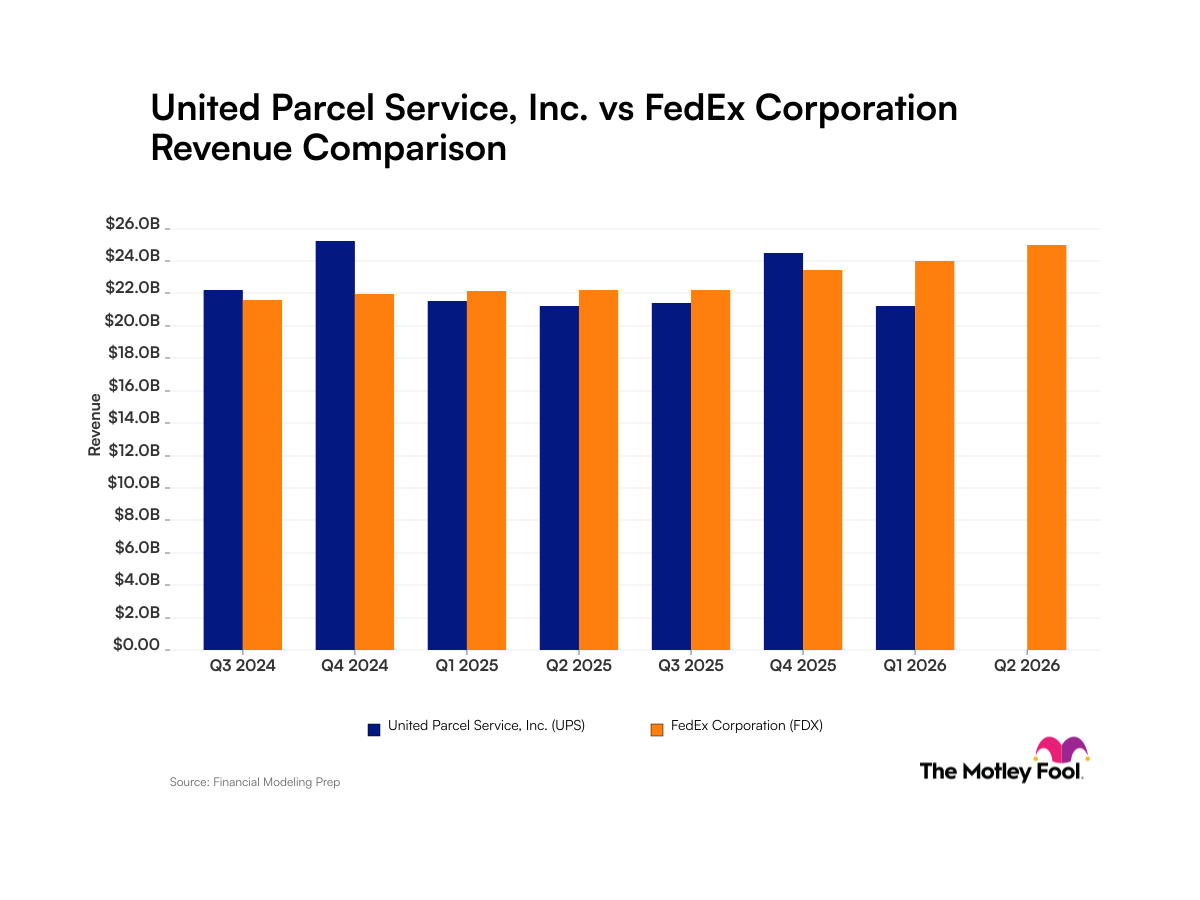
In its third‑quarter 2025 release in late September, UPS reported revenue of $21.4 billion, down 3.7% year over year, but maintained a 10% consolidated operating margin as it focused on "revenue quality" over sheer volume. Management highlighted progress toward a roughly $3.5 billion expense reduction target tied to its strategic reset.
The Amazon issue that hangs over any UPS discussion doesn't seem as bad as people think. UPS has been deliberately shrinking its exposure to lower-margin Amazon packages, with Amazon volume down more than 20% year over year in the third quarter of 2025, and it plans to cut that business roughly in half by the second half of 2026.
That move pressures near-term revenue but frees capacity for higher-margin healthcare, business-to-business, and international shipments.
If the risky strategy works, investors are effectively being paid a high-single-digit yield to watch UPS swap commoditized e-commerce for other moneymaking lanes. And unlike many AI stocks trading at lofty valuations on future hopes, UPS's current price already reflects all this Amazon skepticism, leaving more upside if execution improves.
Verizon: A big yield with shrinking debt
Verizon's business is even more straightforward: It sells wireless and broadband access in a mature market, using the resulting cash to invest in its network and pay a large dividend that currently yields about 7%. That dividend has become more important to some investors as many AI‑exposed tech stocks have taken on heavy debt and seen their shares corrected sharply.

NYSE: VZ
Key Data Points
In September 2025, Verizon's board raised the quarterly dividend to $0.69 per share, marking the company's 19th consecutive annual increase.
Management has paired those increases with steady debt reduction. By late 2025, Verizon lowered its net unsecured debt to about $112 billion and brought its debt-to-EBITDA (earnings before interest, taxes, depreciation, and amortization) ratio down to roughly 2.2. Debt-to-EBITDA measures how easily a company can handle its debt using operating earnings. So, in other words, if Verizon is handling its debt while also strengthening its balance sheet, that's a great sign for investors.
Company commentary has framed this balance sheet progress as essential to sustaining the payout while continuing to invest in 5G and fiber.
Unlike some high-profile AI players piling on debt to fund data centers and acquisitions, Verizon is sticking to what it does best: focusing on its core wireless and broadband businesses, while it seems like others take on the risks of entering newer, less proven territory.
Risks remain: The U.S. wireless market is saturated, and capital spending needs stay high. Still, Verizon doesn't need rapid growth to justify its current valuation. A stable customer base, modest pricing power, and disciplined capital allocation could support respectable returns, and don't forget the juicy dividend.
Don't get swept away by hype
This isn't an argument against AI, but a warning about the hype around AI. While AI will improve efficiency across many different sectors, enthusiasm has driven some pure-play AI stocks to valuations with little margin for error.
In contrast, companies like Verizon and UPS operate in less glamorous markets, but with dependable cash flow and prominent dividends. While dividend payments are not guaranteed to contineu or grow, over time, a 6% to 7% yield with modest growth may quietly outperform the most talked-about stocks that start with high expectations and little room to disappoint.