It's been a wild few months for Intel (INTC 1.79%). After over a year of being the biggest dog in the chip sector, the legacy company is suddenly on fire, jumping more than 150% in five months as investors bet on its turnaround after the federal government took a stake in the company and as new CEO Lip-Bu Tan attempts an overhaul.
That momentum took a hit on Friday as the company offered weaker-than-expected guidance for the first quarter, calling for both a decline in revenue and profits, and the stock fell by double digits.
Most Intel bulls see the stock as a long-term bet on the recovery of an American icon. No other American company is more central to the semiconductor industry than Intel, which both designs and manufactures its own chips and offers a diverse array of products, though it's best known for its PC CPUs.
However, part of what plagued Intel in the past were strategic and execution mistakes, and it will need to overcome those in order to build a healthy and growing business. Management said that supply constraints would ease following the first quarter, but there were signs on Intel's call that the company is still committing unforced errors, including in its supply chain.
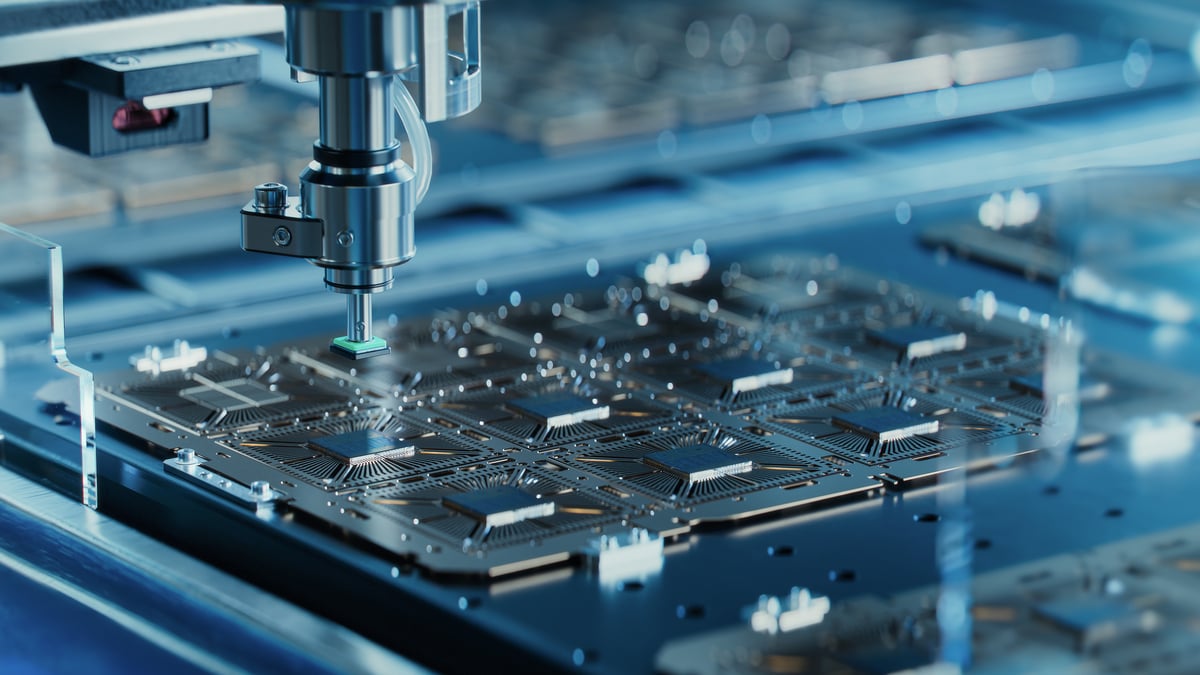
Image source: Getty Images.
What's plaguing Intel now
One of the biggest pain points for Intel in recent years has been its foundry division, which has posted billions in losses. Intel's fabs could be a competitive advantage, and investors are hopeful they will be as the company deploys its 18A process; however, commentary on the latest earnings call shows the company is still struggling to leverage the foundry biz.
Lip-Bu Tan called out disappointing fab yields, or the percentage of usable chips from a wafer, saying that improving them is a key goal in 2026. It also sees opportunities to improve its production cycle speed, while CFO David Zinsner admitted the company underestimated demand for data center chips, and it's working to fix its own supply chain mistakes.

NASDAQ: INTC
Key Data Points
Intel's problems seem solvable, but after the surge in the stock over the last six months, shares are priced like it has already overcome those challenges and is on a glide path to success.
Even after the sell-off, Intel has a market cap of more than $200 billion, even though its revenue growth is flat and it's losing money on a generally accepted accounting principles (GAAP) basis in the midst of the greatest bonanza its industry has ever seen.
There is upside potential for the stock, but the sell-off is warranted. Management still has work to do to fix its execution issues and regain investor trust.