There's no question that the electric vehicle (EV) market has become more competitive for Tesla (TSLA 0.99%). At the same time, the company's long-term competitive position is strengthening, and it's well positioned to win the EV market.
Tesla is already winning
First, much has been made of Tesla's declining EV deliveries in 2025, and the reality is that they fell by 8.6% compared to 2024. But here's the thing. Tesla's deliveries were negatively affected by the Model Y refresh (the best-selling EV in the U.S., with the Model S second).

NASDAQ: TSLA
Key Data Points
The Kelley Blue Book Electric Vehicle Sales report's estimates of U.S. EV sales show a decline in the Model Y's market share in the back half of 2024 and the start of 2025, but a quick rebound in the second quarter when the new Model Y became available.
In addition, note the massive increase in Tesla's and the Model Y's market share in the fourth quarter after the expiry of EV Federal tax credits. Simply put, Tesla was relatively less impacted than its low-cost EV rivals.
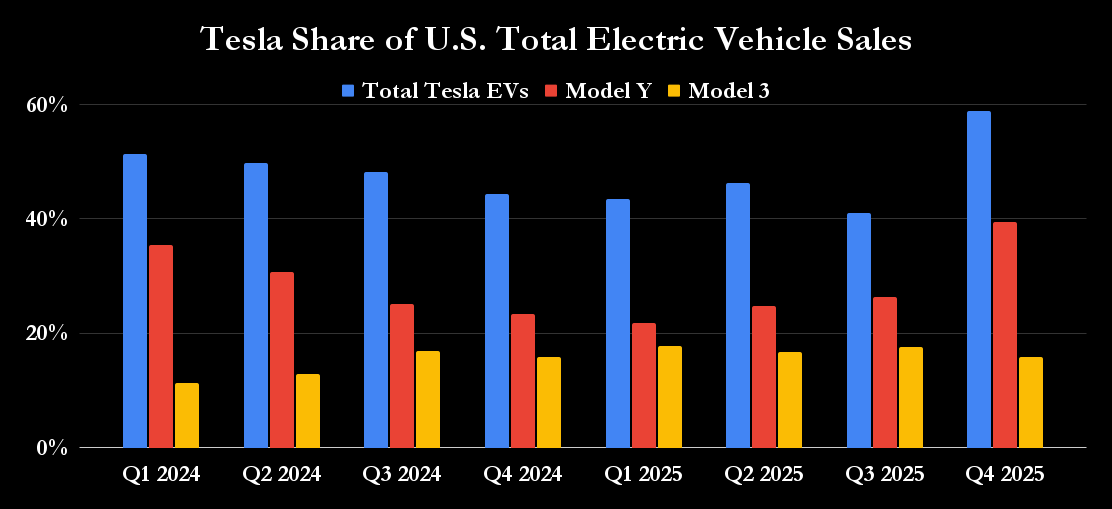
Data source: Kelley Blue Book Electric Vehicle Sales Report. Chart by author.
An improving competitive landscape
Speaking of low-cost rivals, there's a difference between a low-cost EV model and one that's effectively being subsidized to gain EV market share. The latter is not sustainable. A good example comes from Ford Motor Company (F +3.65%), whose Model e segment lost $3.6 billion in the first nine months of 2025 and took a $19.5 billion charge as it refocused its EV operations.
In contrast, Tesla remains profitable and has the scale to grow production, and in doing so, reduce its cost per car.
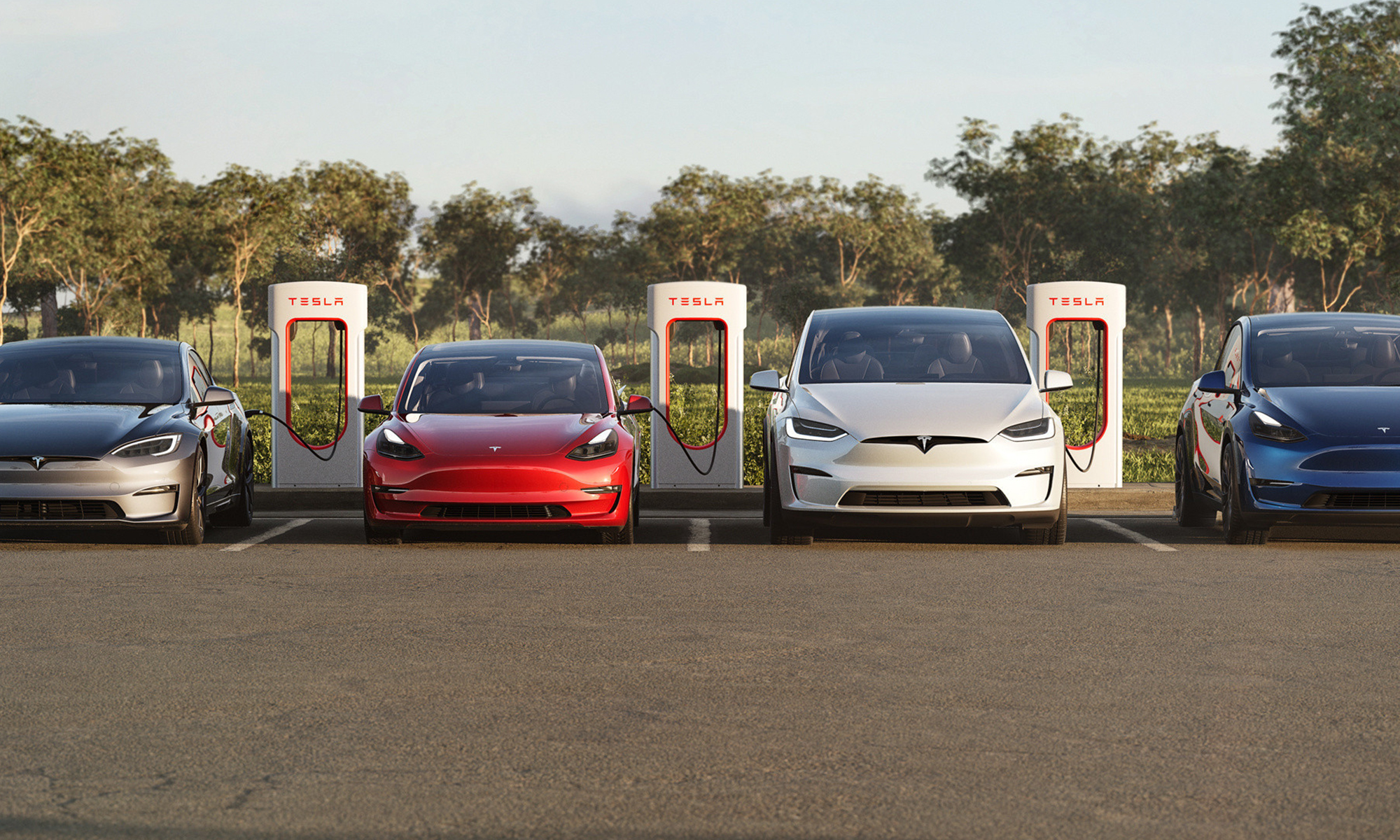
The third reason comes down to its supercharger network, which is an integral part of building out an EV infrastructure necessary to support sales.
Image source: Tesla.
Tesla robotaxi will support growth
Fourth, investors had some good news on this front because CEO Elon Musk recently confirmed that safety drivers had been removed from some of its robotaxis operating in Austin, Texas. Even though, according to reports, the unsupervised robotaxis are being followed by monitors in safery cars.
Still, it's a positive step forward in Tesla's robotaxi rollout, and investors shouldn't underestimate the potential it has, not only to transform the earnings potential for the company from a massive stream of revenue from its Cybercabs, but also to share revenue from Tesla EVs transformed into robotaxis using unsupervised full self-driving (FSD) software.
In addition, the expansion of robotaxis will highlight FSD's capabilities. It could drive future subscription sales and add significant value to owning a Tesla over alternative EVs.
Image source: Tesla.
Tesla will dominate the EV market
Musk's company is already dominating the market, and that looks set to continue. Rivals simply can't support loss-making EVs indefinitely, and Tesla's robotaxi rollout threatens to structurally change the market in its favor.