Rivian Automotive (RIVN 2.77%) is almost certainly going to achieve its big 2026 goal. Indeed, with roughly $7 billion of cash and short-term investments on its balance sheet at the end of the third quarter of 2025, it has the money it needs for its capital investment plans. However, the real question is whether or not customers will buy what Rivian plans to build.
What does Rivian do?
Rivian makes all-electric vehicles. Its focus is on trucks for both the business market (delivery trucks) and the consumer market. The company's technology has long been showcased via its partnership with Amazon (AMZN 1.02%), which uses Rivian delivery trucks. In fact, Amazon was a key partner early in Rivian's business development, supporting the ramp-up of the auto company's manufacturing capabilities.

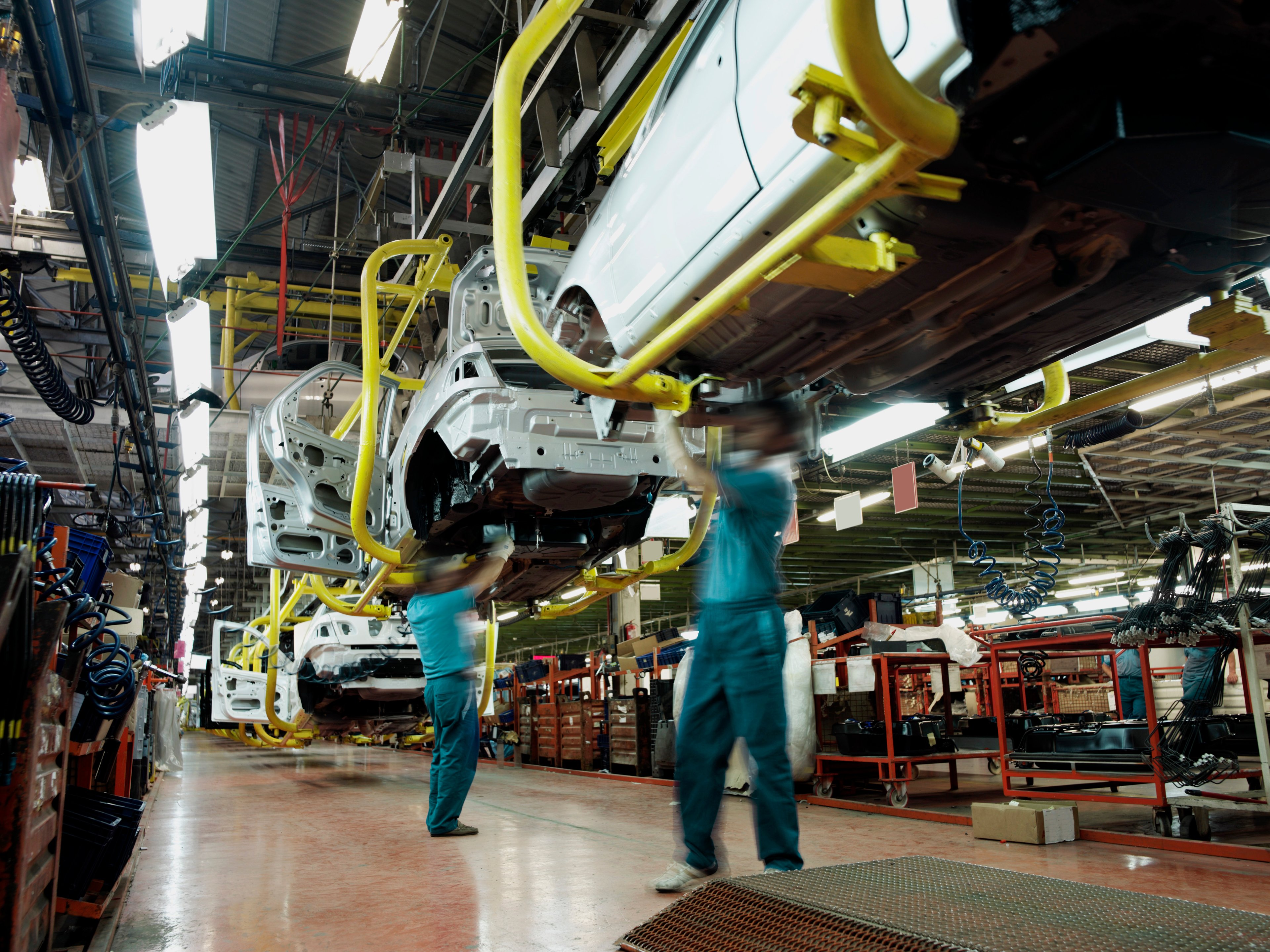
Image source: Getty Images.
From the beginning, however, Rivian's big target was the consumer market. It started with a high-end model, which makes logical sense. With small production numbers, the cost per vehicle would be high. It made no sense to try to sell a low-cost EV in that scenario. Waiting until the company had achieved scale on the production side, working out the kinks and improving efficiency, was the proper decision.
Rivian has, basically, achieved that step with its award-winning R1 vehicle. In fact, as promised, it managed to turn a modest gross profit in the fourth quarter of 2024. Given the results of the first three quarters of 2025, it looks like the company will achieve a gross profit for the full year in 2025. That's an important achievement, as it means the company is making more from the sale of its vehicles than it costs to produce them.
A gross profit is a step along the way to positive earnings. Notably, the company has costs further down the income statement (such as research and development and selling, general, and administrative costs) that have it mired in red ink. To become profitable, the company really needs to sell more cars. Selling only high-end cars, even award-winning ones, won't get Rivian to that goal.
The R2 is on its way in 2026
This is why Rivian's big goal for 2026 is to produce and sell a lower-cost truck called the R2. It is the company's mass-market vehicle. As noted above, there is $7 billion in cash on the balance sheet to help Rivian bring the R2 to market. Unless something goes terribly wrong, Rivian is almost certain to hit this important goal in 2026.
Buying now, while the stock is below $20, will get you in ahead of the R2 launch. If you believe strongly in Rivian's future, that may make sense to you. The R2 could be the key to Rivian's long-term success as a business. It needs to increase its production volume so it can spread its costs over more vehicles if it has any hope of being sustainably profitable.

NASDAQ: RIVN
Key Data Points
The R2 may allow it to do that, but simply building the R2 doesn't mean that people will line up to buy it. Investors need to know whether or not consumers like the lower-cost R2. That won't be known until the R2 actually hits the market. And even then, it could take a few quarters for sales trends to solidify.
Waiting may make the most sense
Rivian is a money-losing start-up, and only aggressive investors should probably consider it. Given the importance of the R2 to the company's future, meanwhile, it probably makes sense for even aggressive investors to hold off here. If the R2 isn't well received, Rivian could have trouble sustaining its business in the long term.