Have you ever wondered about how much is involved in getting your Amazon package to your door within a day of ordering it? I know I have. The modern global logistics system is incredible, and according to Precedence Research, it's set for an 8.36% compound annual growth rate (CAGR) through 2034.
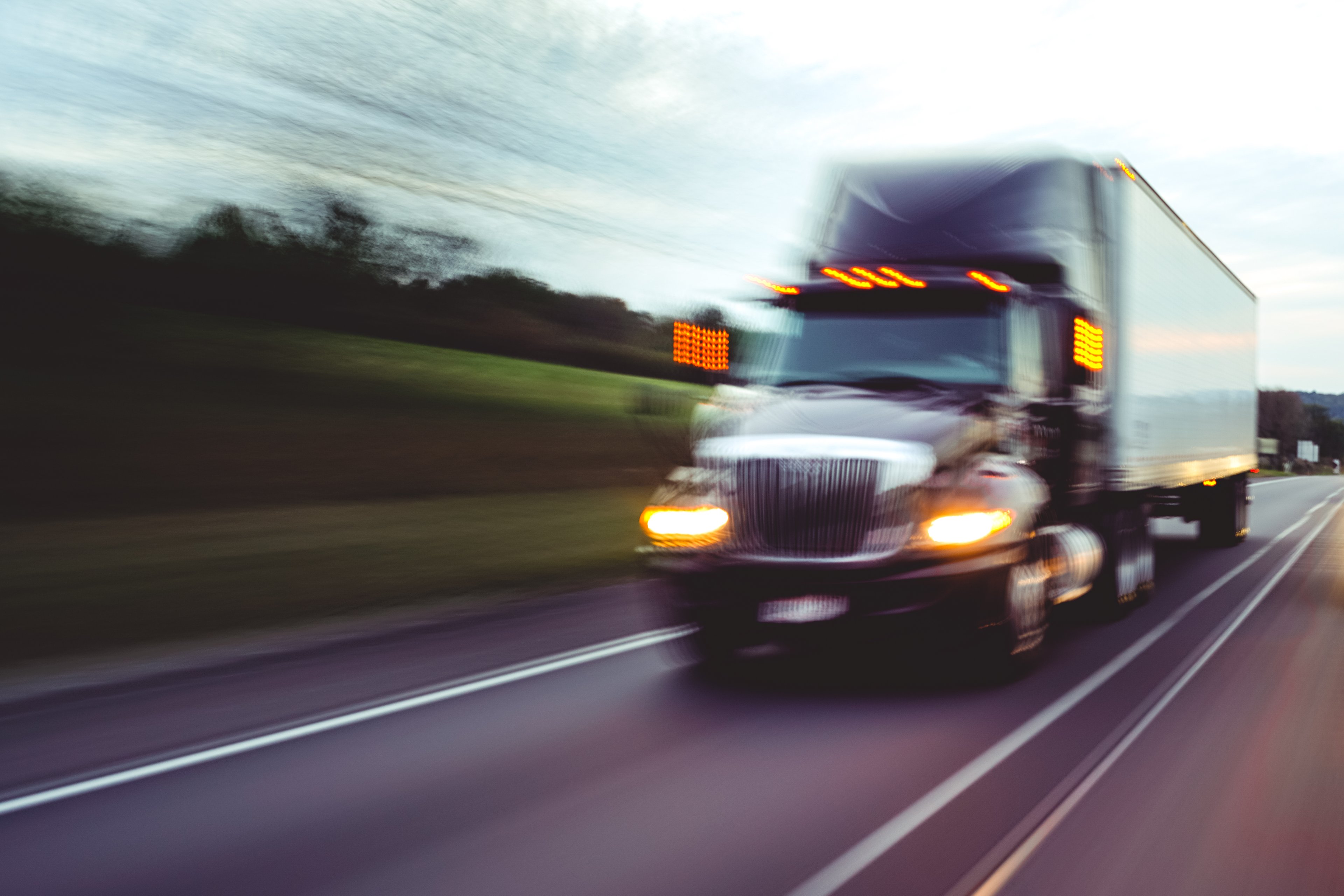
Image source: Getty Images.
Despite that, there are several inefficiencies in the logistics space that result in driver burnout, wasted fuel, missed maintenance and repairs, etc.
Those are all problems that the ability of artificial intelligence (AI) to interpret vast quantities of data quickly is uniquely well suited to fix.
And, despite that potential, which is illustrated by Samsara's (IOT +5.09%) incredible growth figures, the company is down 33% in the past year. However, the market can't keep a stock this fundamentally strong down forever, and I think this dog is about to have its day.

NYSE: IOT
Key Data Points
Keeping track of planes, trains, and automobiles
Samsara's software is complex but still easy to understand. It helps logistics companies, the public sector, utilities companies, and more keep track of and manage their vehicle fleets to optimize safety, reliability, and efficiency.
For instance, a food company using Samsara to track its fleet can ensure its products stay within the safe temperature range. Sysco and United Natural Foods have all adopted Samsara for its usefulness in ensuring safety and quality in food logistics.
Logistics companies with hundreds or thousands of vehicles out on the open road can monitor each one in real time and keep themselves and their drivers safe with AI-powered dash cams.
Construction companies can manage all the different types of vehicles they use on a job site. It's even easier now that over 300 companies like John Deere, Komatsu, and Ford have all integrated Samsara into their OEM parts.
The results speak for themselves. Logistics company DHL saw a 50% reduction in driver turnover thanks to Samsara. The city of New Orleans saw an 81% reduction in collision risk within six months of adopting Samsara. And Estes saved $3 million in fuel costs thanks to the software.
The results for Samsara's bottom line and growth have been fantastic.
The company's latest results, Q3 of its fiscal 2026 (reported Dec. 4, 2025), provided a snapshot of a rapidly growing stock. First, the company's annual recurring revenue (ARR) for Q3 hit $1.75 billion, up 29% over Q3 2025. The company has nearly 3,000 customers paying over $100,000 in ARR to it, and 164 customers paying over $1 million.
Samsara's net revenue for Q3 hit $416 million, up 20% over Q3 2025, and its net new ARR came in at $105 million, up 24% over Q3 2025. It is also sitting on net cash reserves of $275.1 million and total debt of $75.6 million, so it's managing its money well.
What's more, the company locked in new customers in the state of New York, the city of Chicago, and Cadent, the U.K.'s largest gas distribution network, to name just a few. It also operates with an operating margin of 19%, up 9% year over year, and a free cash flow margin of 13%, up 4% over Q3 2025.
To me, that does not sound like a company that should be lagging, and the financial story alone makes Samsara worth a look, let alone its potential.