Shares of new-aged online brokerage Robinhood Markets (HOOD 3.20%) fell hard on Monday, down 8.7% as of 1:00 p.m. EDT.
There wasn't any company-specific news today, but the online brokerage was down in line with the weekend decline in Bitcoin (OTC: BTC) and other cryptocurrencies, which trade 24/7.
Robinhood has a higher-than-average percentage of its customers trading cryptocurrencies compared to other assets, and its users also have a reputation for trading more risky instruments, such as options. So when cryptocurrencies and other speculative assets crashed on Friday and then continued over the weekend, Robinhood stock fell in sympathy.

NASDAQ: HOOD
Key Data Points
Robinhood is where the gunslingers trade
In the third quarter, Robinhood reported $730 million in transaction-based revenue, of which 37% was from cryptocurrency trading and 42% from options trading. Now, of course, when customers sell cryptocurrencies, that also generates near-term transaction revenue. However, brokerage stocks generally sell off when customer assets decline.
The past weekend's crypto rout could also make customers a bit more hesitant to buy many of these risky assets or use volatile options strategies in the near term, which could put a cap on Robinhood's growth going forward in 2026.
The cryptocurrency and precious metals rout began on Friday, seemingly in a reaction to President Trump's nomination of Kevin Warsh to become the next Chairman of the Federal Reserve. It appears some of Warsh's older interviews and speeches led some to believe he may be more "hawkish" regarding interest rates and inflation than they would like.
Whatever the reason, the nomination absolutely decimated many commodities last Friday, from gold to silver to cryptocurrencies. All things being equal, higher rates and tighter monetary policies tend to punish assets that don't pay a yield, and which benefit from a weak dollar.
Expect Robinhood to be as volatile as its main trading assets
In theory, Robinhood shouldn't be quite as volatile as the underlying options and crypto prices. Robinhood makes money on trades, and not necessarily on the underlying assets. Robinhood also makes money from margin lending, but it doesn't lend against cryptocurrency assets.
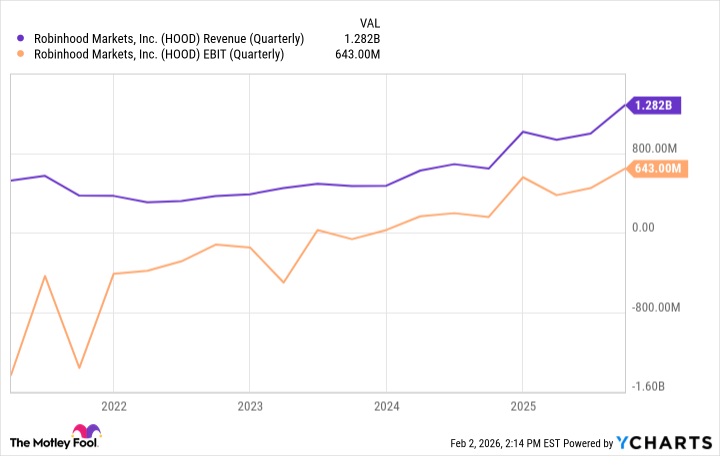
HOOD Revenue (Quarterly) data by YCharts
Over the long term, Robinhood has actually seen fairly consistent growth in revenue and earnings. And while a crypto crash may hurt Robinhood's user base in the near term, as long as the brokerage continues to grow users over time, investors should eventually benefit.