A one-time highflier that has struggled recently is MercadoLibre (MELI +0.68%). The stock has fallen 33% from its 52-week high. Challenges in its e-commerce and fintech businesses have weighed on the stock.
Now the question for investors is whether this constitutes a buying opportunity or if investors should look out below for more selling in this consumer discretionary stock.

Image source: Getty Images.
Why MercadoLibre has fallen
At first glance, this pullback may seem like a surprise. MercadoLibre has long thrived because of its ability to turn Latin America's political and economic threats into opportunities for its business.
However, the threats look like they may have caught up to MercadoLibre. Its e-commerce arm faces competition from Amazon in several markets and numerous smaller companies. Consequently, MercadoLibre's operating margin in 2025 fell to 11.1% versus 12.7% in 2024.
On the fintech side of the business, aggressive expansion of its loan portfolio led to a 90% increase in its credit portfolio in the fourth quarter of 2025. Still, it also led to massive increases in its provision for doubtful accounts.
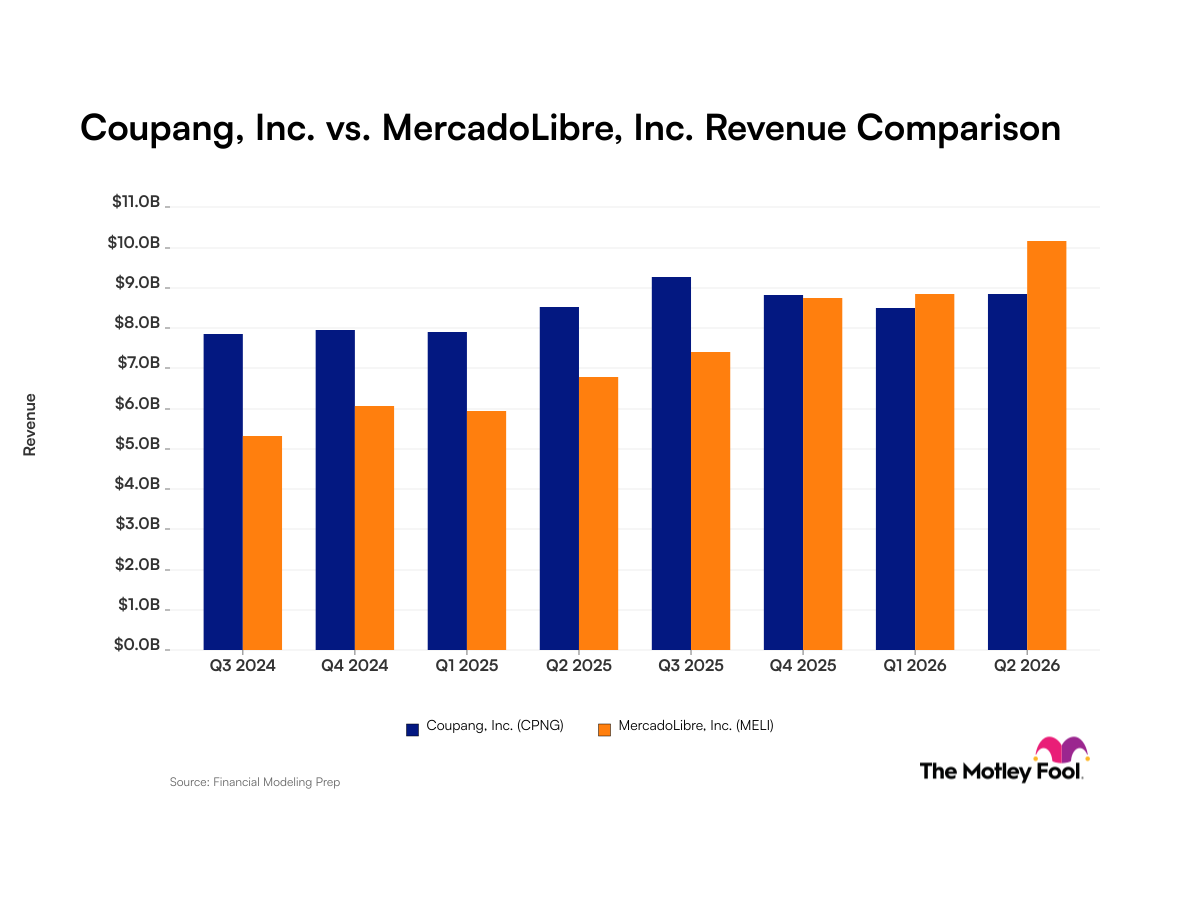
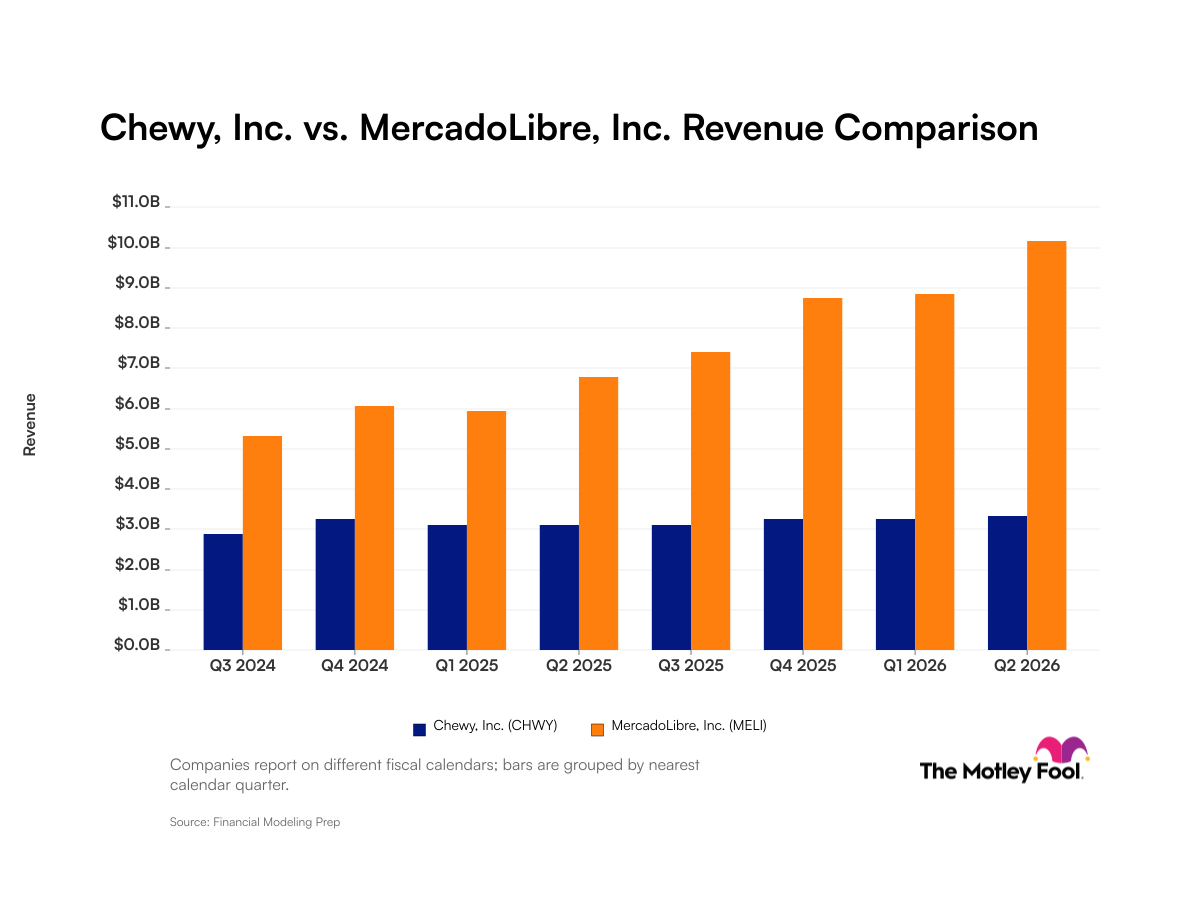
This weighed heavily on the financials. In 2025, revenue of $29 billion increased by 44% year over year. Nonetheless, due primarily to the lower operating margin and 66% rise in doubtful accounts, its $2 billion in net income rose by only 5%.

NASDAQ: MELI
Key Data Points
How it could bounce back
Admittedly, its problems are not going away immediately, but investors should not give up hope. On the e-commerce side, improving economic conditions could work in MercadoLibre's favor.
Although Argentina still contends with 32% inflation, it has experienced a dramatic decline in its poverty rate. Also, with the leadership change in Venezuela, oil exports are at their highest level since 2018, a sign that that country's economy could improve.
On the fintech side, MercadoLibre has set stricter limits on loan sizes. Also, it is employing artificial intelligence (AI) and its treasure trove of customer data to identify higher-risk customers for credit. Such moves could help MercadoLibre reduce its bad loan expenses.
Additionally, amid the lower stock price, its P/E ratio has fallen to 44. Though the S&P 500 (^GSPC +0.73%) average earnings multiple is around 29, this compares well to rival Amazon's historical P/E ratio, which was routinely above 50 and sometimes higher than 100 during its growth years.
Buy MercadoLibre stock
Given MercadoLibre's strength in the market and relatively low valuation, now is likely an excellent opportunity to buy.
Indeed, the falling operating margins and rise in bad loans are valid concerns. Nonetheless, the company now has opportunities to go into new markets. Moreover, even with considerable growth in bad loan expenses, the company appears to have the tools it needs to address this problem.
Ultimately, given its anti-fragility and lower earnings multiple, MercadoLibre could be about to soar.