When evaluating Figma (FIG +2.24%) stock, investors may feel confused. Investor interest in the product was high when it was private, as Adobe's failure to acquire the company and the subsequent attempt to compete attracted investor attention.
However, when Figma stock launched its IPO last July, a spectacular rally fizzled quickly. Amid that massive drop, the stock now trades below the original public offering price of $33 per share.
Does such a performance mean investors should buy, or does Figma's dramatic drop point to more selling?

Image source: Getty Images.
Understanding Figma
As previously mentioned, Figma's design software has drawn significant attention. It sells an interactive website and user interface design tool where separate parties can work on a project interactively. Since it enables all involved parties to see changes in real time, the design process becomes more efficient.
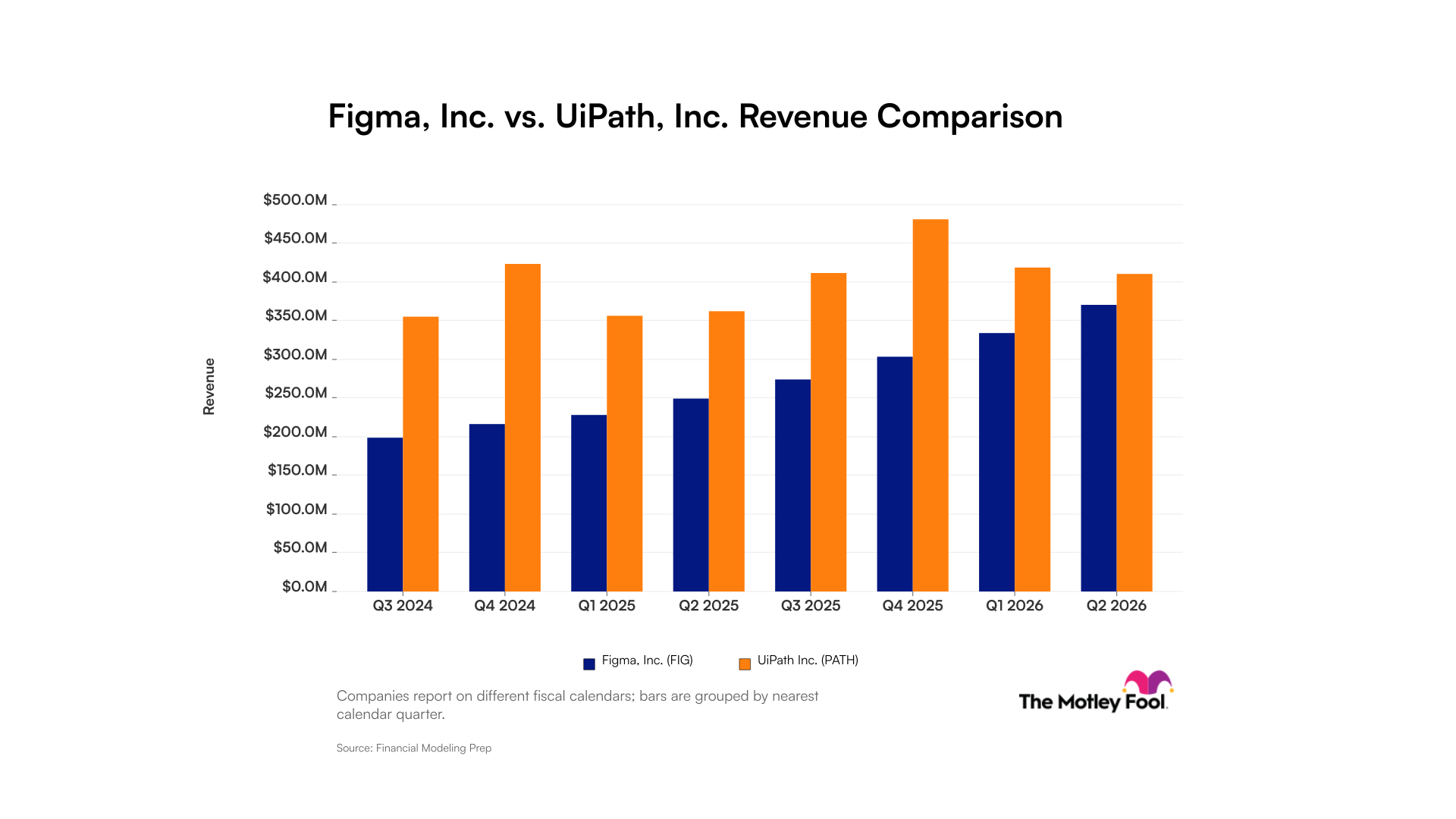
Nonetheless, the company's financials point to both promise and struggle. In 2025, its $1.06 billion in revenue increased by 41% year over year. Additionally, net dollar retention was 136%, indicating that the average existing user spent 36% more on the platform in 2025 than in the previous year.
Unfortunately, that improvement did little for its bottom line as higher stock-based compensation expenses and other factors caused operating expenses to rise. In 2025, net losses came to $1.25 billion, well above the $732 million lost in 2024.
Despite the massive losses, Figma stock initially surged on this news amid a strong growth outlook. The company projects 38% yearly revenue growth in the first quarter, indicating it is more or less maintaining its growth pace.
Still, since the Feb. 18 report, the stock has given back nearly all of those gains. Consequently, the stock is still below its August high by nearly 80%.
FIG Figma
NYSE · As of 4:00 PM ET 10/23/26

That does not mean the news is all bad. Figma stock has not returned to its low from early February, possibly indicating the stock has found a bottom. Moreover, even though the company's losses leave it without a P/E ratio, it trades at a price-to-sales (P/S) ratio of 13.
That sales multiple does not make the stock cheap, but such a valuation compares well to other smaller, high-growth tech stocks. Considering the aforementioned revenue increases, that could induce investors to start taking positions in Figma stock.
Is Figma a buy?
Given the state of the company and its stock, Figma looks like a buy for risk-tolerant investors.
Admittedly, investors cannot predict what will happen to its stock price in the near term. Thus, interested investors should consider dollar-cost averaging into this stock rather than making a large purchase all at once.
Nonetheless, the comparatively reasonable valuation makes Figma stock more attractive. As website and UI designers come to rely on the tool more, this SaaS stock is increasingly likely to experience a recovery.