Microsoft (MSFT 1.13%) stock has been an outsized loser in 2026. The stock has lost 20% of its value in 2026 and is the worst-performing "Magnificent Seven" stock by far. Overall, it's down nearly 30% from its all-time highs, something that rarely happens with a stalwart like Microsoft.
With all that negative sentiment, the investors may be wondering whether now is the time to get out of Microsoft stock or buy more. Let's look at what the data says and determine whether Microsoft is a buy or a sell right now.

Image source: Getty Images.
Microsoft's stock seldom gets this cheap
Microsoft is one of the world's leading tech companies and is deeply involved in the artificial intelligence (AI) buildout. Microsoft is taking more of a facilitator approach and offering several generative AI models for use on its Azure cloud computing platform. However, Microsoft has also heavily invested in OpenAI and owns about 27% of the company. This could be a huge payday for Microsoft if it goes public, but it's also not forcing users to deploy OpenAI's tools, either.

NASDAQ: MSFT
Key Data Points
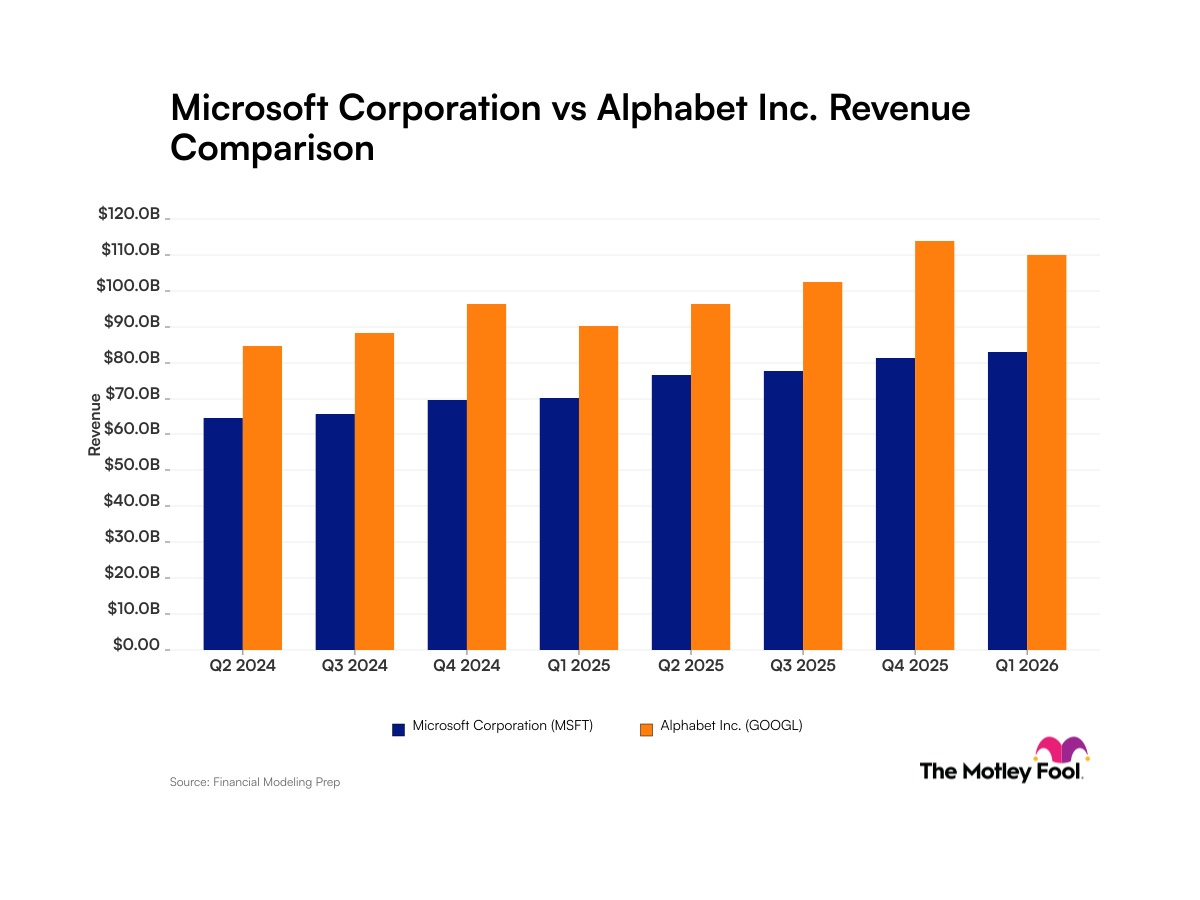
Because Microsoft has gained a reputation for being a neutral operator, its cloud computing revenue is soaring, rising 39% year over year during its fiscal 2026's second quarter (ended Dec. 31, 2025). Overall, Microsoft's revenue rose 17% year over year, placing this quarter among the best that Microsoft has delivered over the past decade.
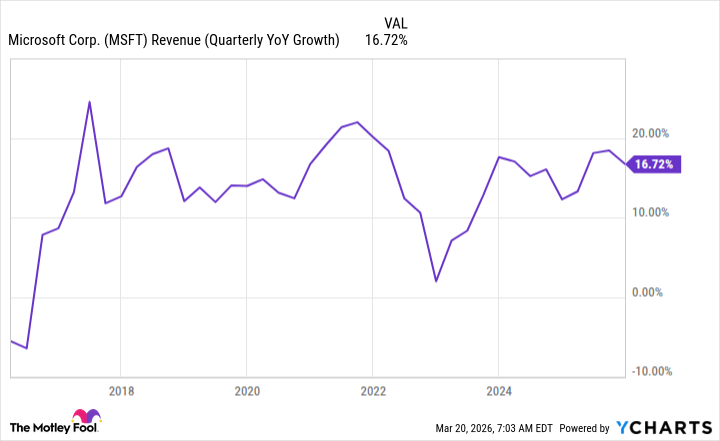
MSFT Revenue (Quarterly YoY Growth) data by YCharts. YoY = year over year.
This doesn't look like a stock that's supposed to be down significantly from its all-time highs, yet that's exactly where we find it. Wall Street also isn't expecting its growth rate to taper off much. They expect 16% growth next quarter and for the full year.
So, why is Microsoft's stock down if it's doing well and maintaining the status quo? Let's take a look at its valuation to see whether we can find some clues.
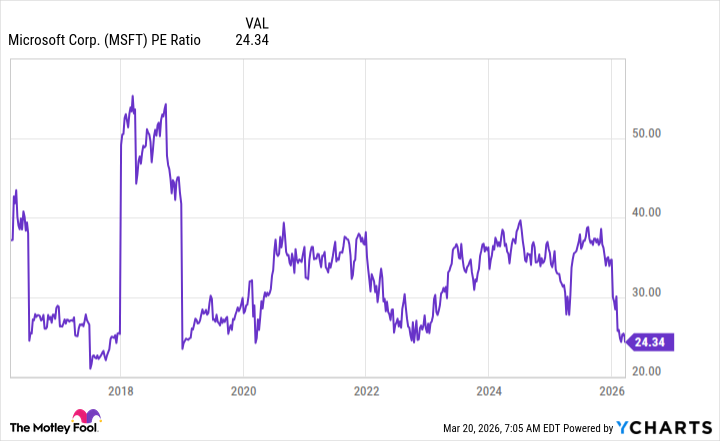
MSFT PE Ratio data by YCharts. PE Ratio = price-to-earnings ratio.
This is among the cheapest that Microsoft has been in the past decade from a price-to-earnings standpoint. But that's not the whole picture. Just because a stock looks cheap in reference to itself over a long time frame doesn't mean that it's cheap overall. Microsoft spent the better part of the past few years trading in the mid-30s times earnings range, which is very expensive. The S&P 500 trades for 24.1 times earnings now, and there's some debate about whether Microsoft deserved a 50% premium to the market.
However, I don't think Microsoft should be valued as a market-average stock, either. Its execution is too high, and its growth is too fast to make that argument. So, I think it's safe to say that Microsoft's stock is undervalued and is worth buying at these levels. However, it may not return to its previous high valuation range, either.